
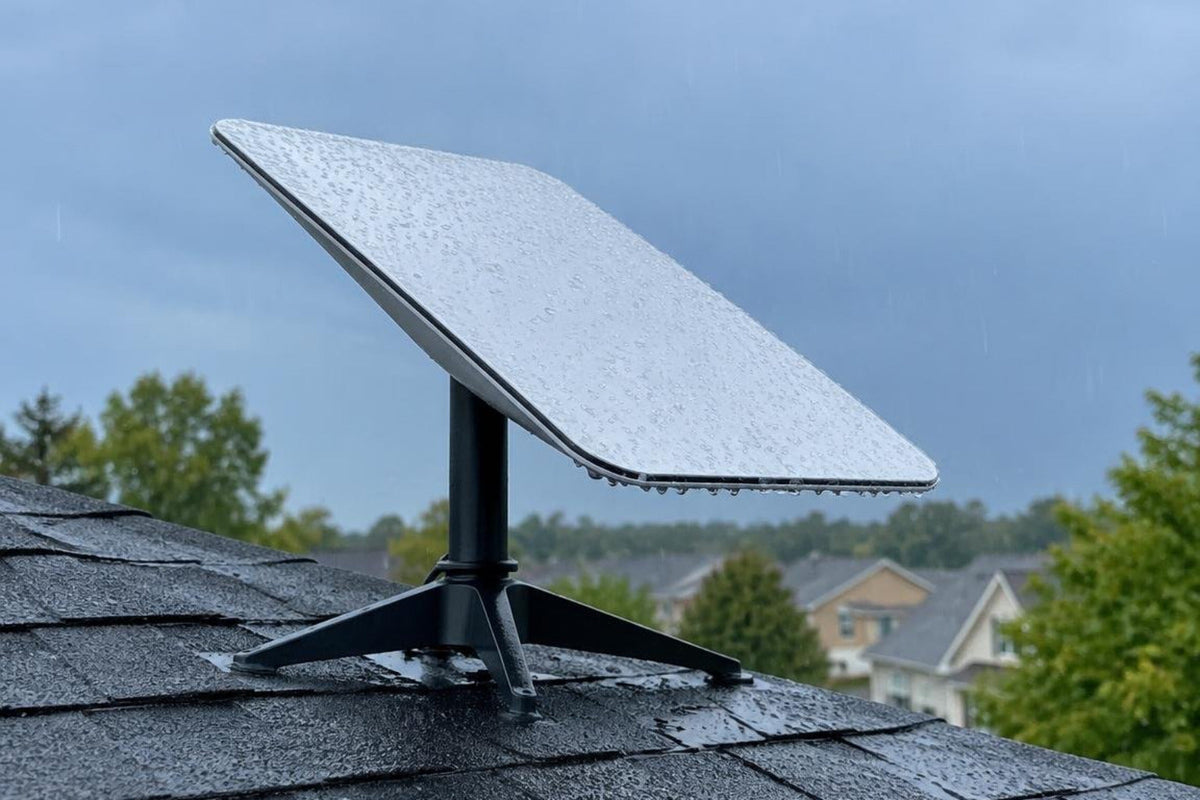
Is Starlink dish waterproof enough for heavy storms?
If you are asking, is Starlink dish waterproof, the practical answer is that it is designed for outdoor use but is water-resistant rather than permanently waterproof. In heavy rain and strong winds, the dish's weather rating is only one part of the setup. A compatible Starlink mount, a sound mounting surface and correct cable routing are equally important for keeping the dish stable and correctly positioned.
Hi, I'm Andrew Ziogas, managing director at SpaceTek Australia, and I help customers match Starlink mounts to their dish model and installation surface. The practical aim is simple: choose compatible mounting hardware, secure it properly and avoid treating a weather-rated dish as a complete storm solution.
For Australian homes, caravans and vehicles, start by checking the Starlink generation, the installation location and the support behind the mounting point. The right setup helps maintain a clear view of the sky while reducing avoidable movement, water-entry risks and strain on the mounting surface.
What does Starlink dish water resistance mean?
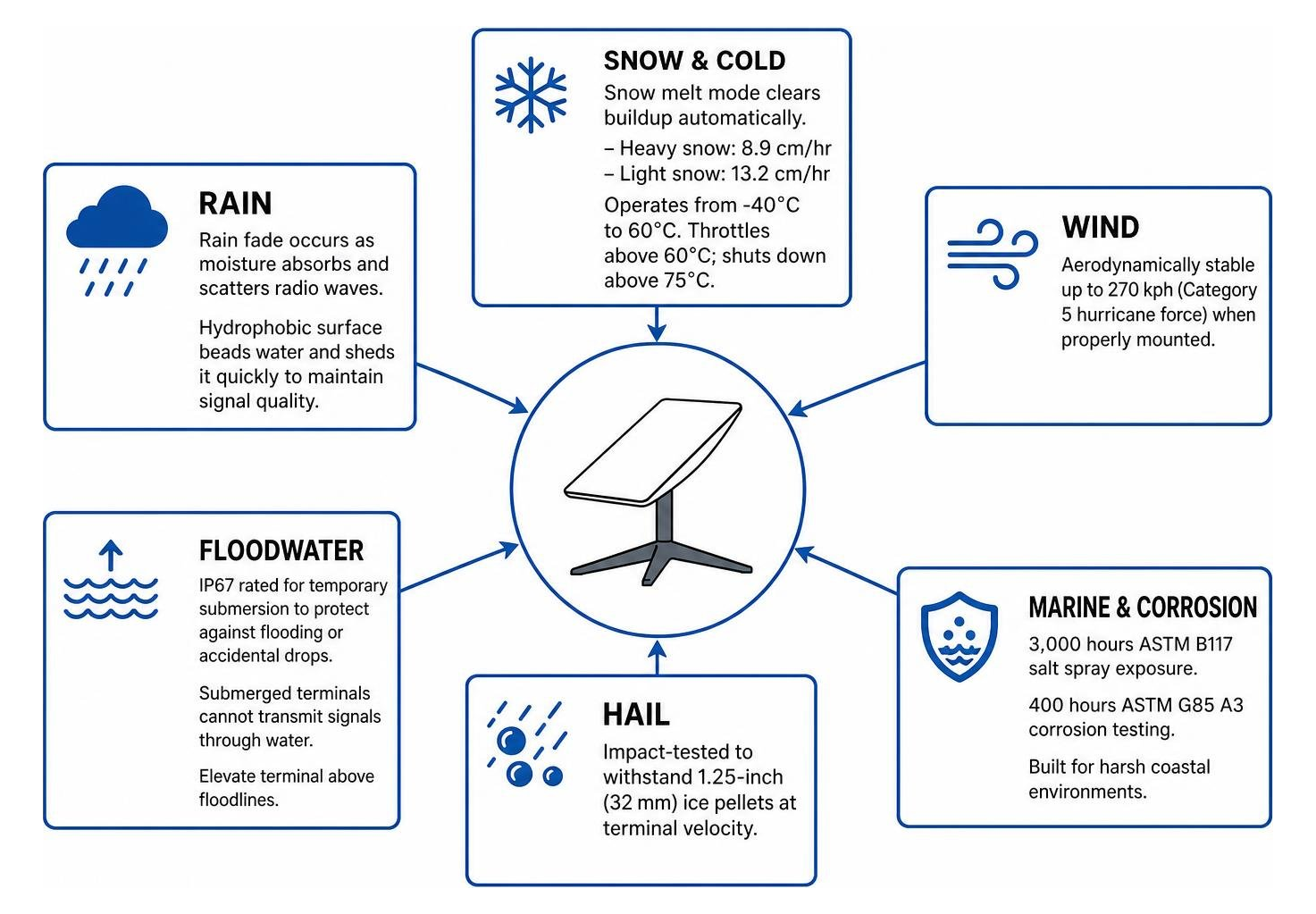
Starlink dishes can operate in rain, but an IP rating does not mean every model has the same protection or that any dish should be left underwater. IP means Ingress Protection: the first number describes protection from solids such as dust, while the second describes protection from water under defined test conditions. Always match the rating to the exact Starlink model.
The official Starlink Performance Kit specifications list IP68 protection when the connector is unmated and IP69K when it is correctly mated. Those ratings apply to that kit, not automatically to Standard, Mini, Gen 2 or V5 equipment. For other hardware, refer to the applicable Starlink specification sheet before making installation decisions.
Heavy rain can still reduce satellite signal quality through rain fade, where moisture in the atmosphere weakens the signal path. Strong winds can also expose weaknesses in an installation by shifting the dish, loosening fixings or stressing an unsuitable mounting surface. The official Performance Durability Guide provides additional environmental testing context for the Performance Kit.
Why does the mount matter as much as the dish?
A water-resistant dish needs a stable mounting system to remain correctly aligned and supported. An unsuitable or poorly secured mount can lead to:
- dish movement that affects alignment or clear sky visibility
- fixings that loosen after repeated wind exposure
- water entering poorly sealed roof penetrations or cable entry points
- damage to roof sheeting, cladding or another surface that lacks suitable structural support
For technical details, see the official PerformanceKit_Specifications.
For the underlying technical details, review the official Performance Kit specifications.
What should you check before mounting a Starlink dish?
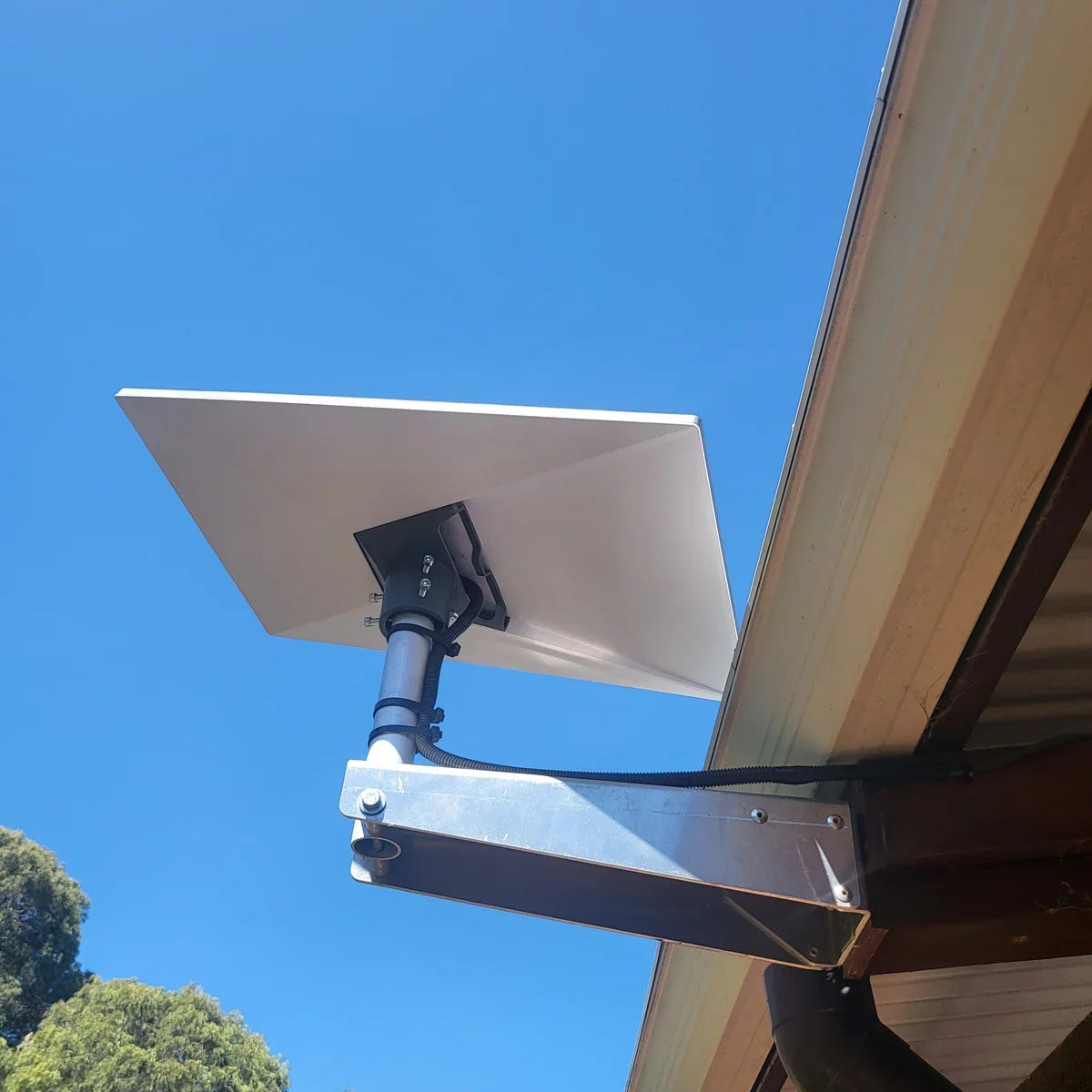
Choose a Starlink mount that is compatible with the specific dish generation and suited to the roof, wall, eave, pole or vehicle surface. Where the mounting system calls for it, secure roof mounts to appropriate structural supports such as rafters or purlins rather than relying on roof sheeting alone. Follow the mount instructions, use suitable fasteners and keep cable entries protected from running water.
Can your Starlink mount handle heavy storms?
A suitable Starlink mount helps keep the dish securely attached and correctly positioned, but the result depends on the complete installation. Water resistance protects the dish enclosure under defined conditions. Mounting stability depends on compatibility, the supporting structure, fasteners, installation quality and exposure at the site. For more on weather-related signal effects, see SpaceTek's guide to whether Starlink works on rainy days.
For a fixed home installation, use the guidance in these Starlink mounting instructions to plan the location, mounting surface and cable route. A dish should have a clear view of the sky without being positioned where wind loading, water run-off or a weak mounting surface can create unnecessary problems.
What makes a Starlink mount suitable for a storm-prone location?

SpaceTek's Starlink bad weather performance guide explains the separate roles of signal conditions, dish weather resistance and installation stability.
Look for a mount designed for the exact Starlink model and intended installation type. It should suit the roof, wall, eave, pole, caravan or vehicle surface and be installed in line with its product instructions. Choose weather-resistant materials, secure the mounting points with suitable fasteners and seal roof penetrations correctly where applicable.
For roof installations, the residential roof mount installation guide explains why the attachment method, structural support and cable path matter. The Starlink roof mount guide also provides practical planning information before installation.
Can heavy rain or wind affect Starlink service?
Yes. Heavy rain can temporarily affect signal performance, while strong winds may reveal movement or installation weaknesses. That does not mean a compatible SpaceTek mount is guaranteed for every weather event. It means the dish, mount and mounting surface should be selected and installed as one system. For model-specific details, consult the official Starlink V5 specifications.
Which SpaceTek Starlink mount suits your setup?
SpaceTek's range is organised by Starlink generation and installation type so customers can start with compatibility rather than assuming one mount fits every dish. Mount suitability also depends on whether the installation is fixed, portable, caravan-based or vehicle-based.
Why choose SpaceTek Starlink mounting kits?
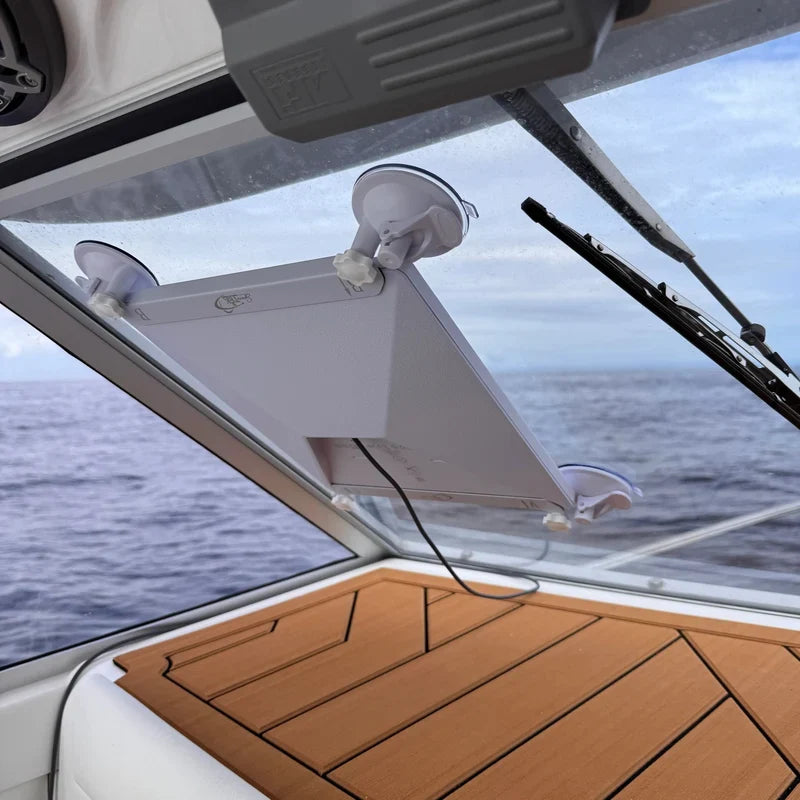
SpaceTek Starlink mounting solutions are made for Australian conditions and designed around correct dish fitment, durable materials and local support. The range covers fixed and mobile installations, including tin roofs, eaves, caravans, 4WDs, boats and commercial sites in Australia and New Zealand.
SpaceTek mounts are precision-machined or folded from aluminium and reinforced composite materials, with compatibility matched to the relevant Starlink dish model rather than assumed across generations. Key considerations include:
- compatibility with the specific Starlink dish and installation surface
- materials suited to outdoor exposure
- a mounting arrangement designed for the intended fixed or mobile application
- access to local support when selecting a suitable setup
Many Starlink kits include a basic stand intended for ground-level testing. For a clean, secure permanent installation, the complete setup may also need an appropriate Starlink mount, suitable cable-routing components and installation hardware for the roof, vehicle or other mounting surface. Choosing compatible equipment for the full installation helps support a secure, practical result.

Which mounts suit Starlink Standard Gen 3 and V4?
The Starlink Standard Gen 3 and V4 mounts and accessories collection includes roof, wall, eave and pole-mounting options for fixed residential and commercial-style installations. Select hardware that suits both the Standard Gen 3 or V4 dish and the installation surface.
Which mounts suit Starlink Mini?
The Starlink Mini mounts and accessories collection includes options for portable, caravan, 4WD, vehicle and off-grid use. The compact dish still needs secure attachment, especially where the mounting location is exposed to wind or movement. Where an exposed cable extension is required, a compatible waterproof cable joiner coupler can help protect the connection from moisture.
Which house Starlink mounts and accessories suit Starlink Gen 2?
For residential mounting options across suitable models, see SpaceTek's house Starlink mounts and accessories.
The Starlink Gen 2 mounts and accessories collection is for Gen 2 hardware. Check the product compatibility details before purchase because a mount intended for another generation may not fit or support the dish correctly.
Which mounts suit Starlink V5?
The Starlink V5 mounts and accessories collection groups V5-compatible mounting kits and installation hardware. Do not assume Gen 3, V4 and V5 mounting parts are interchangeable.
What should caravan and RV owners consider?
The RV and caravan Starlink mounts and accessories collection covers options for mobile installations. Consider the mounting surface, cable management, outdoor exposure and whether the setup is intended for use while parked or while travelling.
What should vehicle owners consider?
The Starlink vehicle mounts and in-motion accessories collection is designed for mobile setups such as 4WDs, caravans, utes and worksites. Follow the intended use and installation requirements for the chosen product, including any limits that apply when the vehicle is moving.
Frequently asked questions about Starlink water resistance and storm protection
Is a Starlink dish waterproof or just water-resistant?
Starlink dishes are designed for outdoor use and water resistance, not permanent underwater operation. The exact protection level depends on the model and its connector state, so check the relevant official Starlink specification before installation.
Can Starlink work during heavy rain and thunderstorms?
Usually, yes, but heavy rain can temporarily weaken the satellite signal through rain fade. A stable mount will not remove rain fade, but it helps keep the dish correctly positioned.
Can strong winds knock a Starlink dish off its mount?
Strong winds can expose an unsuitable or poorly installed mounting setup. Use a mount compatible with the dish, attach it to an appropriate supporting structure and follow the installation instructions for the mounting surface.
What is the best Starlink mount for high-wind areas?
The best choice depends on the Starlink generation, installation surface and site conditions. Select a compatible SpaceTek Starlink mount designed for the intended roof, wall, eave, pole, caravan or vehicle application rather than relying on a one-size-fits-all option.
Should I remove my Starlink dish during a severe storm?
Follow Starlink's safety guidance and assess the local conditions. If the mount, dish or supporting surface appears damaged or insecure, do not continue using the installation until it has been checked and made safe.
How do I prevent water from leaking through a Starlink roof mount?
Use a mount suited to the roof type, secure it to appropriate structural support where required and follow the installation instructions for flashings, seals and cable routing. Keep the cable path arranged so water runs away from entry points.
Are magnetic Starlink mounts suitable for stormy weather?
Magnetic mounts are intended for specific compatible products and surfaces. Check the product's intended use and follow its installation requirements. Do not treat a magnetic mount as a substitute for a fixed mount where the application requires permanent structural attachment.
Can I leave my Starlink Mini mounted outside permanently?
That depends on the exact Mini mount, its intended use and the installation environment. Check the product compatibility and installation guidance, then inspect the mount and cable path regularly for movement, wear or water-entry risks.
How can you secure a Starlink setup for heavy weather?
A Starlink dish may be designed to handle rain, but a reliable installation also needs a compatible mount, suitable structural support and careful installation.
Choose mounting hardware for the Starlink generation, the installation surface and the intended use instead of assuming one mount suits every setup. For compatible fixed-installation options, explore SpaceTek's Starlink Gen 3 and V4 mounts.
Explore SpaceTek's compatible mounting categories:
- Explore Starlink Gen 3 and V4 mounts
- Shop Starlink Mini mounts and accessories
- Explore Starlink roof, caravan and vehicle mounts
When deciding whether a Starlink dish is waterproof enough for your location, remember that water resistance, mount compatibility and installation quality work together.
For long-term reliability, inspect the installation after severe weather and address loose fasteners, damaged seals or changes in dish position promptly. SpaceTek's range helps Australian customers find model-compatible Starlink mounts for fixed, mobile and off-grid installations.

Leave a comment
This site is protected by hCaptcha and the hCaptcha Privacy Policy and Terms of Service apply.