
Open uping Connectivity Anywhere with Solar Power
Solar powered wifi routers combine renewable energy with wireless networking to deliver internet access in locations where grid power is unavailable or unreliable. Here's what you need to know:
What is a solar powered WiFi router?
- A wireless internet device powered by solar panels and battery storage
- Uses 4G/LTE cellular networks or satellite connectivity to provide WiFi
- Operates independently of mains electricity
Key Components:
- Solar panel (typically 40-200W)
- Battery system (usually LiFePO4, 40-200Ah)
- Charge controller (integrated or separate)
- Router/modem (4G/5G capable)
Typical Use Cases:
- Rural properties without grid access
- Mobile setups (caravans, RVs, boats)
- Construction sites and temporary installations
- Remote monitoring and IoT deployments
- Backup connectivity during power outages
Expected Performance:
- Speeds: Up to 300Mbps (depending on cellular coverage)
- Battery runtime: 4-10 days without sunlight
- Device support: 8-128 connected devices
For remote residents across Australia, these systems solve the dual challenge of unreliable electricity and limited internet infrastructure. They're particularly valuable in areas where traditional NBN or ADSL services don't reach, and where diesel generators would be costly or impractical to run continuously.
I'm Aaron Wroblewski, founder of SpaceTek Australia, and I've spent over 25 years working with remote communications systems including HF radio, long-range WiFi, and satellite internet—all of which increasingly rely on solar power solutions like solar powered wifi routers for off-grid deployments. Understanding how to properly power and mount these systems in harsh Australian conditions has been central to helping customers stay connected in even the most challenging locations.
A Deep Dive into Solar Powered WiFi Routers
For those of us who work or live beyond the reach of traditional infrastructure, solar powered wifi routers represent more than just technology—they're a lifeline. Whether you're managing a remote property, running a construction site, or embracing the freedom of van life, understanding how these systems work and what they can do for you is essential for making the right choice.
How They Work: From Sunlight to Signal
The beauty of a solar powered wifi router lies in its neat simplicity. The system starts with solar panels capturing sunlight and converting it into direct current (DC) electricity. This power flows through a charge controller—think of it as the system's intelligent traffic cop—which carefully regulates voltage and current to protect and optimise battery charging.
The battery storage is where the magic really happens. Modern systems typically use lithium iron phosphate (LiFePO4) batteries, which are remarkably robust and long-lasting. This battery bank acts as your energy reservoir, storing power throughout the day so your router keeps humming along through the night and during those inevitable stretches of cloudy weather that even sunny Australia experiences.
Here's where things get particularly clever: the router runs directly on DC power from the battery. This matters more than you might think. Most networking equipment naturally operates on DC, so by skipping the conversion to AC and back again (which is what happens with grid power), you're avoiding significant energy losses. It's a more efficient setup all around. We explore these principles in greater depth in our guides on powering satellite systems directly from DC.
The router itself is typically a 4G/LTE cellular model that taps into mobile networks, though it can also distribute internet from a satellite terminal. Many modern systems integrate the battery and charge controller into a single weatherproof enclosure—a practical design choice for the harsh conditions we face across much of Australia.
The role of the battery is genuinely crucial here. A properly sized system should provide 4-10 days of operation without sunlight, while the solar panel needs to be roughly 1.5 times your daily power consumption to ensure reliable recharging even during less-than-ideal weather.
Key Benefits: Why Go Solar for Your Internet?
The advantages of solar powered wifi routers go well beyond the obvious "no power bills" benefit, though that's certainly appealing.
Energy independence is the headline act. When you're kilometres from the nearest power pole, or when the grid fails during a storm, your solar system keeps working. This isn't just convenient—it's transformative for remote properties, mobile setups, and anywhere traditional infrastructure doesn't reach. You're not waiting for anyone to extend services to your location or fix an outage.
The cost savings are substantial once you look beyond the initial investment. No monthly electricity bills for your internet connection means the system pays for itself over time, often faster than you'd expect. The global solar power market's projected growth of 11.7% CAGR from 2024 to 2030 reflects the increasing economic viability of these solutions.
Environmental sustainability matters more every year. By using clean, renewable energy, you're actively reducing your carbon footprint. This isn't just feel-good rhetoric—it's a practical contribution to a more sustainable future, and it aligns with the growing demand for energy-efficient solutions across all sectors.
Perhaps surprisingly, reliability during power outages makes these systems valuable even in areas with grid access. When storms knock out power lines, your solar-powered internet keeps running. For critical communications, remote work, or simply staying connected during emergencies, this backup capability is invaluable.
For anyone embracing off-grid living, these aren't luxury features—they're necessities that enable modern life without compromise. To explore more about comprehensive off-grid solutions, have a look at our guide: No Grid, No Problem: Your Guide to Off-Grid Satellite Internet.
Key Features to Compare in Solar Powered WiFi Routers
When you're evaluating different solar powered wifi routers, certain specifications matter more than others—especially in the demanding Australian environment.
Battery capacity, measured in amp-hours (Ah) or watt-hours (Wh), determines how long you can operate without sunlight. Quality systems range from 40Ah up to around 200Ah for more demanding applications. LiFePO4 batteries are worth the investment—they deliver up to ten times more charge cycles than traditional lead-acid batteries and perform better across temperature extremes.
Solar panel wattage dictates charging speed and capability. You'll find panels ranging from 12W-15W for compact units up to 40W, 50W, 100W, or even 200W for comprehensive setups. Rule of thumb: your panel should generate about 1.5 times your daily power consumption to handle less-than-perfect weather and maintain battery health.
Weather resistance isn't optional in Australia. Look for an IP rating of IP66 or IP67, which means the device is dust-tight and protected against powerful water jets or temporary immersion. These ratings aren't just marketing speak—they're the difference between a system that lasts years and one that fails after the first decent storm.
4G/5G support and antenna quality directly impact your internet performance. Most systems support 4G/LTE with speeds up to 300Mbps where cellular coverage allows. High-gain external antennas can dramatically improve signal reception in remote areas, and dual SIM functionality with auto-failover provides redundancy when network coverage is patchy.
Wi-Fi standards like 802.11n or the newer Wi-Fi 6 (802.11ax) affect your local network performance, while remote management capabilities let you monitor battery health, power efficiency, and connection status without making site visits—invaluable for unattended deployments.
When you're integrating these systems with satellite internet, ensuring stable and efficient power becomes even more critical. Our StarPower 12V/24V DC Supply is designed for this, and our guides offer practical insights into optimising power for your complete off-grid setup.
Common Applications for Solar Powered WiFi Routers
The versatility of solar powered wifi routers shines across remarkably diverse applications throughout Australia.
On rural properties and farms, these systems have become essential infrastructure. They enable everything from basic communication and entertainment to sophisticated smart farming technologies. Farmers use them to monitor livestock movements, control irrigation systems remotely, and access real-time weather data—all of which directly impact productivity and profitability.
Construction sites benefit enormously from quick-to-deploy solar internet. Without waiting for temporary power or telecommunications connections, site offices, security cameras, and worker connectivity can be operational within hours rather than weeks.
For the growing number of Australians exploring our continent in RVs, caravans, and campervans, solar internet systems deliver genuine freedom. You can work remotely from stunning locations, stream entertainment, and stay connected with family without hunting for caravan parks with Wi-Fi. Our guides on remote power solutions for mobile setups explore these portable options in detail.
IoT sensors and remote monitoring applications depend on these systems for backhaul connectivity. Whether it's environmental sensors in national parks, water level monitors in remote dams, or security cameras guarding isolated assets, solar routers provide the essential link for data transmission.
Temporary events—from outback festivals to remote sporting competitions—can deploy solar Wi-Fi hotspots quickly, providing internet access for organisers, vendors, and attendees without complex infrastructure.
Installation, Performance, and Potential Limitations
Getting the most from your solar powered wifi router requires thoughtful installation and realistic expectations about performance.
When mounting the solar panel, orientation matters enormously. In Australia, you'll generally want a north-facing position adjusted for your latitude, with clear exposure to sunlight throughout the day. For mobile applications, flexible mounting becomes essential—you need to adjust for changing positions and orientations.
Securing all components properly protects your investment. The router, battery enclosure, and connections must be weatherproof and securely fastened. High-quality hardware is non-negotiable; using rust-resistant mounts made from materials like aluminium ensures your setup withstands harsh Australian conditions, from coastal salt spray to outback heat. While quality systems often carry high IP ratings, the installation still requires attention to detail. Proper cable management using UV-resistant ties, waterproof gland connectors, and protective conduits prevents damage from sun exposure, wildlife, and accidental impacts. For a practical off-grid checklist and mounting tips, see No Grid, No Problem: Your Guide to Off-Grid Satellite Internet.
System sizing is perhaps the most critical step. Calculate your router's power consumption, factor in any additional devices, and account for the solar irradiance at your specific location during the shortest daylight months. This ensures your system performs reliably year-round. Our guides provide valuable insights into power calculations that apply broadly to off-grid systems.
Expected performance depends heavily on your location. While 4G/LTE routers can theoretically deliver speeds up to 300Mbps, actual performance reflects cellular signal quality. In remote areas, speeds might be lower but typically remain sufficient for browsing, email, video calls, and even streaming. The battery storage ensures continuous operation through cloudy periods, and even on overcast days, solar panels provide trickle charging to maintain battery levels.
Potential limitations deserve honest discussion. The initial cost for a complete system exceeds standard grid-powered setups, though long-term savings and the value of connectivity in remote locations often justify this investment. Weather dependence is real—prolonged periods of heavy cloud cover or bushfire smoke can eventually deplete batteries if the system isn't adequately sized. Maintenance requirements are generally low, but solar panels benefit from occasional cleaning, and batteries eventually need replacement.
The most significant limitation for 4G/LTE-based systems remains cellular coverage. In truly remote parts of Australia where mobile networks don't reach, satellite internet becomes the only viable option—which is where properly mounted systems become crucial for optimal performance.
Building a Resilient Off-Grid Internet System
Choosing a solar powered wifi router is your gateway to reliable off-grid connectivity—it's what enables you to stay connected in the most remote corners of Australia, from the red centre to coastal hideaways. But here's the thing: powering your internet is only half the battle. The other half is ensuring your entire setup, especially if you're running high-performance satellite systems, is securely installed to handle everything the Australian climate throws at it.
We're talking about intense UV exposure, cyclonic winds, coastal salt spray, and temperature extremes that can make equipment fail if it's not properly protected. A robust, weather-resistant mount isn't just an accessory—it's the foundation that protects your investment and guarantees optimal signal performance. Without secure mounting, even the best solar powered wifi router and satellite dish setup can become unreliable or damaged during harsh weather events.
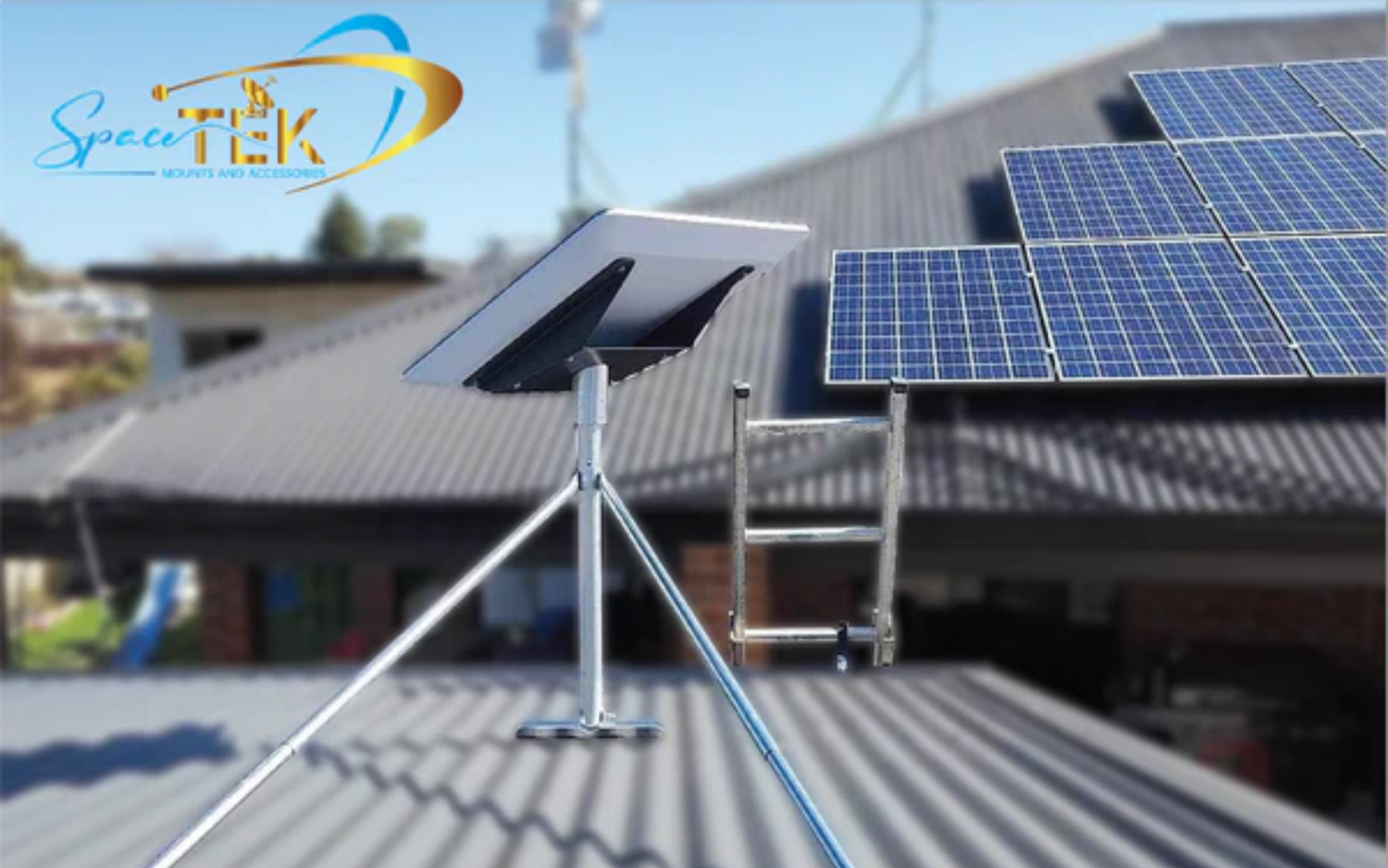
This is where proper planning makes all the difference. Your solar panels need secure mounting in optimal sun-facing positions. Your battery enclosures need protection from the elements. And critically, your satellite dish requires a mount that won't rust, bend, or shift over time—because even a small misalignment can dramatically impact your connection quality.
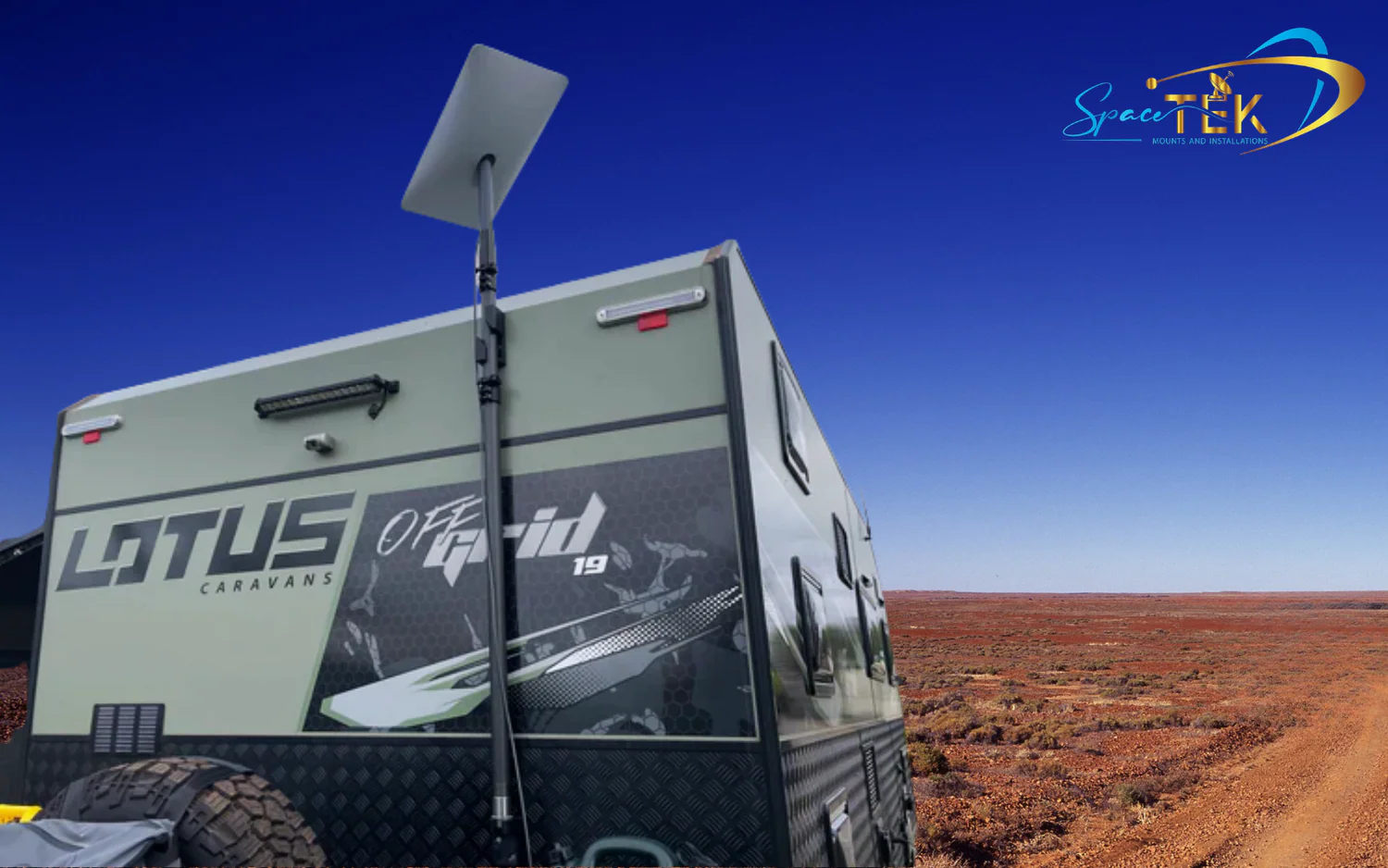
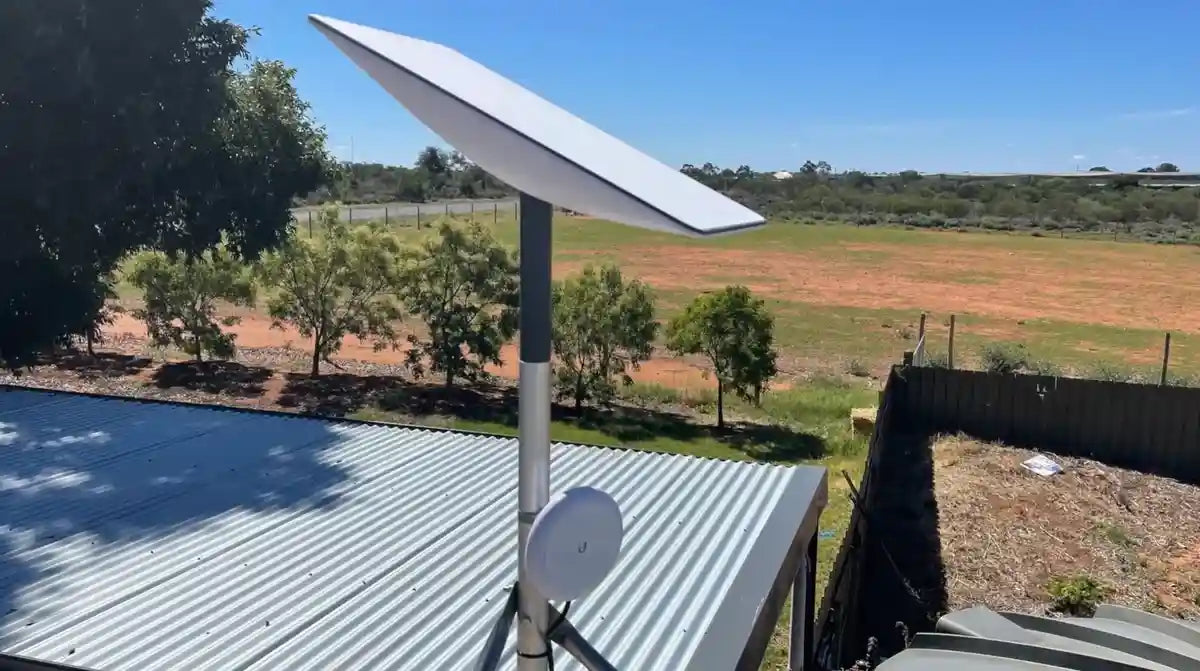
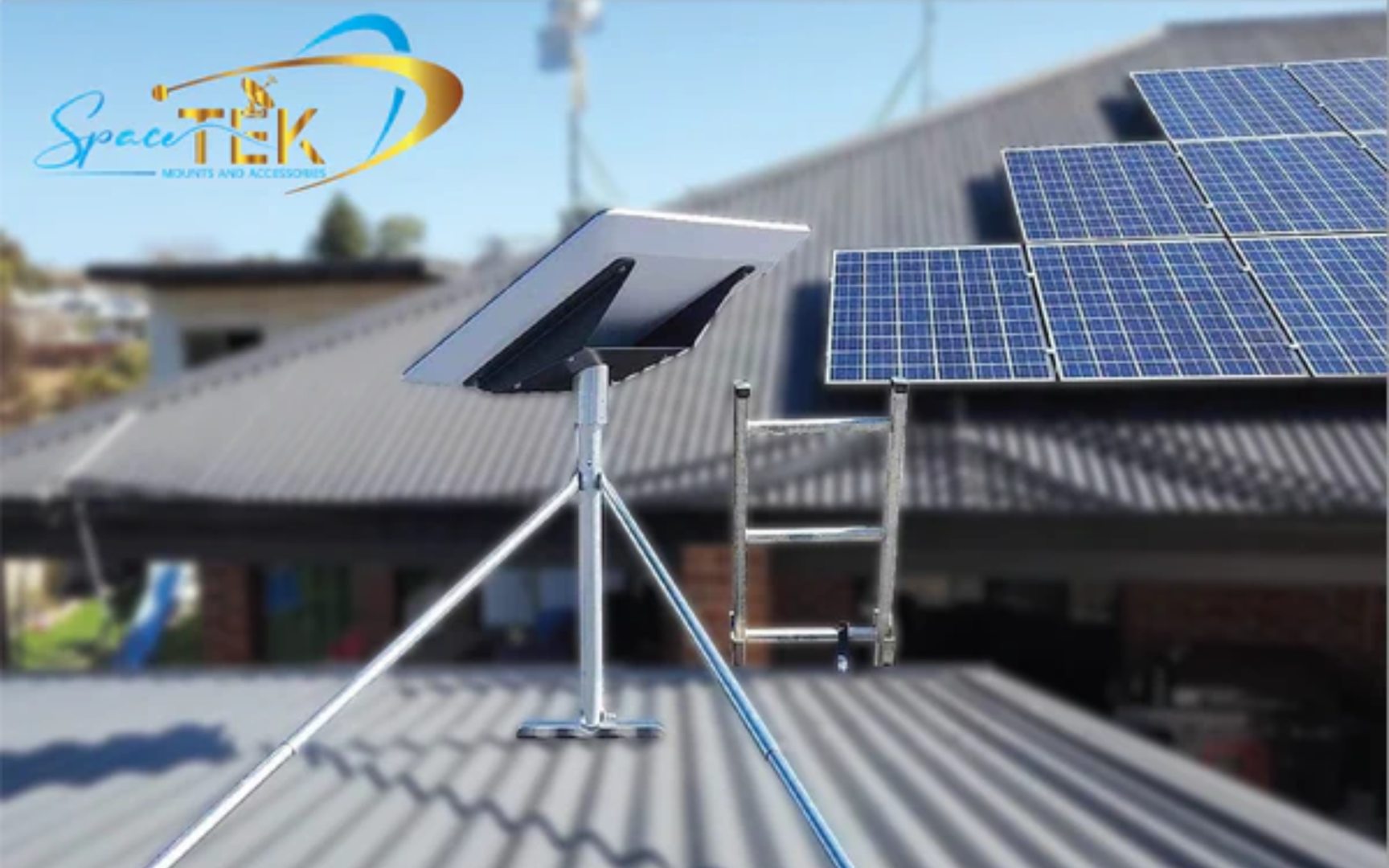
At SpaceTek Australia, we've spent years understanding these challenges because we live them ourselves. Our speciality is high-quality, rust-resistant mounting solutions specifically designed for Australian conditions. We're not just talking about standard mounts—we're talking about aluminium and carbon fibre solutions engineered to handle coastal environments, outback heat, and everything in between. Our mounts are built to be user-friendly and compatible with popular satellite internet self-installer kits, whether you're mounting on a residential tin roof, an RV, a caravan, or an off-road vehicle.
The beauty of a well-designed off-grid system is its resilience. When your solar panels are properly angled and secured, your batteries correctly sized, and your satellite dish mounted with precision on a rust-resistant mount, you've created a system that just works—day after day, season after season. It's the peace of mind that comes from knowing your connection won't fail when you need it most, whether that's for running a remote business, staying in touch with family, or simply enjoying the freedom of off-grid living without sacrificing modern connectivity.
If you're planning or upgrading your off-grid internet system and want expert advice on securing your setup—from choosing the right mount for your specific installation to understanding how all the components work together—we're here to help. Get in touch with our team and let's ensure your connection stays rock-solid, no matter where in Australia you call home.

Leave a comment
This site is protected by hCaptcha and the hCaptcha Privacy Policy and Terms of Service apply.