
A heavy-duty Starlink mount goes beyond basic functionality, offering superior structural integrity and environmental resilience essential for Australia's unique and often extreme conditions. We understand that our continent presents challenges from scorching heat and intense UV radiation to corrosive coastal air and powerful cyclonic winds.
A truly heavy-duty mount incorporates several key elements:
- Robust Materials and Construction: We use thicker gauge materials, such as marine-grade aluminium or zinc-plated, powder-coated steel. These materials offer enhanced resistance to bending, twisting, and fatigue under the significant stresses found in Australia. For example, our heavy-duty marine-grade aluminium mounts are specifically designed for Australian conditions and often come with a lifetime warranty.
- Superior Wind Resistance: Australia experiences some of the highest wind loads globally. Our heavy-duty mounts are engineered to meet or exceed Australian wind load standards, such as C4 ratings. C4-rated mounts are designed to withstand wind gusts up to approximately 310 km/h, which is critical for preventing dish dislodgement or damage during severe weather events. For more insights, refer to our guide on Rooftop Wind Resistance What Your Starlink Mount Should Handle.
- Corrosion and UV Protection: Materials are meticulously chosen for their ability to resist rust and degradation from prolonged exposure to salt spray in coastal areas and the intense UV radiation experienced across the continent. Treatments like powder coating and galvanisation are standard practice to ensure longevity.
- Thermal Management: Elevated designs and specific material choices play a crucial role in mitigating heat transfer from hot roof surfaces. This is vital because Starlink Gen 3 terminals incorporate a thermal protection shut-off at approximately 50°C. Elevated heavy-duty mounts reduce heat exposure on metal roofs, preventing performance issues and ensuring continuous service. Our article on From Wind to Wi-Fi How Australian Weather Shapes Mount Design delves deeper into this.
- Enhanced Stability and Vibration Dampening: Whether for fixed installations or mobile applications, heavy-duty mounts minimise movement and vibration, ensuring consistent signal acquisition and extending the lifespan of your Starlink terminal.
Which Australian Roof Types Require Specific Heavy-Duty Starlink Mounting Solutions?
Australia's diverse architectural landscape and challenging environmental factors mean that different roof types necessitate specific heavy-duty mounting solutions to ensure optimal Starlink performance and structural integrity.
- Tin/Metal Roofs: These are incredibly common across residential, rural, and commercial properties throughout Australia. Heavy-duty tin roof mounts often feature broad base plates for load distribution and elevated poles to clear obstructions and reduce thermal exposure. We know that heavy-duty tin roof mount kits for Starlink Gen 3 are in high demand, reflecting the need for robust, weather-resistant mounting solutions.
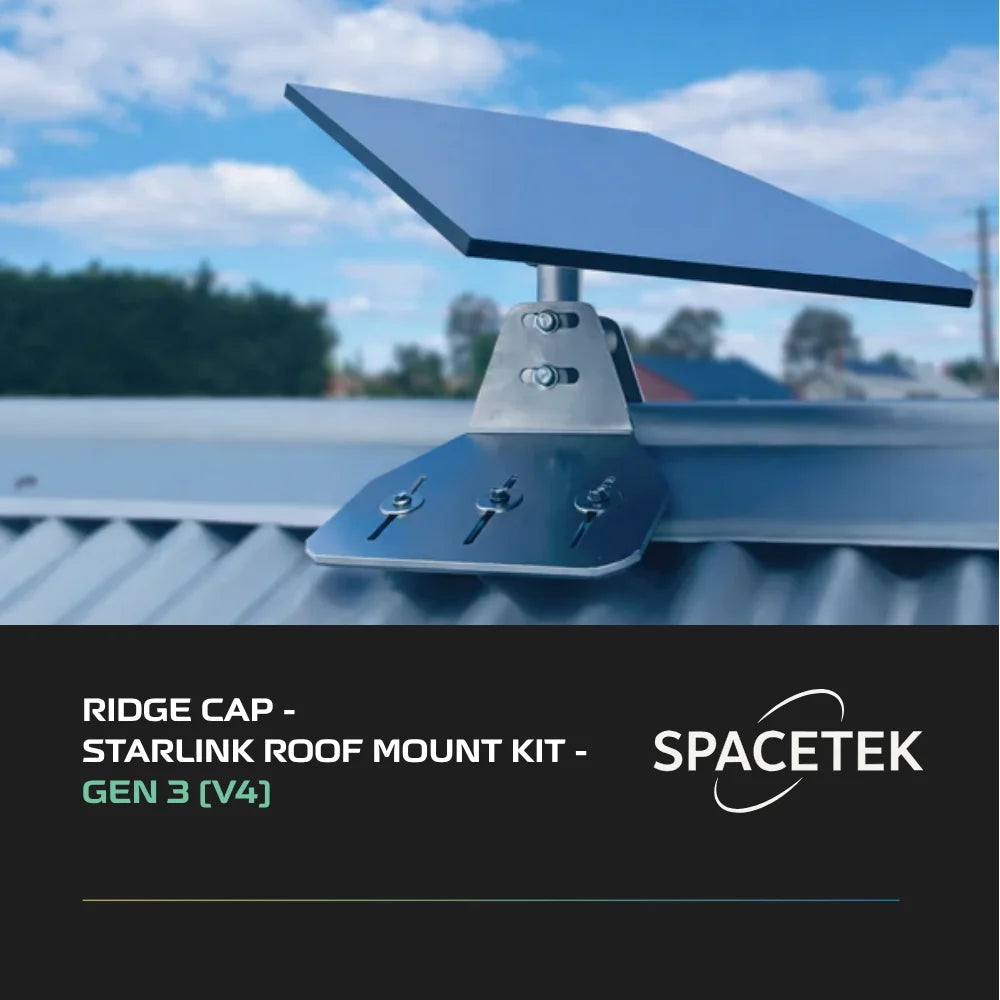
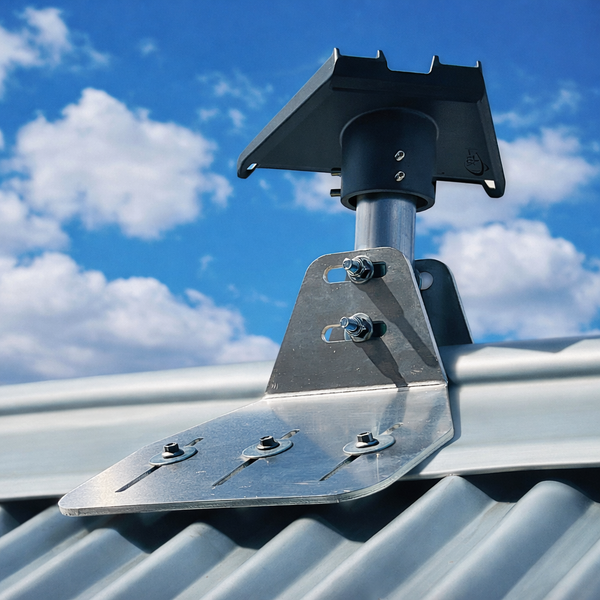
- Ridge Cap Mounts: For tin roofs with a suitable pitch (typically 25-30 degrees), ridge cap mounts offer a secure, elevated position without penetrating the main roof surface. We offer the Ridge Cap - Starlink Roof Mount Kit - Gen 3 (Standard 4), expertly designed for the latest Gen 3 dish. Similarly, for the Gen 2 dish, our Roof Mount Starlink - Ridge Cap Mount - Gen 2 provides a robust solution. Both are built to endure Australian conditions, particularly in cooler climates.
- Tile Roofs: These require mounts that integrate seamlessly without compromising waterproofing. Heavy-duty tile mounts typically use tile replacement brackets or fascia mounts to avoid direct tile penetration.
- Fascia/Wall Mounts: When roof penetration isn't an option, fascia and wall mounts provide a sturdy attachment point. These solutions must be robust enough to handle significant wind loads, especially when extending from the building.
- Insulated Panel Structures (ATCO, Site Huts): For commercial or temporary structures common on work sites, specialised heavy-duty wall mounts utilise compression fixing systems. This allows them to secure the dish without needing internal framing, suitable for panels up to 100mm thick.
- High-Wind Areas: In cyclone-prone or exposed regions, additional reinforcement is crucial. Our Duo Cleat Load Spreader - Stay bar bracket support on Corrugated Roofs is a prime example of a structural accessory designed to distribute load and significantly improve stability in high-wind environments, reducing point stress from mount stay-bars.
How Do Heavy-Duty Vehicle, Caravan, and RV Mounts Differ from Fixed Installations?
Heavy-duty mounts for vehicles, caravans, and RVs are fundamentally different from fixed roof or wall mounts because they operate in a dynamic environment, enduring unique stresses on the move. When you're exploring the Australian outback or setting up camp, your Starlink mount needs to be as tough and adaptable as your adventure.
- Vibration and Shock Resistance: Mobile mounts must withstand constant vibration, bumps, and shocks from corrugated roads and off-road travel. Our designs often incorporate dampening materials and robust locking mechanisms to prevent movement and ensure continuous connectivity.
- Quick Deployment and Stowage: Many mobile solutions prioritise ease of setup and pack-down. We understand that when you arrive at your destination, you want internet quickly. This often means quick-release systems or telescopic poles.
- Aerodynamics and Low Profile: For vehicle-mounted systems, a low-profile design is often preferred to minimise wind resistance and maintain vehicle clearance, especially for roof rack installations. This helps with fuel efficiency and reduces drag.
- Modular and Transferable Designs: Some of our heavy-duty mobile mounts are designed to be easily transferred between different vehicles or used in temporary ground setups, offering incredible versatility for touring and remote work.
- Power Integration: Mobile setups almost always require integrated DC power solutions. This differs significantly from the AC power typically used in fixed installations, demanding specialised components for stable operation.
What Essential Features Should You Look for in Heavy-Duty Starlink Mounting Kits?
When selecting a heavy-duty Starlink mounting kit, several essential features contribute to its performance, durability, and suitability for Australian conditions. Do it properly the first time, and you'll enjoy reliable internet for years.
- Wind Rating and Structural Standards: Always look for mounts that specify compliance with Australian wind load standards, such as a C4 rating under AS4055. This indicates their ability to withstand extreme gusts up to approximately 310 km/h, crucial for preventing costly damage in high-wind regions.
- Material Quality: Prioritise marine-grade aluminium or heavy-gauge, galvanised, and powder-coated steel. These materials offer superior corrosion and UV radiation resistance, essential for enduring Australia's harsh sun and coastal environments.
- Thermal Management Design: For roof mounts, consider elevated designs that provide adequate airflow and separation from hot roof surfaces. This is critical to prevent the Starlink terminal's thermal shut-off, which can occur at around 50°C.
- Stay-Arm-Free vs. Traditional Stay-Arm Designs: For Gen 3 (V4) dishes, stay-arm-free mounts offer a cleaner aesthetic and simpler installation by relying on the mount's inherent strength. Traditional stay-arm designs provide additional bracing, which can be beneficial in extremely high-wind or exposed locations. These are often complemented by load spreaders designed to distribute forces across multiple corrugations.
- Cable Management and Protection: Integrated cable routing and protection features are crucial to prevent damage from UV, weather, and wildlife. This ensures long-term reliability and avoids costly cable replacements.
- Compatibility and Adaptability: Always ensure the mount is specifically designed for your Starlink generation (e.g., Gen 3/Standard 4) and includes the correct pole adapter. Look for versatility if you anticipate future upgrades or changes to your setup. Our comprehensive Starlink Mounts Australia Guide offers more detailed information.
- Ease of Installation and Maintenance: While heavy-duty, a well-designed mount should still be manageable for DIY installation or straightforward for professionals. Consider accessibility for future maintenance.

What Are SpaceTek's Specialised Heavy-Duty Starlink Mounting Solutions for Australia?

At SpaceTek, we specialise in custom Starlink mounting kits and accessories, meticulously designed and built for the unique challenges of the Australian environment. Our focus is on high-quality, rust-resistant mounts that ensure secure and optimal dish performance, giving you peace of mind.
- Ridge Cap - Starlink Roof Mount Kit - Gen 3 (Standard 4): This mount is expertly designed for the latest residential Starlink Gen 3 (V4 / Standard 4) dish. It securely installs your terminal on the ridge of standard residential metal roofs with a 25-30 degree pitch. Fully adjustable and built with durable materials, it provides optimal elevation for uninterrupted signal reception, making it ideal for both residential and commercial applications in cooler climates (where peak summer temperatures remain below 40°C). If you're in hotter regions or require extra clearance to avoid the 50°C thermal shutdown, we recommend considering our 1m, 1.5m, or 2m tin roof mount kits for additional elevation and enhanced airflow.
- Roof Mount Starlink - Ridge Cap Mount - Gen 2: Specifically engineered for the Rectangle Gen 2 Dishy, this ridge cap mount kit is perfectly suited for tin roofs. It allows the Starlink Gen 2 dish to clip tightly into the mast in its designed form, meaning no modifications or drilling into the dish leg is required, preserving your warranty. These kits now ship with Gen 3 poles paired with a Gen 2 adapter, secured with six grub screws for a rock-solid connection. Like our Gen 3 ridge mount, we recommend using these in cooler climate areas where peak summer temperatures are below 40°C to prevent potential thermal protective shutdown of the Starlink terminal. For areas experiencing higher summer temperatures, we advise using our 1 or 1.5-meter roof mount kits to ensure higher airflow and better clearance from radiant heat.
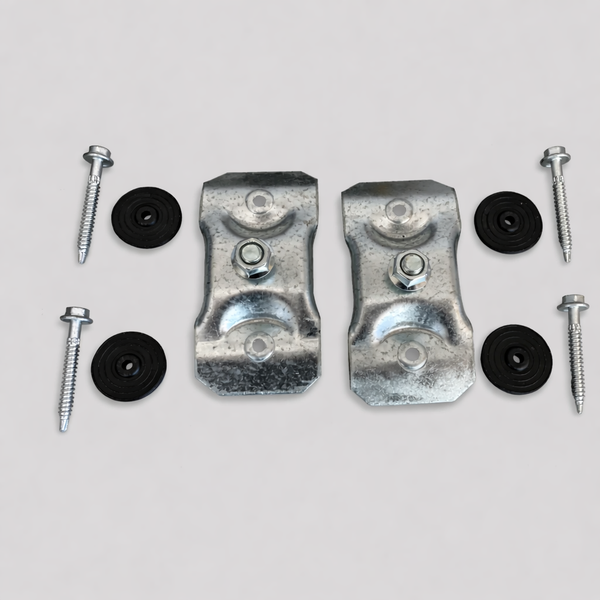
- Duo Cleat Load Spreader - Stay bar bracket support on Corrugated Roofs: The Hills 13mm Duo Cleat is a structural load-spreading accessory, manufactured from gal steel, providing long-term durability and corrosion resistance. It's specifically designed for corrugated metal roof installations, where it effectively distributes mounting forces across two corrugation ridges. This crucial feature reduces localised stress from mount stay-bars and significantly improves overall mount stability in high-wind environments, making it an essential reinforcement for exposed and cyclone-prone regions across Australia.
How Can Advanced Power Solutions Enhance Your Heavy-Duty Starlink Setup?
Beyond a robust mounting solution, ensuring a stable and efficient power supply is critical for the optimal performance and longevity of your Starlink system, especially in off-grid or mobile Australian setups. We understand that infrastructure independence is key.
- Stable Regulated DC Input: Starlink systems, particularly the Mini, require a stable regulated DC input. Standard 12V vehicle or caravan power can fluctuate significantly, leading to frustrating dropouts or system instability. Our advanced DC power solutions are designed to convert variable input voltages into the precise, stable voltage required by Starlink, ensuring consistent and reliable operation.
- Efficiency and Battery Life: High-quality DC-DC converters are engineered for maximum efficiency, minimising power loss and extending battery life in off-grid scenarios. This is crucial for touring and remote living across Australia, where every watt counts and reliable power is paramount.
- Thermal Management for Power: Just like the Starlink dish itself, power components can be affected by Australia's extreme heat. Our advanced power solutions are often designed with robust enclosures and superior thermal dissipation features to operate reliably even in high ambient temperatures.
-
Versatile Power Options: We believe in providing flexibility. Look for solutions that offer broad compatibility, such as 12V/24V/48V DC input options, and the ability to seamlessly switch between AC and DC power sources. This allows for effortless transitions between grid power and off-grid battery banks.
- SpaceTek offers a range of power solutions, including the StarPower V4 Ultimate Power Solution for Starlink Gen 1, Gen 2, Gen 3 & Mini, designed for comprehensive compatibility. For those with Gen 3 systems, our StarPower V3 12V/24V Starlink DC Power Supply for Gen 3 provides a dedicated, efficient DC power source. For fixed installations, we also offer a Universal Replacement 110-240V AC Power Supply with an Integrated Starlink PoE Injector to ensure reliable power delivery.

What Common Starlink Mounting and Power Mistakes Should Australians Avoid?
Installing Starlink in Australia comes with unique challenges, and avoiding common mistakes in both mounting and power can save you significant headaches and ensure reliable connectivity. We always advise our customers to do it properly the first time.
- Underestimating Wind Loads: A common error we see is using mounts not rated for Australian wind zones. Always choose a heavy-duty mount with an appropriate wind rating (e.g., C4) for your specific location. Our guide on Protecting Your Starlink Mount from Wind Tips That Work provides valuable insights.
- Ignoring Thermal Protection: Mounting the dish too close to a hot metal roof, especially during our scorching summers, can trigger the Starlink's thermal shut-off. Always ensure adequate clearance and airflow, or choose an elevated mount designed to mitigate heat.
- Poor Cable Routing and Protection: Exposed cables are vulnerable to UV degradation, damage from wildlife, and physical wear and tear. Always route cables securely, use UV-resistant conduit, and ensure all connections are waterproof.
- Inadequate Structural Support: Attaching a mount to non-structural elements like thin fascia boards or unsupported purlins is a recipe for failure. Always secure mounts to rafters, beams, or other robust structural components of your building or vehicle.
- Voltage Instability in DC Systems: For mobile setups, relying on an unregulated 12V supply can cause Starlink dropouts and instability. Investing in a stable, regulated DC power solution is crucial to provide the precise voltage required by your Starlink system.
- Obstruction Avoidance Neglect: Even with a heavy-duty mount, obstructions like trees or buildings can block the Starlink's vital view of the sky. Always use the Starlink app's obstruction checker to find the clearest possible mounting location before finalising your installation.
- Lack of Waterproofing: Any roof penetrations made during installation must be properly sealed with exterior-grade sealant to prevent leaks and water damage. This is a critical step that should never be overlooked.
Frequently Asked Questions About Heavy-Duty Starlink Brackets in Australia
Why is a C4 wind rating important for my Starlink mount in Australia?
A C4 wind rating signifies that the mount is engineered to withstand extreme wind gusts up to approximately 310 km/h. This is incredibly important as it makes the mount suitable for Australia's high-wind and cyclone-prone regions, ensuring your Starlink dish remains secure and operational during severe weather events.
How does a heavy-duty mount help with Starlink's thermal shut-off in hot Australian summers?
Heavy-duty mounts, especially those with elevated designs, create a crucial air gap between the Starlink dish and hot roof surfaces. This separation reduces radiant heat transfer, helping to prevent the dish from reaching its 50°C thermal protection shut-off point and maintaining continuous internet service even on the hottest days.
Can I use a heavy-duty Starlink mount for both Gen 2 and Gen 3 dishes?
While some heavy-duty mounts offer universal compatibility with different Starlink generations through specific adapters, it's crucial to verify compatibility for optimal performance. For example, we offer dedicated ridge cap mounts for both the Gen 3 and Gen 2 dishes, ensuring a perfect fit and optimal performance for each specific terminal.
Where can Australian customers buy certified heavy-duty Starlink brackets and what warranties or support are typically offered?
Australian customers can purchase certified heavy-duty Starlink brackets from specialist Australian providers like SpaceTek Australia. We design and manufacture solutions specifically for local conditions, offering products with detailed specifications, wind ratings, and robust warranties. We stand by our products, which are Tough Tested Trusted SpaceTek Mounts Built for Australian Conditions.
Conclusion
Investing in a heavy-duty Starlink bracket in Australia isn't just about protecting your equipment; it's about securing reliable, high-speed internet connectivity in some of the world's most demanding environments.
From the scorching sun to cyclonic winds, a robust, Australian-engineered mounting solution ensures your Starlink dish remains stable, protected, and performing optimally. Do it properly the first time. By understanding the unique challenges of Australian conditions and choosing mounts built to withstand them, you can enjoy uninterrupted Starlink service for years to come.
- Explore our full range of heavy-duty Starlink mounting solutions for your needs: Shop House Starlink Mounts & Accessories
- Discover robust mounting options for your vehicle, caravan, or RV: Shop Vehicle Starlink Mounts
- Need expert advice or a custom solution? Contact our team today: Contact SpaceTek Australia


Leave a comment
This site is protected by hCaptcha and the hCaptcha Privacy Policy and Terms of Service apply.