
Can Starlink Standard run from a DC battery system?
Yes, with a power supply designed for the exact kit and a suitable electrical installation. A direct DC supply can remove the need to use an AC inverter for Starlink, but it does not make every dish, cable or router interchangeable.
This October 2026 guide separates Starlink's own Standard DC-DC accessory from third-party StarPower products. Start by identifying your terminal and router, then choose whether to keep the original networking equipment or use a supported replacement arrangement.
Starlink's Standard DC-DC accessory
Starlink describes its Standard DC-DC Power Supply as a way to run compatible Standard equipment from a DC source without an inverter. Availability depends on the market; confirm the accessory offered for your kit in the Starlink shop.
The official specification sheet lists 12–48V DC input and 56V, 3.57A output for this particular accessory. Those figures describe that product, not every aftermarket power unit or the dish's continuous consumption.
Likewise, its environmental rating does not apply to a StarPower unit shown in a different listing. Use the instructions and limits for the exact accessory you receive. Do not select circuit protection or modify connectors from a comparison table alone.
StarPower V3 and router-replacement options
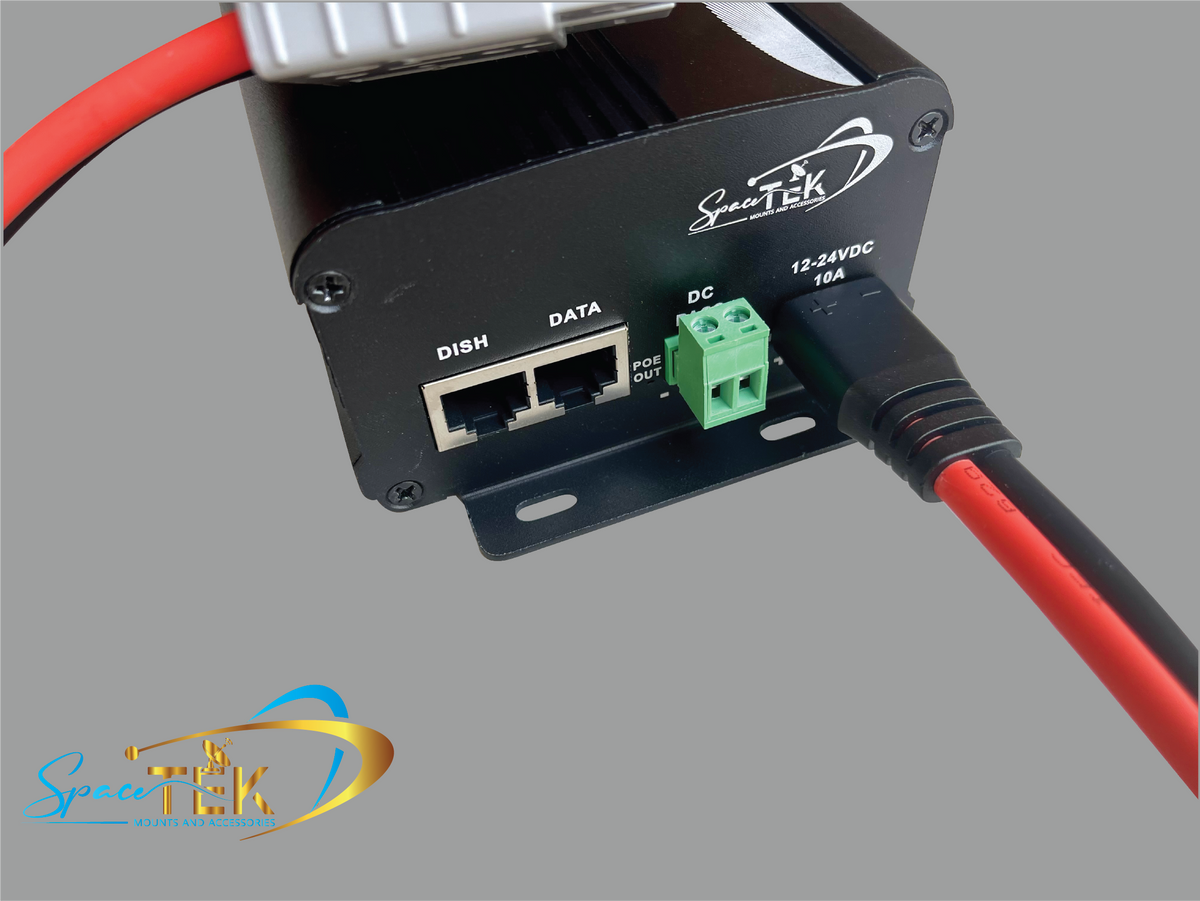
SpaceTek's StarPower V3 powers the original Standard Gen 3 / V4 router from a compatible 12V or 24V system. The router stays in the installation and supplies the dish. V3 is therefore not a way to remove that router.

The V3 listing says the unit is not moisture-resistant and needs an indoor or protected location. Its installation requirements must not be replaced with specifications copied from Starlink's own DC-DC accessory.
SpaceTek also lists router-replacement products in its StarPower range. For those, obtain confirmation of the exact terminal, power input, cables and replacement router. Product generations and similar names are not enough to establish compatibility.
Will direct DC power improve battery runtime?
Removing an inverter from the Starlink power path avoids using that conversion stage for this load. The actual saving depends on the inverter, power supply, router, operating conditions and what else remains connected. Do not assume a fixed percentage improvement or a guaranteed number of extra hours.
For a useful comparison, record the complete system's energy use over a representative period. Include the router and any equipment that still has to run. Compare similar conditions before deciding whether changing the supply is worthwhile.
A supply's output rating is not the same as daily energy consumption. Battery planning should account for usable capacity, other loads and the installation's limits. Ask the installer to assess the complete setup rather than choosing components from an article's generic wattage claim.
Plan the electrical installation before ordering
Give the supplier or qualified installer the following information:
- The exact terminal and router models.
- The battery system and the equipment already connected to it.
- Whether you want to retain the original router.
- The proposed equipment location and cable route.
- Any existing adapters or modified cables.
Have wiring, connections and circuit protection selected for the actual equipment and installation. There is no single wire size, fuse value or accessory-socket rule that this guide can safely apply to every vehicle or off-grid system.
Follow the relevant isolation and connection instructions. Do not cut a dish cable, improvise an injector pinout or connect a battery directly to the terminal because two plugs look compatible.
Keep the power supply within its documented environmental and temperature limits. Weather resistance of the outdoor terminal does not establish that an indoor converter can be exposed to rain or condensation.
Frequently asked questions
Does DC power require router bypass?
No. Power and networking arrangements depend on the selected hardware. StarPower V3 retains the original router. A router-replacement system is a different configuration that needs its own compatibility checks.
Can I use the same supply with Standard Actuated, Standard and Mini?
Do not assume so. Identify the exact equipment and use a documented configuration. Similar generation labels do not establish matching connectors, voltages or networking requirements.
Will a DC converter prevent every dropout?
No. A power supply cannot eliminate sky obstructions, service outages or local Wi-Fi problems. If faults begin after a power change, have that installation checked rather than assuming the dish or service is responsible.
Can a regulated supply keep Starlink running as the battery empties?
Only within the documented operating conditions. Regulation is not a promise of unlimited runtime or operation below the supply's input limits. Battery and power-system protection still matter.
Should I change heating or other app settings to reduce consumption?
Use the guidance for your kit and conditions. Do not disable a feature solely because a generic DC-power guide suggests it; include relevant operating modes when assessing energy use.
Choose a documented setup, then measure the result
Confirm the kit, supply, router arrangement and installation requirements before making changes. Keep a record of the selected components and instructions so future troubleshooting is based on the equipment actually fitted.
For SpaceTek product advice, contact the team with your terminal, router and power-system details. After installation, measure the complete system under realistic conditions rather than relying on a universal runtime or efficiency promise.

Leave a comment
This site is protected by hCaptcha and the hCaptcha Privacy Policy and Terms of Service apply.