
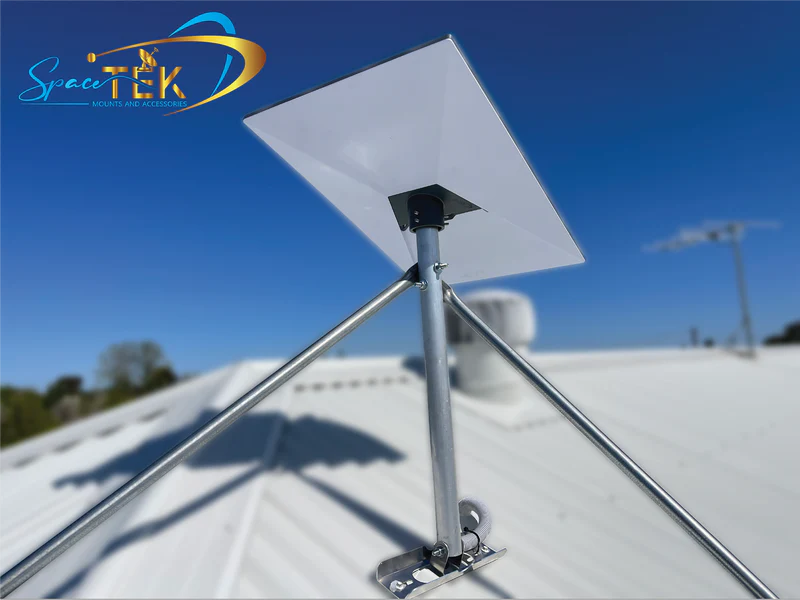
Why Choosing Between Starlink High Performance Kits Matters

Starlink performance is a critical decision for anyone requiring mission-critical connectivity in demanding environments. Here's what you need to know:
Key Differences at a Glance:
- Peak Speeds: Gen 3 delivers up to 475 Mbps down / 75 Mbps up, compared to Gen 2's 450 Mbps / 60 Mbps
- Environmental Rating: Gen 3 features IP69K (pressure-washable) vs Gen 2's IP56
- Temperature Range: Gen 3 operates from -40°C to 60°C, while Gen 2 handles -30°C to 50°C
- Power Efficiency: Gen 3 draws 70W average vs Gen 2's 110W
- Power Options: Gen 3 supports both AC and DC input; Gen 2 is AC only
- Field of View: Both offer 140° FOV for superior satellite acquisition
- Cable System: Gen 3 uses field-terminable RJ45 connectors; Gen 2 uses proprietary connectors
- Warranty: Gen 3 includes 3 years; Gen 2 offers 2 years
SpaceX's latest High Performance hardware represents a substantial leap forward for commercial, marine, and remote operations. The Gen 3 kit delivers faster throughput, superior weather hardening, and flexible power options that make it ideal for Australian conditions, from coastal spray to outback heat.
For users running critical applications on boats, RVs, remote work sites, or emergency response vehicles, understanding these differences is essential. The Gen 3's improved durability and efficiency can mean the difference between reliable connectivity and frustrating dropouts in harsh environments.
I'm Aaron Wroblewski, founder of SpaceTek Australia, and with over 25 years of experience in remote communications and satellite systems, I've seen how the Gen 2 vs Gen 3 comparison impacts real-world deployments across Australia's most challenging locations. Throughout this guide, I'll break down exactly what these upgrades mean for your specific use case and whether the Gen 3 justifies its investment.
If you are planning a new installation or upgrade, it is worth pairing your chosen kit with the right mounting hardware. SpaceTek's Starlink mounting kits are engineered for Australian conditions and are fully compatible with the Starlink system, helping you get the most from either Gen 2 or Gen 3.
Starlink High Performance Gen 2 vs Gen 3: A Deep Dive Comparison
When we dig into the core of the debate, we find that the improvements go beyond mere incremental updates. The Gen 3 High Performance kit has been engineered to tackle even tougher challenges, making it a strong choice for Australia's diverse and often extreme environments.
Raw Performance: Speed, Throughput, and a Wider View
When it comes to raw speed and data throughput, the Gen 3 High Performance dish builds upon its predecessor's strong foundation. The Gen 3 offers a noticeable bump in peak performance, delivering up to 475 Mbps download and 75 Mbps upload speeds. This is a 10–20% increase in download speeds and a 25% increase in upload speeds compared to the Gen 2's peak of 450 Mbps down and 60 Mbps up. For high-demand users, this extra bandwidth can be crucial for smooth operations, whether it is for live streaming, large data transfers, or supporting multiple users simultaneously.
Both generations of the High Performance dish provide a 140° field of view (FOV). This wide FOV is vital for maintaining consistent connectivity, especially in areas with potential obstructions like trees or buildings, or when operating in motion. It allows the dish to see more satellites at any given time, optimising signal reception and helping to keep the link stable. This capability is particularly useful in Australia's varied landscapes, from dense bushland to remote coastal areas. Latency remains low across both generations, a hallmark of Starlink's Low Earth Orbit (LEO) technology, while the Gen 3's improved throughput translates to a more responsive and stable internet experience overall.
To understand more about the underlying technology, you can explore our guide on What is Starlink Internet.
Extreme Durability: Built for the Harshest Environments
One of the most significant advancements lies in environmental durability. The Gen 3 High Performance kit is explicitly designed to withstand punishing conditions, making it an ideal choice for the rugged Australian climate.
The Gen 3 dish has an IP69K ingress protection rating when cabled, which means it is dust-tight, waterproof, and can withstand high-pressure, high-temperature washdowns. This is a substantial upgrade from the Gen 2's IP56 rating and offers strong protection against dust, driving rain, and saltwater spray, which is critical for marine and coastal operations. When uncabled, the Gen 3 still maintains an IP68 rating.
Operating temperature range has also been extended for the Gen 3, now capable of functioning from -40°C to 60°C. This broader range supports consistent performance whether you are in the scorching Australian outback or unexpectedly chilly southern regions, compared to the Gen 2's -30°C to 50°C. The Gen 3 also includes better thermoregulation, so performance remains more consistent in heat-intensive regions.
Snow melt capability has improved, with the Gen 3 handling up to 85 mm per hour, surpassing the Gen 2's 75 mm per hour. Heavy snowfall may not be a major concern for most of Australia, but this capability highlights the dish's robust design for extreme weather. Both generations are built to survive high wind speeds, with the Gen 3 rated for over 174 mph (around 280 km/h), which helps in cyclonic conditions. The improved corrosion resistance for saltwater environments further reinforces the Gen 3's suitability for marine use.
If you are installing in exposed or coastal locations, pairing your hardware with a corrosion-resistant mount is just as important as the dish you choose. SpaceTek's roof mounts and poles for Starlink are built from high-quality materials to handle wind, salt, and heat.
Power and Cabling: A Major Overhaul for starlink high performance gen 2 vs gen 3
The power and cabling architecture represents another significant overhaul in the Starlink evolution. The Gen 3 High Performance kit introduces a more efficient and flexible power system, along with an improved cabling solution.
The Gen 3 dish is notably more power-efficient, with an average power draw of approximately 70W, a reduction from the Gen 2's 110W average. This lower power consumption is a big advantage for remote deployments, marine vessels, and RVs where power sources might be limited or battery life is critical.
A key improvement is the Gen 3's Advanced Power Supply, which supports both 100–240VAC and 12–56VDC input. This dual-input capability offers flexibility for integration into various power systems, particularly for mobile and off-grid setups in Australia. The Gen 2, in contrast, is primarily an AC-only system. The Advanced Power Supply is also rack-mountable, which simplifies installation in commercial and enterprise environments.
The cabling system has seen a major upgrade. The Gen 3 cable now uses industry-standard RJ45 connectors, making it more versatile and straightforward to work with. These cables are field-terminable, which is a major win for professional installers. You can cut the cable to the exact length required and terminate it on-site, allowing for cleaner and more efficient cable runs through conduits or tight spaces. The Gen 2 cable uses proprietary connectors, which often meant purchasing specific lengths and dealing with less flexible installation options. The Gen 3 cable also supports PoE+ (Power over Ethernet Plus) for improved device integration.
If you are routing cables through a vehicle, rooftop, or mast, using purpose-built hardware helps protect both the cable and your roof penetration. SpaceTek's Starlink accessory range includes grommets and brackets that work neatly with Gen 3's RJ45-based cabling.
Installation and Compatibility: What Upgraders Need to Know
Understanding the installation and compatibility aspects is crucial when considering the upgrade. While both systems aim for user-friendly setup, the Gen 3 introduces refinements and changes that impact existing installs.
The Gen 3 kit simplifies installation with features like colour-coded connectors, an improved baseplate, and quick-snap mounts. However, a key point of difference is the unique Starlink Cable Gen 3. Because it uses standard RJ45 connectors, retrofitting existing Gen 2 installations will usually require cable replacement or the use of adapters. While adapters can bridge the gap, a full cable replacement is often recommended for best performance and reliability.
Mounting systems have also evolved. The Gen 3 dish uses a different mounting interface compared to previous generations, which means existing Gen 2 mounts may not be directly compatible. SpaceTek Australia offers a range of custom compatible Starlink mounts and adapters designed for Australian conditions, so you can transition from Gen 2 to Gen 3 without compromising on stability or weather resistance.
When it comes to longevity and reliability, the Gen 3 comes with a 3-year warranty, an improvement over the Gen 2's 2-year warranty.
If you are planning a vehicle, caravan, or marine upgrade, it is worth reviewing our guide on Upgrading to Starlink Gen 3: What It Means for Mount Compatibility alongside our Starlink vehicle and RV mounts. This combination helps you match the right mount to your chosen Starlink kit so the dish stays secure on the move.
The Verdict: Is the Gen 3 High Performance Kit a Necessary Upgrade?
Key Use Cases: Who Benefits Most from Gen 3?
The Gen 3 High Performance kit is not just an upgrade; it is a strategic investment for specific user groups where reliability and robust performance are non-negotiable.
Marine use is where the Gen 3 really stands out. Its IP69K rating, corrosion resistance for saltwater environments, and wider operating temperature range make it well-suited for boats, yachts, and offshore operations. The increased link stability during motion and in adverse weather means mariners can rely on more consistent connectivity, even in challenging seas.
For RV and overland vehicles, the Gen 3's lower power consumption, at around 70W average, is a game-changer for battery systems. The robust build and improved weather hardening support reliable internet whether you are parked in the dusty outback or dealing with a torrential downpour. Flexible AC and DC power options also simplify integration into existing vehicle power systems. Our In-Depth Guide to Gen 3 V4 In-Motion Mounts and Accessories dives deeper into mobile setups.
Commercial sites and remote operations in mining, construction, agriculture, and emergency services will also benefit. Gen 3's ability to maintain high throughput in extreme temperatures, combined with its rugged construction, supports mission-critical connectivity for data transfer, remote monitoring, and communication. Field-terminable RJ45 cables make professional installations faster and cleaner on these demanding sites.
Any high-demand user or business that needs sustained high speeds and maximum uptime, regardless of location or environmental conditions, can gain from the Gen 3's performance and durability.
If you are deploying in these tougher environments, pairing Gen 3 with a purpose-built mount will help you fully realise the benefits. SpaceTek's heavy-duty Starlink mounts are designed for exactly these kinds of installations.
Final Recommendation for starlink high performance gen 2 vs gen 3
After a thorough comparison of Gen 2 vs Gen 3, the recommendation is straightforward. For new installations, or for existing Gen 2 users operating in demanding environments, the Gen 3 High Performance kit is usually worth the upgrade.
Gen 3 offers higher throughput, significantly improved environmental durability, greater power efficiency, and a more versatile cabling system. Its hardened components are designed to deliver reliable internet in Australia's harshest conditions, from tropical cyclones to arid deserts and open waters. The longer 3-year warranty adds extra peace of mind.
If you are an existing Gen 2 user in milder conditions and your current setup is stable, there may be no urgent need to upgrade immediately. However, if you are seeing frequent dropouts, running close to the performance limits, or planning a move into harsher locations or marine use, Gen 3 is a strong, future-ready choice.
At SpaceTek Australia, we know that even the best Starlink kit can underperform if it is not mounted correctly. A stable, rust-resistant mount is essential to keep your dish locked on signal, especially in wind, salt, and heat. Our Starlink mounting collections include roof, vehicle, and marine options built from high-quality materials like aluminium and stainless steel, all designed for easy integration with the Starlink hardware.
For expert advice on the best mounting solution for your Gen 3 High Performance kit, or to discuss how to optimise your Starlink setup, please get in touch. The SpaceTek team can help you choose secure, rust-resistant, and user-friendly mounts so your Starlink installation performs at its best anywhere in Australia.

Leave a comment
This site is protected by hCaptcha and the hCaptcha Privacy Policy and Terms of Service apply.