
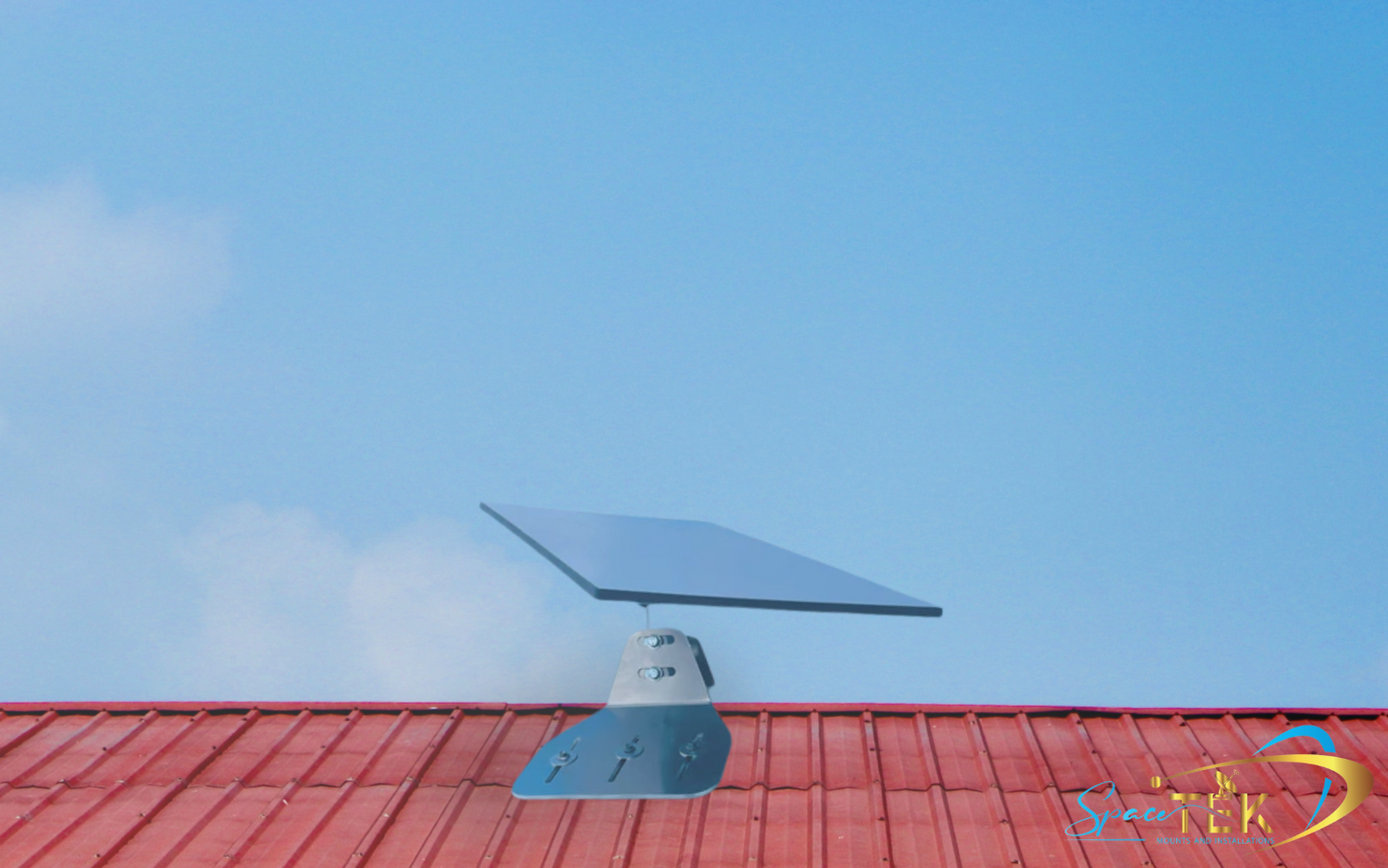
How Rain Actually Affects Satellite Broadband in Australia

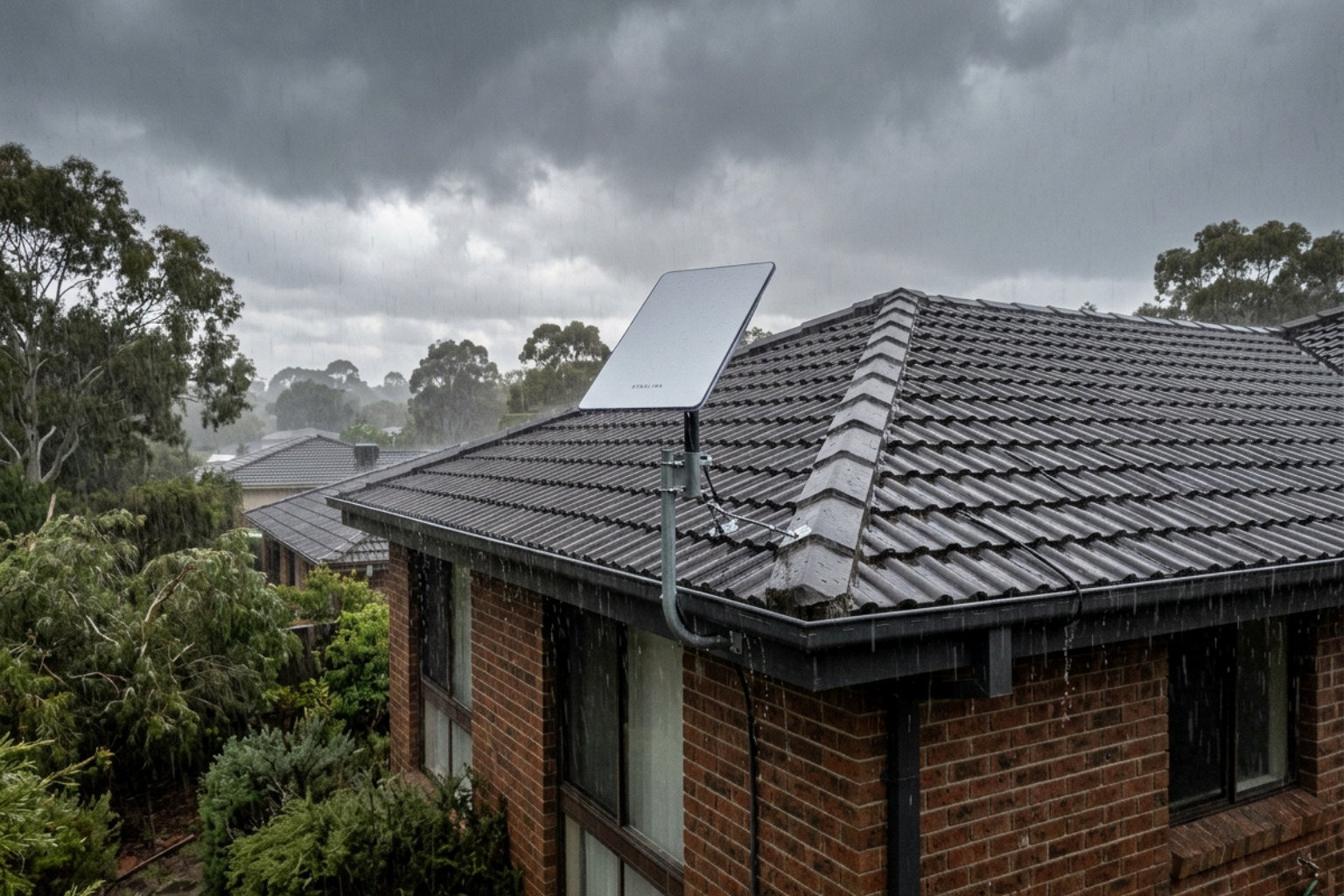
Satellite internet Australia performance during storms is a common concern — and a fair one, especially if you're in a regional or remote area where satellite connectivity is your only reliable option.
Here's the short answer:
- Light to moderate rain causes little to no noticeable impact on your connection.
- Heavy downpours can temporarily reduce download speeds by around 38% and uplink speeds by up to 52%.
- Total outages from rain are rare and typically last only seconds to a few minutes before the system self-recovers.
- Cloud cover alone — even up to 87.5% — causes only about a 20% speed reduction.
- Modern LEO systems are significantly more resilient than older geostationary satellite services, thanks to shorter signal paths and built-in antenna redundancy.
So yes, weather does affect performance — but for most Australian users, it's a temporary inconvenience rather than a dealbreaker.
The reason comes down to physics. Satellite signals travel as high-frequency microwave radio waves. When those waves pass through heavy rain, water droplets absorb and scatter the signal before it reaches your dish. This is called rain fade, and it's been a known challenge for satellite technology since it first emerged.
What's changed is the technology. Traditional geostationary satellites sit roughly 35,786 km above Earth. Every signal has to travel that distance — twice — just to load a webpage. That enormous atmospheric path makes signal degradation a serious problem. Low-Earth orbit (LEO) satellites, by contrast, orbit at around 550 km. The signal travels 98% less distance through the atmosphere, meaning moisture has far less opportunity to degrade it.
For Australians — whether you're in the tropical north dealing with monsoon season, the outback bracing for dust and heat, or a coastal property exposed to salt spray and storms — understanding how your connection behaves in wet weather is genuinely useful. And knowing how your dish is mounted could make the difference between a brief slowdown and a frustrating outage.
Why Mounting Choice Matters: Optimising Resilience in Australian Weather
When we talk about satellite internet, we often focus on the satellites in the sky, but the hardware on your roof is just as critical. In Australia’s harsh environment, a "she'll be right" approach to installation can lead to signal attenuation that has nothing to do with the clouds.
The phased-array antenna inside a modern dish is a marvel of engineering. It uses beamforming technology to electronically steer a signal toward moving satellites without needing to physically move the dish constantly. However, for this to work during a storm, the dish must be perfectly stable. Even a few millimetres of "wobble" in high winds can cause the narrow microwave beams to miss their mark.
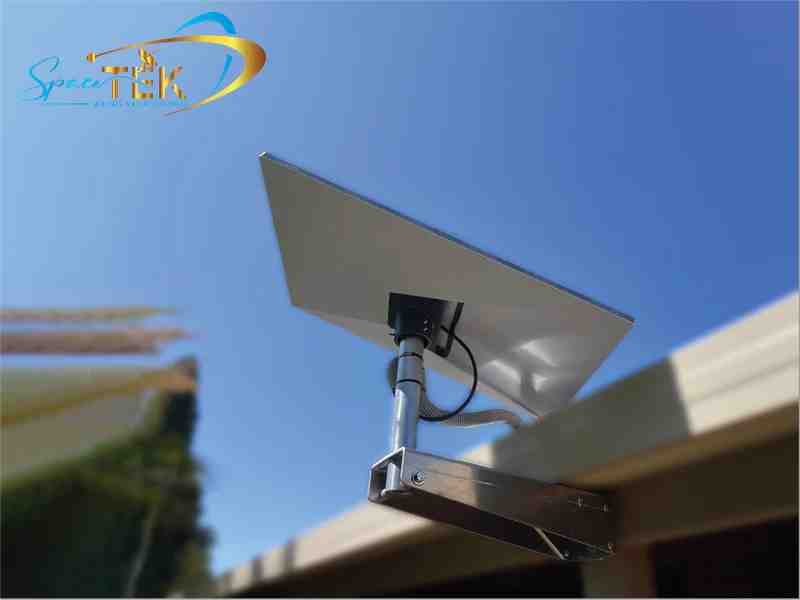
We’ve seen many DIY installs using flimsy brackets that vibrate during a typical afternoon squall. This vibration, combined with moisture in the air, creates a "double whammy" for your connection. By using a SpaceTek precision-machined aluminium mounting plate, you ensure that the dish stays exactly where it needs to be. Our mounts are designed to handle the high-frequency Ku-band and Ka-band signals, ensuring that physical movement doesn't add to the natural challenges of the atmosphere.

To understand how weather interacts with these frequencies, you can read more about how weather affects your satellite internet.
Rain Fade Explained
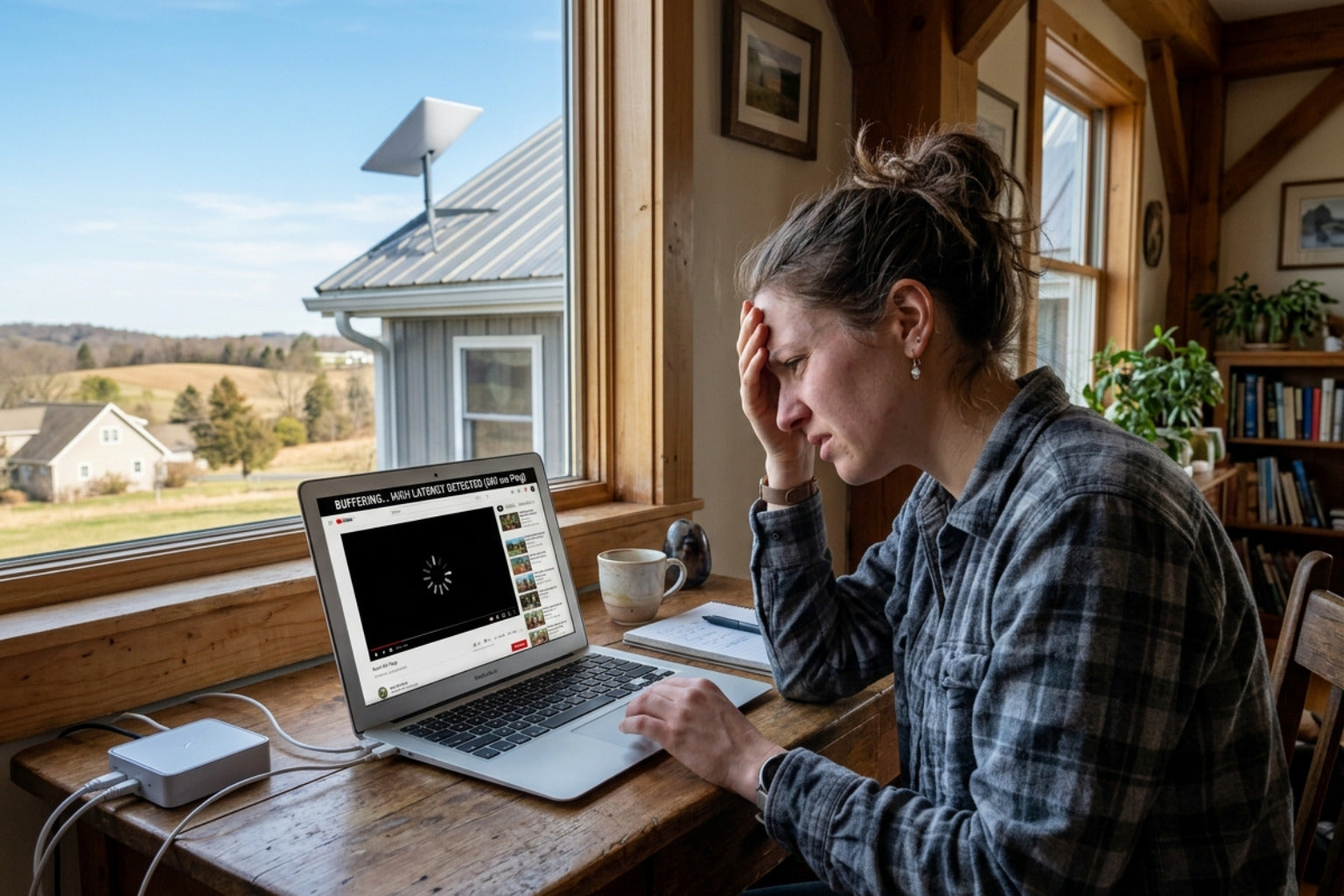
Rain fade is the primary culprit when your Netflix stream starts buffering during a storm. It occurs because the radio frequencies used for satellite internet Australia are at a similar wavelength to water droplets. When it pours, those droplets act like tiny mirrors and sponges, scattering and absorbing the microwave energy.
In technical terms, the moisture in the air increases the "path loss" of the signal. While light rain is easily penetrated, a tropical deluge in Queensland or a heavy cold front in Victoria can create a wall of water that the signal struggles to punch through. Interestingly, the uplink (sending data from your house to space) usually takes a bigger hit than the downlink. This is why you might find your video call freezes on your end while you can still see the other person clearly.
For a deeper dive into the mechanics of wet weather performance, check out our guide on whether Starlink works on rainy days.
Wind and Heat Impact on Hardware in Australia
While rain is the most visible disruptor, Australian weather throws other curveballs at satellite hardware. High winds are a major factor; dishes are generally rated to withstand winds up to 120 km/h. If your mount isn't up to the task, those winds won't just cause signal drops—they could rip the hardware right off your roof.
Then there is the heat. In the Australian outback, temperatures can soar toward the 50°C thermal shutdown limit of the hardware. Satellite dishes are rugged, but constant UV exposure and extreme heat can stress the internal electronics. We focus on using lightweight, rust-resistant aluminium because it handles thermal expansion better than steel and won't degrade under the intense Australian sun. Furthermore, coastal residents have to contend with salt spray. Standard steel mounts will rust through in a matter of seasons. Our precision-formed aluminium components are naturally corrosion-resistant, ensuring your connection remains secure even if you live right on the Great Ocean Road.
You can learn more about reliability during bad weather or bushfire season to see how these factors play out in real-world emergencies.
Installation Tips by Hardware Generation
The hardware has evolved, and so should your installation strategy. Whether you have the Gen 2 "Actuated" dish or the latest Gen 3 "Standard" model, placement is everything.
- Gen 2 (Square/Actuated): This model uses a motor to tilt itself. It’s vital to ensure the mount allows for the full range of motion. If the dish hits a gutter or a chimney while trying to realign during a storm, it can trigger a motor stuck error.
- Gen 3 (Standard): This latest version is fixed-position and has a wider field of view. Because it doesn't move, it relies even more on a rock-solid base. It’s also more power-hungry, meaning your cabling needs to be secure and well-protected from moisture.
Always use the Starlink app's obstruction tool before drilling any holes. Even a single leafy branch can become a major signal blocker once it gets heavy with rainwater. Ensure all cable seals are seated correctly; water ingress into the ethernet port is one of the most common causes of permanent hardware failure.
For those experiencing issues, we have a detailed resource on troubleshooting dropouts in stormy weather.
Benefits & Use Cases of Robust Starlink Installations
A high-quality installation isn't just about avoiding outages; it's about unlocking the full potential of your satellite internet Australia. When you invest in a professional-grade mount and a clear line of sight, you gain several key advantages:
- Reliable Connectivity for Regional Homes: In areas where the NBN fixed wireless or copper lines are non-existent, a well-mounted Starlink dish provides a "set and forget" solution that rivals city speeds.
- Critical Communications in Emergencies: During floods or bushfires, terrestrial towers often fail. A satellite dish with a secure mount and a backup power source can be a literal lifesaver, providing weather updates and emergency contact when other networks are dark.
- Professional Performance: If you work from home or enjoy competitive gaming, you need low latency. A stable mount prevents the "micro-outages" caused by wind vibration, keeping your ping steady even when the wind is howling outside.
Selecting the Right Starlink Accessories for Australian Conditions
Not all accessories are created equal. When shopping for Australian weather and satellite internet solutions, you need to look past the price tag and focus on materials.
In Australia, we deal with extreme UV levels that turn cheap plastics brittle in months. We also deal with high humidity and salt air. That is why we advocate for aluminium. It is lightweight, which makes it easier to handle on a ladder, yet incredibly strong.
When choosing a mount, consider your specific local climate. If you are in a cyclone-prone region in the North, you need a low-profile mount that reduces wind load. If you are in the snowy peaks of the Snowy Mountains, you need a mount that keeps the dish clear of snowdrifts so the built-in heater can do its job effectively.
Our kits are designed to be fully compatible with Starlink self-installer kits. This means you get the best of both worlds: the ease of the Starlink ecosystem with the rugged durability of Australian-made hardware.
Top 5 Must-Have SpaceTek Accessories
We take pride in engineering products that actually last in the Australian bush. We don't use 3D printing for our structural components; instead, we rely on precision-machined or formed aluminium.
- SpaceTek Custom Aluminium Base Mounts: Locally made and rust-resistant, these provide a much broader footprint than standard frames, making them perfect for permanent roof installations.
- SpaceTek Gen 3 (V4) Pole Adapter: Precision-machined from high-grade aluminium, this adapter ensures a rock-solid connection for the latest hardware, eliminating vibrations that cause signal loss.
- SpaceTek Mesh Wi-Fi Mounting Solutions: Designed to help your signal penetrate thick Australian brick walls, ensuring your fast satellite speeds reach every corner of your home.
- SpaceTek DC-to-DC Power Supplies: Robust power solutions for those running off-grid or in caravans, ensuring stable voltage during stormy weather and power fluctuations.
- SpaceTek Heavy Duty Pivot Mounts: Engineered to hold the dish at the optimal angle for the Australian sky, these mounts handle extreme heat and high winds without breaking a sweat.
SpaceTek Expertise & Solutions for Uninterrupted Connectivity
At SpaceTek Australia, we aren't just selling hardware; we are providing the foundation for reliable internet in the places that need it most. We understand the frustration of a dropped Zoom call during a rainstorm or a dish that won't stay aligned in a gale.
Our products are born from a deep understanding of the diverse Australian climate. From the humid tropics to the freezing alpine regions, our mounts have been tested to ensure they outperform and outlast generic alternatives. We believe that if you're going to do a job, you should do it once and do it right.
By choosing Australian-made quality, you are supporting local engineering and ensuring that your connection to the world remains unbroken, no matter what the Bureau of Meteorology predicts for the weekend.
Frequently Asked Questions
Does heavy rain cause total signal loss for Starlink in Australia?
While heavy rain can cause temporary slowdowns, total signal loss is quite rare. During an intense downpour, you might see a 38% reduction in download speeds and a 52% drop in uplink speeds. However, because the system has thousands of satellites in orbit, it can usually switch to a satellite in a clearer part of the sky. Most outages last only a few seconds as the dish re-acquires a strong signal.
How can SpaceTek mounts mitigate rain fade and weather effects?
A SpaceTek Australia mount helps by providing the most stable platform possible. By using a custom aluminium base that is precision-machined, not 3D printed, we eliminate the physical vibrations that can worsen signal loss during a storm. A secure, rust-resistant mount ensures the dish stays at its optimal tilt, providing the best possible link budget to fight through the moisture in the air.
Maintaining a Starlink connection in regional Australia during storms
To keep your connection in regional Australia running during a storm, we recommend using a UPS (Uninterruptible Power Supply). This protects your sensitive router from power surges and brownouts common during lightning storms. For ongoing maintenance, check the dish quarterly for debris, ensure the mount is tight after storms, and rinse salt buildup in coastal areas with fresh water once a month.
For more information, browse our full range of custom Starlink mounts and accessories.
Conclusion
Living in regional Australia shouldn't mean being disconnected every time the clouds roll in. While rain fade is a reality of the technology, modern LEO systems have made massive strides in weather resilience.
The key to a truly reliable connection lies in the quality of your setup. By using SpaceTek Australian-made, rust-resistant aluminium mounts, you protect your investment from the wind, heat, and salt that define our landscape. Don't settle for "good enough" when it comes to your bridge to the digital world.
If you're ready to upgrade your setup or need help choosing the right mount for your home or RV, contact us today for expert advice. Let’s make sure your internet is as tough as the country it serves.

Leave a comment
This site is protected by hCaptcha and the hCaptcha Privacy Policy and Terms of Service apply.