
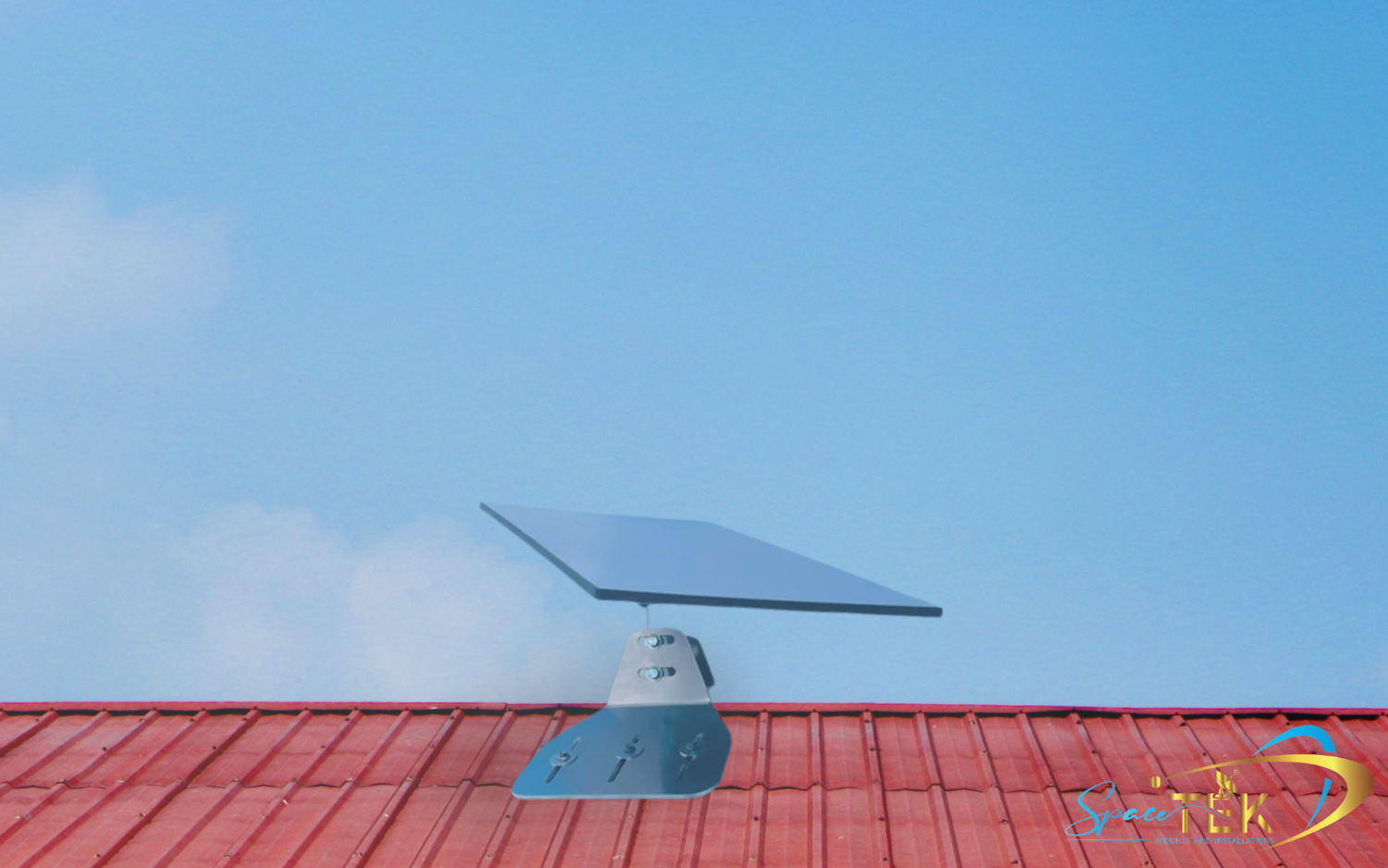
The Right Mounts for Starlink Keep You Connected — At Home, at Work, and on the Move

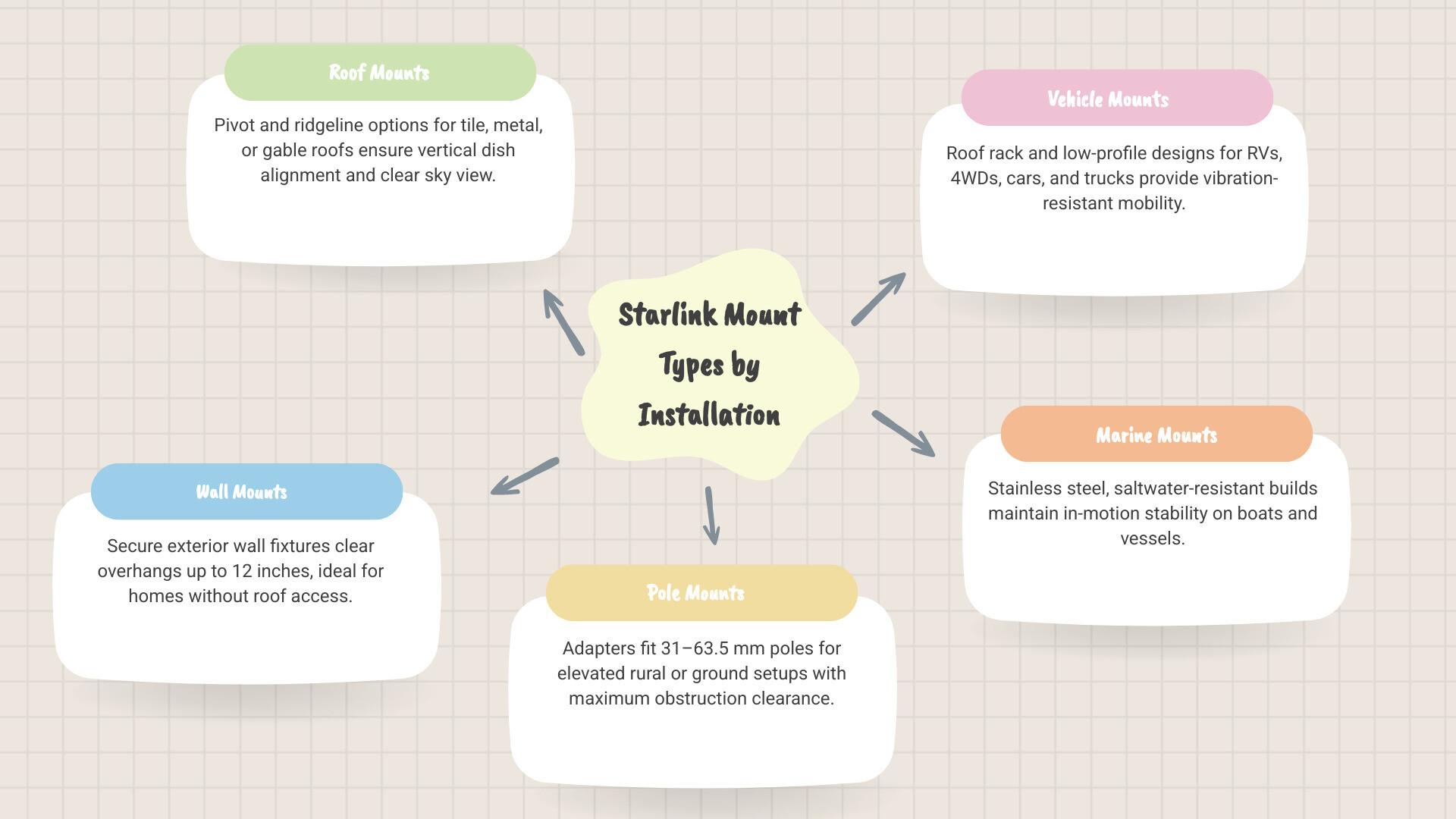
Mounts for Starlink are available in a wide range of options to suit every installation scenario — from suburban rooftops to remote outback properties and moving vehicles.
Here's a quick overview of the main mount types:
- Wall Mounts – Fixed to exterior walls, clearing overhangs up to 12 inches
- Pivot Mounts – Ideal for slanted or tiled roofs, keeps the dish vertical
- Ridgeline Mounts – No-drill option using ballast weights, suits gable roofs under 45°
- Pipe/Pole Adapters – Attaches to existing metal poles 31–63.5 mm in diameter
- Roof Rack Mounts – Removable vehicle mounts for RVs, 4WDs, and trucks
- Flat/Wedge Vehicle Mounts – Low-profile, aerodynamic options for cars, boats, and caravans
- Non-Penetrating Mounts – No drilling required, suited to renters or temporary setups
- Marine Mounts – Saltwater-resistant, stainless steel builds for boats and vessels
Choosing the wrong mount is one of the most common reasons Starlink users experience poor signal or dish damage. A dish that's blocked by a roofline, rattling loose on a moving vehicle, or corroding in coastal air simply won't perform.
SpaceTek Australia specialises in Starlink mounting solutions built specifically for Australian conditions — intense UV, coastal salt, outback heat, and high winds included.
Whether you're mounting on a tiled roof in the suburbs, a pole on a rural property, or the roof rack of a 4WD heading into the bush, the right mount makes all the difference.
A solid mount keeps you connected — whether it's at home, at work, or on the move.
Residential and Commercial Mounting Solutions
When we look at permanent installations for homes and businesses, the primary goal is achieving a clear line of sight to the satellite constellation. Any obstruction—be it a stray branch or a tall chimney—can cause millisecond dropouts that ruin video calls and gaming.
For residential and commercial setups, we must account for the specific architecture of the building. This includes the roof type (tin vs. tile), the wind resistance required for the local area, and the necessary overhang clearance to ensure the dish isn't blocked by the guttering. In Australia, our mounts must be particularly robust; for instance, a standard ridgeline mount is typically rated for winds up to 80 kph, but in many coastal or cyclone-prone regions, we often need even more secure, through-bolt solutions to meet rigorous wind loads and structural safety standards.

House mounts for Starlink & Accessories
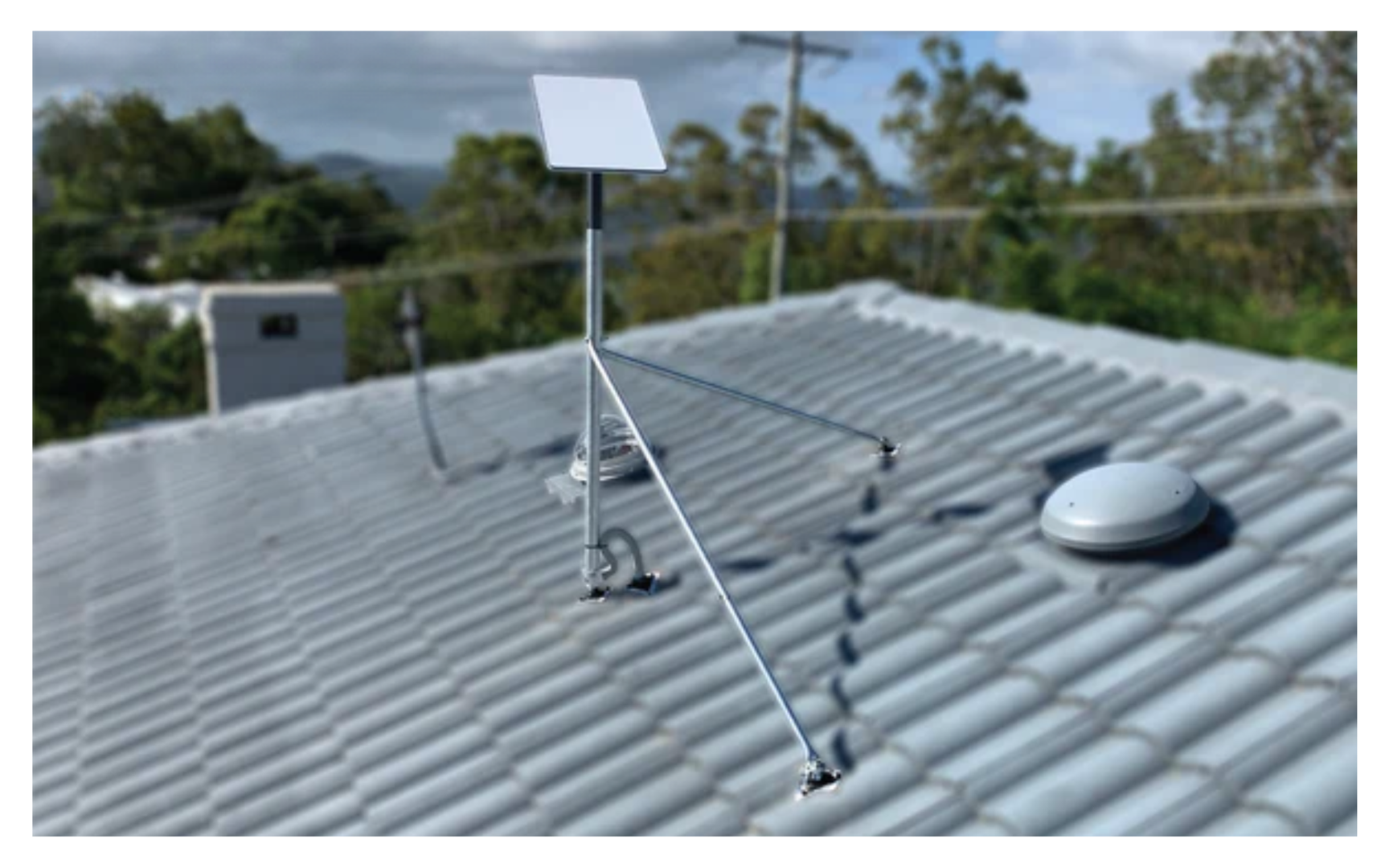
For the average Australian home, the roof is the most logical place for a dish. However, not all roofs are created equal. If you have a classic tiled roof, you need a solution that won't crack the tiles or cause leaks. We recommend checking out our House Starlink Mounts & Accessories to find kits designed specifically for these surfaces.
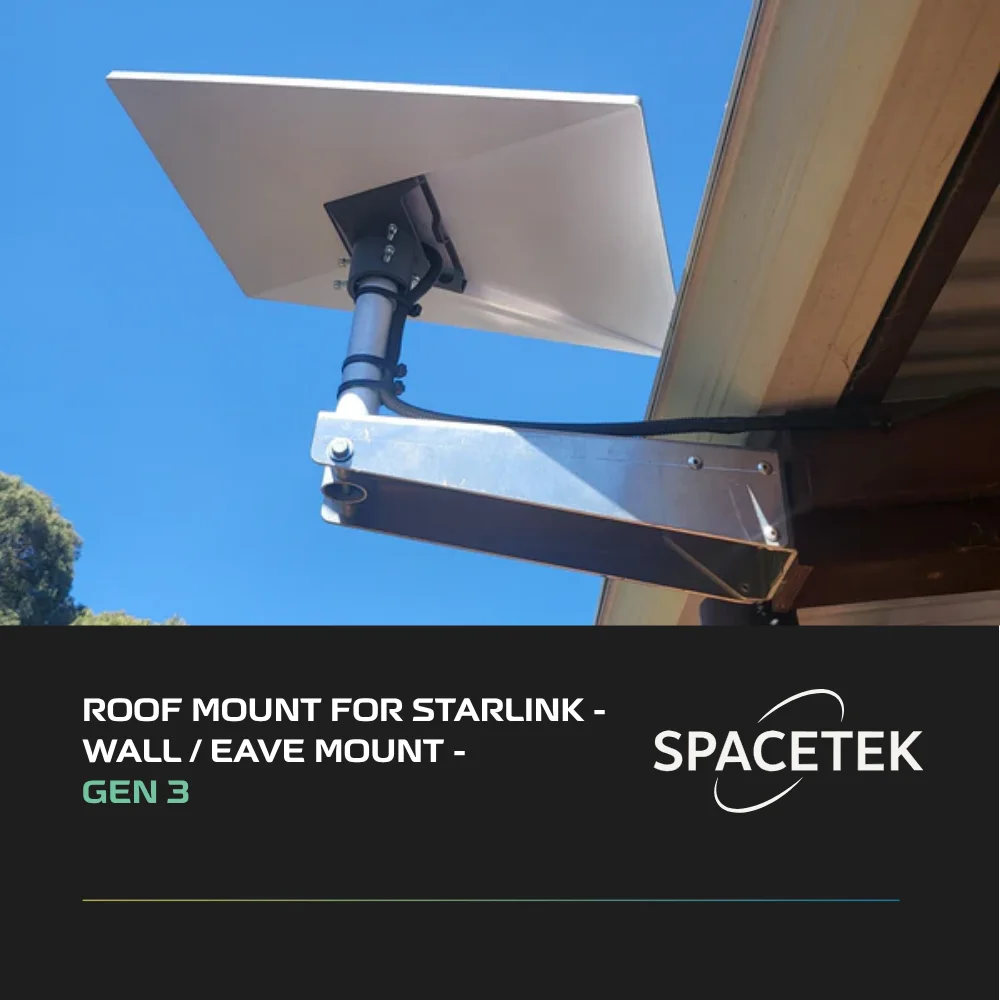
For a sloped roof, a pivot mount helps keep the mast upright while matching the roof angle. If your home has deep eaves, a long wall mount can push the dish out far enough to improve clearance, while a short wall mount suits tighter installs with less overhang. For a closer look at the options, see SpaceTek's complete guide to Starlink roof mounts and their advice on choosing the right Starlink mount for your roof type in Australia.
Rural Properties Starlink Mounts & Accessories
Out on the land, obstructions like tall gum trees or rolling hills are the biggest enemies of a stable signal. Often, the house roof isn't high enough. This is where elevated setups and ground poles come into play. A ground pole mount can provide up to 50 inches of ground clearance, but for many rural users, we provide adapters to fit even taller existing masts.
For rural properties, the right Starlink mount usually comes down to height, clearance, and stability. Elevated pole and ground-mounted setups can help the dish see past treelines, sheds, and uneven terrain. If you want a practical starting point, explore Starlink mounts and accessories for rural properties and follow this guide on installing a Starlink pole mount in 5 simple steps. In open country, a rigid mount matters because any movement can reduce signal consistency.
Townhouse Starlink Mounts & Accessories
Living in a townhouse or a high-density area presents a different set of challenges: limited space and strict body corporate rules. You can't always go drilling holes wherever you like. In these cases, we look toward compact mounts and eave brackets that utilise existing structures.
For compact homes and shared buildings, browse our Townhouse Starlink mounts and accessories for space-saving and non-penetrating options. These setups can use ballast to hold the dish firmly in place without drilling into the roof surface. If you are comparing urban-friendly install styles, our guide on choosing between wall, eave, or pole Starlink mounts explains which option suits narrow lots and limited roof access.
Commercial mounts for Starlink & Accessories
For businesses, warehouses, and industrial sites, the requirements move from "reliable" to "mission-critical." Whether it's a remote mining camp or a large-scale agricultural operation, the hardware needs to be incredibly durable. We provide Commercial Starlink Mounts & Accessories that are precision-engineered from high-grade aluminium and stainless steel to prevent rust in harsh environments.
In demanding commercial environments, custom mounting plates are often the smartest option, especially when a Starlink setup needs to be welded or bolted onto heavy equipment, steel frames, or site structures. For remote operations, this guide to mounting Starlink in mining and agricultural sites explains how to improve stability, clearance, and reliable connectivity where fixed infrastructure is limited.
Mobile Connectivity and Selection Guide
The release of the Starlink Gen 3 (V4) and the ultra-portable Starlink Mini has changed the game for travellers. No longer tethered to a fixed address, we can now take high-speed internet into the deepest parts of the bush or out onto the water. However, moving vehicles introduce two major variables: vibration and wind load.
A mount that works on a stationary house will fail on a 4WD corrugating down a dirt track. Our mobile mounts for Starlink are designed with vibration resistance and weatherproofing at their core. For the Starlink Mini, we offer low-profile mounts that can be used for in-motion connectivity, provided you have the right power setup. This technology relies on advanced satellite communication in motion to maintain a stable link while travelling.
RV & Caravan Starlink Mounts & Accessories
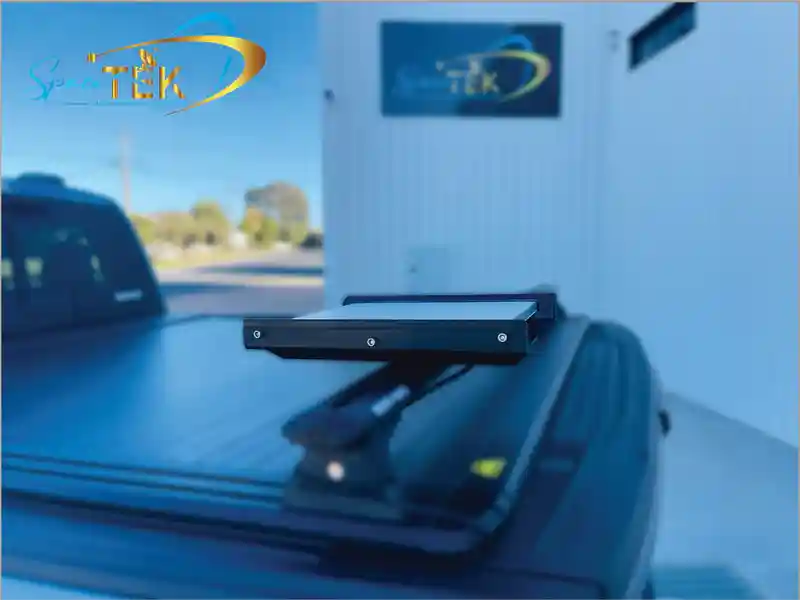
For the grey nomads and weekend warriors, we offer a variety of RV & Caravan Starlink Mounts & Accessories. If you prefer to keep your dish removable, a quick-release roof rack mount is the way to go. This allows you to set up the dish on a tripod when you're parked under trees, or lock it to the roof when you have a clear view.
If you want a more permanent, travel-ready setup, a mobility mount gives the Standard dish a secure, weather-ready base with less fuss once installed. SpaceTek also offers options built for tougher mobile use, including mounts and accessories for trucks and durable 4WD Starlink mounting solutions. For a closer look at portable and touring-friendly setups, read the Starlink RV mounting guide.
Boat Starlink Mounts & Accessories
The marine environment is perhaps the most demanding for any piece of hardware. Saltwater spray will eat through cheap mounts in weeks. That’s why we utilise 316-grade stainless steel and marine-grade aluminium for our Boat Starlink Mounts & Accessories.
On a boat, mount stability matters just as much as dish placement. Whether you are fitting a Starlink Mini to a rail or mounting a Gen 3 dish on a cabin roof, the setup needs to stay secure as the vessel moves through chop, turns, and swell. Many marine-friendly mounts use a slight tilt to help with water runoff and consistent performance. For a closer look, see the guide to Starlink Mini mounting brackets or read about Gen 3 mount compatibility.
FAQ
Does Starlink have to be mounted on the roof?
While roof mounting is common for clear sky views, Starlink can be installed on walls, poles, or ground mounts as long as there are no obstructions. Many of our customers use the X-frame base for temporary ground setups.
What is the best mount for high-wind areas?
Heavy-duty ridgeline or through-bolt roof mounts are recommended for high-wind environments. Our mounts are designed to handle significant wind loads, ensuring the dish remains stable and aligned even during storms.
Can I use a Starlink Mini mount on my car?
Yes, specific low-profile and magnetic mounts are designed for vehicle use. For example, our Suction Cup Mount or Mini In-Motion Mount allow for stable connectivity while stationary or moving.
Conclusion
At SpaceTek Australia, we don't believe in "one size fits all." Every installation—whether it's on a suburban tile roof, a remote mining rig, or a luxury yacht—requires a mount that can stand up to the elements. By using precision-machined aluminium, high-strength carbon fibre, and rust-resistant stainless steel, we ensure your Starlink hardware is protected for the long haul.
Built for Australian travel, our Carbon Fibre Telescopic RV Mount is designed for people who need a strong, lightweight setup that can handle life on the move. It offers a more secure, purpose-built way to mount Starlink for caravans, RVs, and touring rigs. To get started, read our guide on unboxing and installing your standard mobility mount or explore our full range of mounting solutions.


Leave a comment
This site is protected by hCaptcha and the hCaptcha Privacy Policy and Terms of Service apply.