

Why Rust Resistance is Critical for Satellite Longevity

Rust resistant satellite mounts are the single most important hardware decision you'll make when installing a Starlink dish in Australia's coastal or harsh weather environments.
Here are the best rust-resistant satellite mount types to look for:
- 316 marine-grade stainless steel mounts - Best for saltwater and coastal environments, offering superior corrosion resistance
- Powder-coated aluminium mounts - Lightweight and highly durable, ideal for vehicles, caravans, and rooftop installs
- Defender-coated Unistrut systems - Engineered for a 100-year service life, purpose-built for metal roof installations
- Non-penetrating standing seam clamps - Preserve your roof warranty while delivering load ratings above 1,600 lbs
- Dual-layer galvanised and powder-coated mounts - Provide redundant protection for high-humidity and cyclone-prone regions
- Fibreglass dish and aluminium arm assemblies - The go-to choice for coastal properties where standard steel dishes can rot through in as little as one to two years
Standard steel satellite hardware simply wasn't built for Australian conditions.
Salt-laden coastal air acts as a catalyst for oxidation, and the results are brutal. A standard steel "mini" dish mount can rust through completely within one to two years in a sufficiently exposed location — long before the dish itself has reached the end of its useful life.
This is where most setups go wrong.
People invest in quality satellite hardware and then mount it using generic steel brackets that fail prematurely. The result is signal loss, roof damage from rust streaks, and the cost and hassle of a full reinstall.
The good news is that the right materials and coatings can virtually eliminate this problem. Whether you're mounting a Starlink dish on a standing seam metal roof, a coastal property, or a 4WD heading deep into the outback, there are purpose-built rust-resistant options designed to last the life of the install.
Rust resistance is the difference between a "one-and-done" installation and a recurring maintenance nightmare. In May 2026, we are seeing more users than ever having to replace their mounting hardware because they prioritised cheap upfront costs over material science.
Standard steel mounts are often the first point of failure in any satellite setup. In coastal regions, the salt-heavy air creates a corrosive environment that eats through standard galvanisation in record time. When a mount begins to oxidise, it doesn't just look bad—it loses structural integrity. This can lead to the dish shifting in high winds, causing immediate signal dropouts.
Furthermore, a rusting mount can cause permanent damage to your property. Rust streaks are more than an eyesore; they represent chemical leaching that can stain and degrade your roof's surface. Choosing Rust Resistant Mounts is about protecting your home as much as your internet connection. For those in extreme seaside locations, fibreglass dishes paired with aluminium components are a game-changer. These units have been known to survive for over 30 years without failure, offering significantly higher signal gain and reliability during bad weather compared to standard steel dishes. If you want to know How To Find Durable Starlink Mounts For Harsh Aussie Conditions, the answer always starts with the chemistry of the hardware.
What Makes Satellite Mounts Rust-Resistant?
A mount is only as strong as its weakest point, which is why we focus on a multi-layer approach to protection. True rust resistance isn't just a layer of paint; it's an engineered system of base metals and advanced finishes designed to fight oxidation at every level.
The "Defender" coating is a prime example of this engineering. Originally used in industrial Unistrut systems, this finish is rated for a 100-year service life. It outperforms standard hot-dipped galvanised steel by a significant margin, especially in salt-spray environments. When we look at Starlink Mounting Kits For Harsh Climates What Sets Australian Designs Apart, we see a focus on UV resistance and powder-coated finishes that can be customised to match your building while providing a hard-wearing barrier against the elements.
Another critical factor is the avoidance of porous materials. Standard 3D printed mounts often fail because they lack the density and UV stability of industrial-grade components. This is Why Waterproof Starlink Solutions Outperform 3D Printed Alternatives—they are built from non-porous materials that don't trap moisture against the metal hardware.
Marine-Grade Materials for Rust Resistant Satellite Mounts
When we talk about "marine-grade," we are usually referring to 316 Stainless Steel or 5052 Aluminium. These are the gold standards for rust resistant satellite mounts.
- 316 Stainless Steel: Contains molybdenum, which provides superior resistance to chlorides (salt). According to technical specifications for marine-grade alloys, it is virtually indestructible in coastal environments.
- 5052 Aluminium: Offers a high strength-to-weight ratio and excellent corrosion resistance. It's the preferred choice for 4x4 touring where reducing roof load is essential.
- Weight vs. Durability: While stainless steel is stronger, aluminium's weight savings make it ideal for caravans. Both materials are Tough Tested Trusted Spacetek Mounts Built For Australian Conditions.
Protective Coatings for Rust Resistant Satellite Mounts
For mounts that use steel as a base, the coating is everything.
- Dual-Layer Protection: This involves a primary galvanised layer followed by a high-grade powder coat. This ensures that even if the outer layer is scratched, the metal underneath is still protected.
- Cyclone Washers and Rubber Seals: These aren't just for leaks; they prevent the "chatter" that can rub through coatings in high winds.
- Dust and Heat Resistance: In the outback, fine dust can act like sandpaper. Our powder-coated finishes are designed to withstand this abrasive environment. See Starlink Vs The Outback How Spacetek Mounts Handle Dust And Heat for more on how these coatings perform in the red dirt.
Best Non-Penetrating Mounts for Metal Roofs
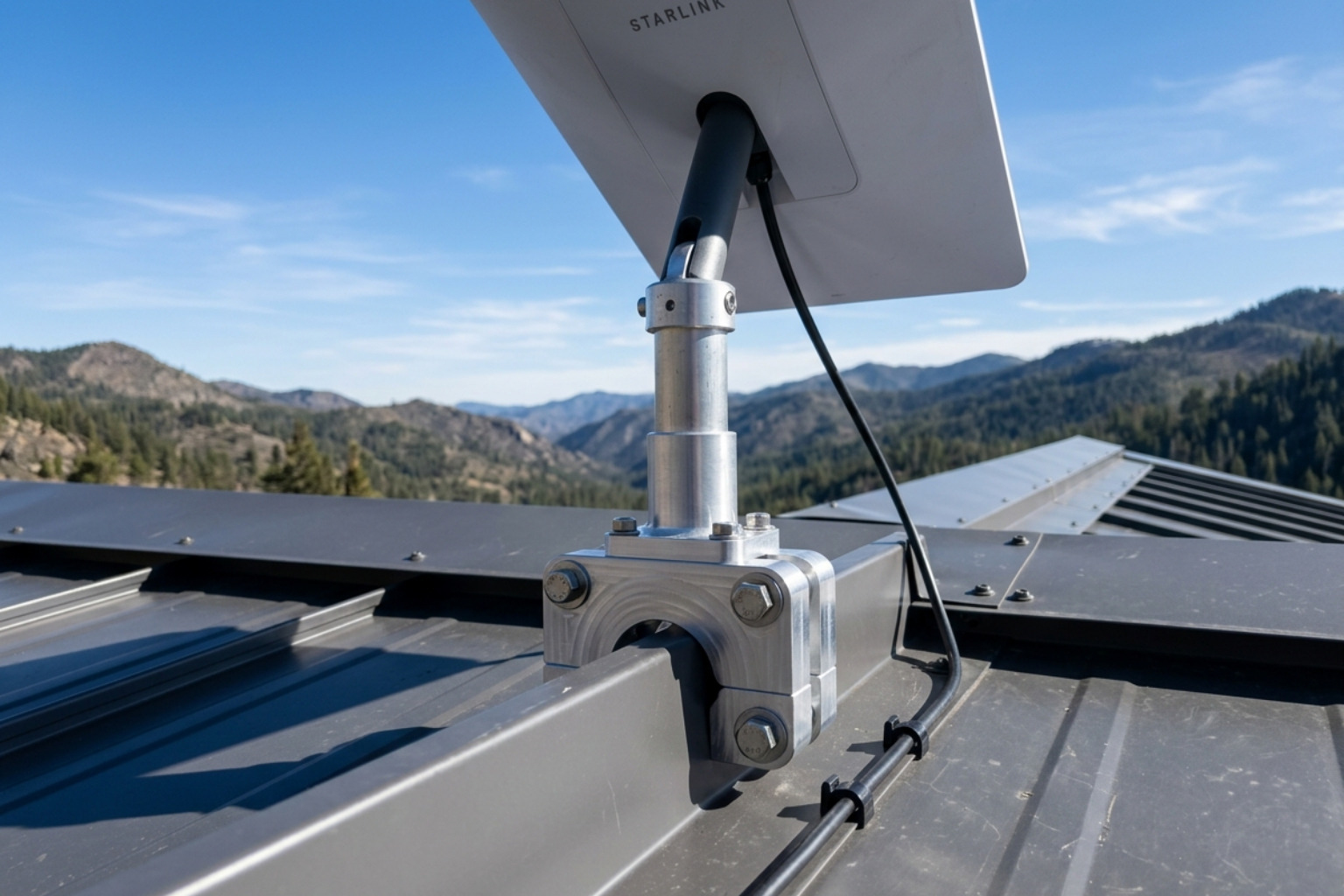
If you have a standing seam metal roof, the last thing you want to do is drill holes in it. Drilling voids warranties and creates potential leak points that can lead to internal rot. The smarter way is to use non-penetrating systems like the SataMount RCT.
These systems use heavy-duty clamps that grip the ribs of the roof. The SataMount RCT is a beast, offering a load rating of over 1,600 lbs per attachment point. This ensures your Starlink dish stays put even in the most severe storms. These Spacetek High Duty Mounts Secure Reliable And Built For Australian Conditions are designed to fit 95% of today's standing seam profiles.
By using aluminium clamps and 304 stainless steel screws, these mounts ensure that the hardware itself doesn't cause "galvanic corrosion"—a chemical reaction that happens when two different types of metal touch and moisture is present. Preserving your roof warranty while getting a rock-solid install is why you should Shop House Starlink Mounts specifically designed for non-penetrative attachment.
Installation Best Practices for Australian Conditions
Even the best rust resistant satellite mounts can fail if they are installed incorrectly. The goal is to maintain the integrity of the protective coatings and avoid chemical reactions between materials.
One of the most common mistakes is using treated lumber or concrete ballast on a metal roof. Lumber is porous and retains moisture, and the chemicals in treated wood can accelerate the corrosion of metal panels. Concrete is equally bad; it leaches alkalis that attack the protective coatings of steel roofing. Instead, always use 304 or 316 stainless steel fasteners and Master Gripper roofing screws with high-quality gaskets.
- Torque Settings: For standing seam clamps, we recommend a torque of 90 in/lbs. This ensures a secure grip without crushing the seam or stripping the threads.
- Dissimilar Metals: Ensure you use rubber spacers or gaskets between different metal types to prevent galvanic corrosion—a chemical reaction that happens when two different types of metal touch and moisture is present.
- Free Drainage: Position your mount to allow rainwater to flow freely underneath the rails. Ponding water is a primary catalyst for rust.
- Australian Standards: Always verify that your hardware meets Australian Standards For Satellite Mounts What Buyers Should Check.
If you aren't comfortable climbing onto your roof, it's always best to Find a Professional Installer who understands these technical requirements.

Starlink Mini DC Power Supplies & Accessories (Built for Real-World Setups)
Starlink Mini DC power supplies and accessories are the backbone of a reliable off-grid setup—especially across vehicles, caravans, and touring rigs in Australia. Get this part right, and everything else runs smoother.
Here are the key Starlink Mini power and accessory options worth focusing on:
- Regulated 35V DC-DC power supplies – Deliver stable voltage required by Starlink Mini, even when your 12V system fluctuates
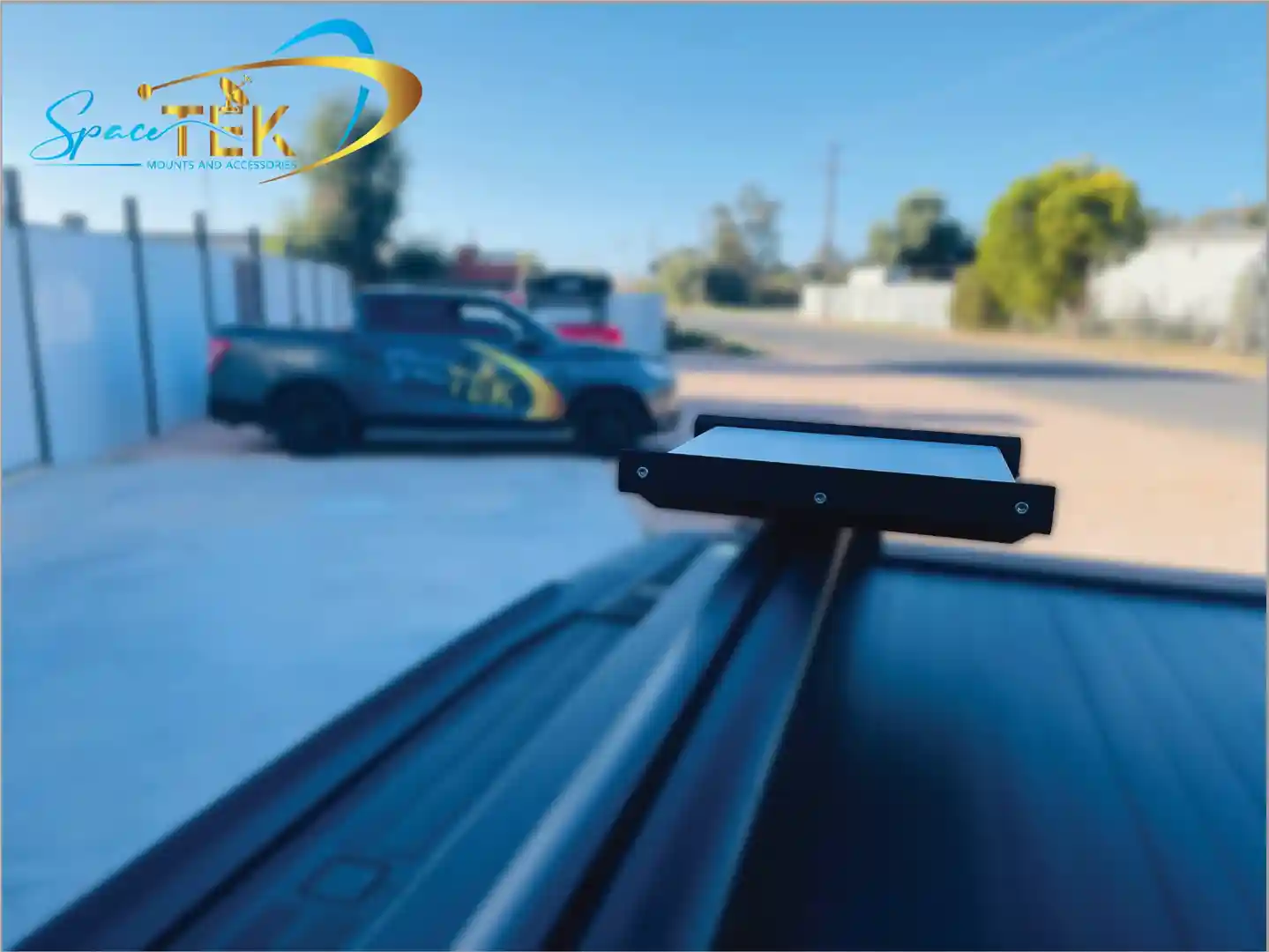
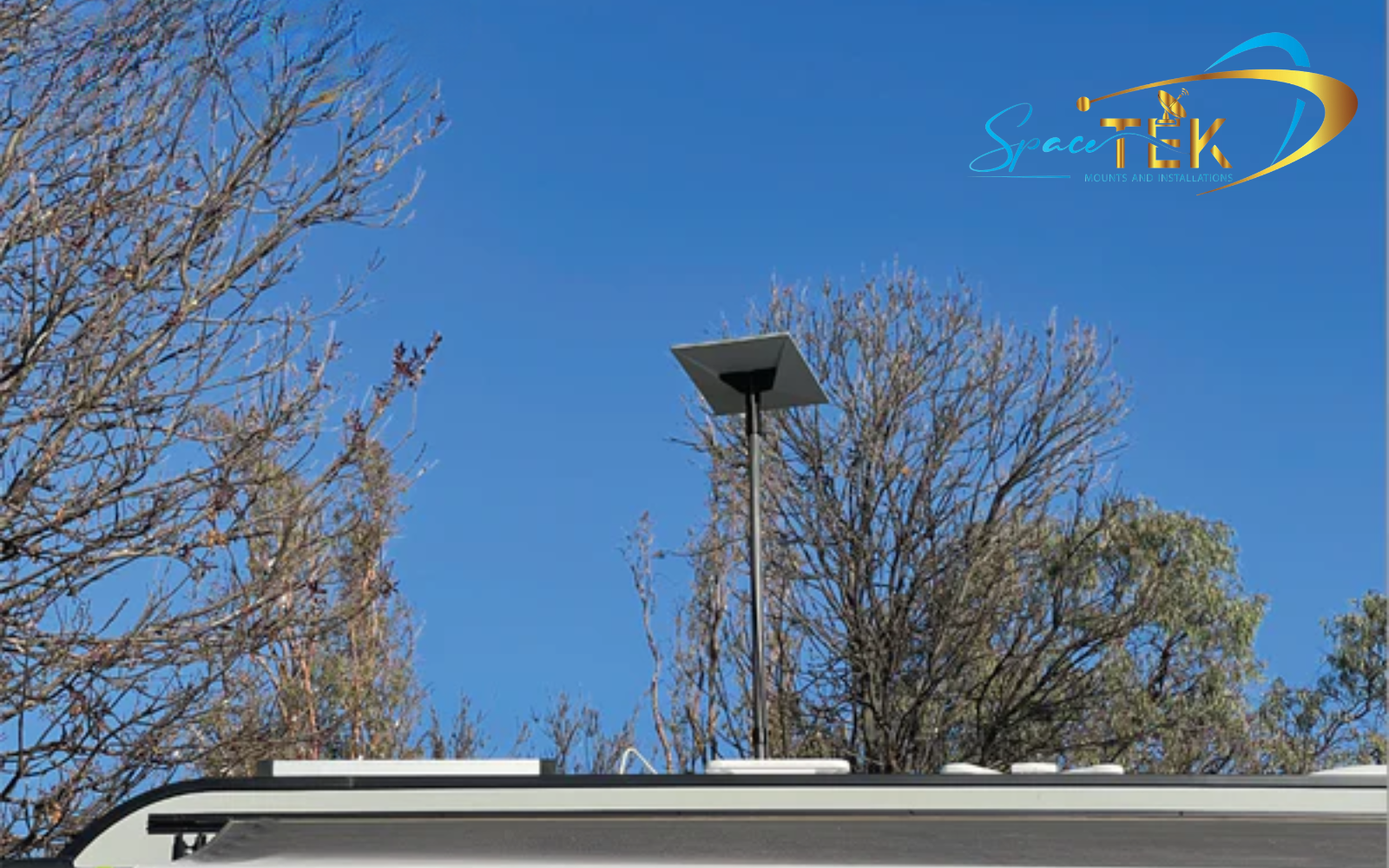
- Vehicle and caravan mounting hardware – Built to handle vibration, wind load, and rough-road conditions
- USB-C PD router power accessories – Useful for compatible router setups requiring negotiated USB-C power
- Cable management and install hardware – Reduces wear, voltage drop, and water ingress risks
- SpaceTek bundle solutions – Designed for Australian touring, caravan, and off-grid use
Most people focus on the dish and overlook the power system—that’s where setups usually fail.
Why Proper DC Power Matters for Starlink Mini
Starlink Mini is more sensitive to voltage consistency than most people expect. While nominal specs look simple, real-world power systems are anything but. Standard 12V systems in cars, caravans, and 4WDs fluctuate constantly due to charging cycles, alternators, temperature, and load changes. Without proper regulation, that instability can lead to dropouts, random resets, and reduced performance.
In actual use, batteries fluctuate during charge/discharge cycles and alternators vary under load. Heat also affects converter efficiency, and long cable runs introduce voltage drop. Cheap or generic DC converters may technically “work”—but often fail under stress (heat, vibration, long drives). SpaceTek’s approach is to design for movement, heat, and real touring conditions, not static installs. We focus on purpose-built power and mounting systems designed for real-world Australian conditions—not just lab specs.
The Smarter Way to Power and Mount Starlink Mini
A reliable setup comes down to three things: stable power, secure mounting, and clean cable routing. Do it properly once, and you avoid the common issues that hit DIY installs.
A proper setup includes a regulated DC-DC power supply that converts fluctuating 12V input into a stable 35V output for the Starlink Mini. You also need purpose-built mounts that keep the dish secure under wind load and road vibration. Finally, clean cable routing is essential to prevent wear and tear, voltage drop, and water ingress. A complete system performs better than mixed generic parts, and this applies not just to Mini—the same principles carry across Starlink Gen 2, Gen 3, and RV setups.
Bundle Deals Built for Real-World Use
If you don’t want to piece everything together and risk mismatched components, bundles are the safer option. They’re designed around one key idea: power and mounting must work together.
Starlink Mini Road Bundle
The Starlink Mini Road Bundle is best for vehicles and in-motion setups. It provides stable regulated DC power and hardware designed specifically for vibration and movement. This results in a cleaner, simpler installation built for real driving conditions—not just parked use.
Caravan Builder Value Bundle
The Caravan Builder Value Bundle is the superior choice for permanent or semi-permanent installs. It ensures stable performance across battery fluctuations and offers cleaner cable routing and integration. The hardware is suited for long-term outdoor use, removing the guesswork and compatibility issues common with DIY builds.
Essential Power Accessories
Accessories aren’t just “nice to have”—they solve the small issues that cause big failures. Common problems usually come from cheap adapters, poor cable routing, or mismatched power components.
Starlink Mini Router 9V USB-C PD Power Supply
The Starlink Mini Router 9V USB-C PD Power Supply is useful for setups using compatible routers with USB-C input. It is important to note that this requires USB-C Power Delivery (PD)—not standard USB. It needs proper voltage negotiation to help avoid underpowering and random resets.
Choosing the Right Setup for Your Use Case
Your setup should match how you actually travel.
- For driving and touring: Regulated DC power is essential. Mounts must handle constant vibration, and cable routing needs flexibility.
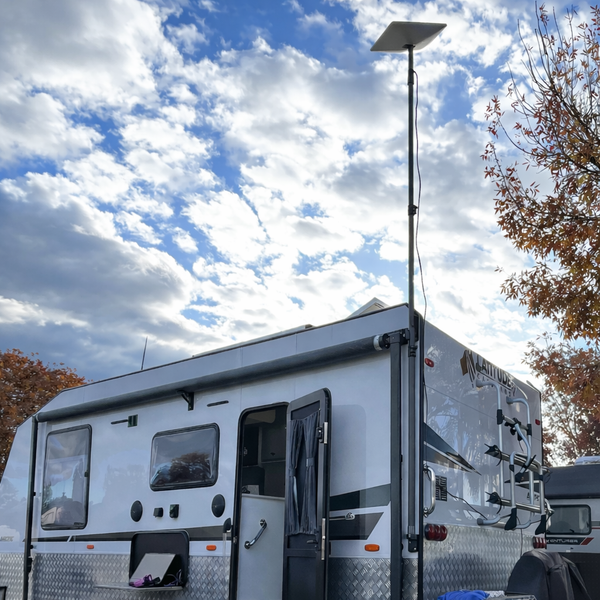
- For caravans: Focus on clean, permanent installs. Use proper cable entry seals and choose mounts built for long-term exposure.
- Avoid: Cheap unregulated converters, weak or generic mounting brackets, and indoor-rated accessories used outdoors. Always plan for heat, dust, and long-term wear.
Installation Notes
A good install is simple in theory: stable power in, secure mount, no weak points.
- Secure all mounts properly: Always check the tension after your first trip.
- Route cables carefully: Keep them away from heat sources and sharp metal edges.
- Use proper glands: Ensure cable entry points are sealed against water and dust.
- Verify voltage: Check the voltage at the device end, not just at the battery, to account for voltage drop.
- Recheck everything: After driving on corrugated roads, give your hardware a quick inspection.
FAQs – Rust Resistant Satellite Mounts
Are these mounts compatible with Starlink Gen 3?
Yes, most of our heavy-duty mounts are compatible with Starlink Gen 3. However, the Gen 3 (V4) dish has a different form factor and often requires a specific pivot mount adapter or "kickstand" bracket to secure it to standard Unistrut rails or pole masts.
How long do rust-resistant coatings like Defender last?
Advanced coatings like the Defender finish are engineered for a 100-year service life. This doesn't just mean they won't "rust through"—it means they maintain their structural integrity and appearance significantly longer than standard galvanised finishes, even in high-saline coastal environments.
Will a metal mount void my roof warranty?
Using non-penetrating clamps on standing seam roofs generally preserves your warranty because you aren't piercing the weather-tight seal of the roof. However, drilling into panels or using incompatible materials like treated lumber can lead to corrosion and will likely void your coverage.
Why does Starlink Mini need regulated power?
Real-world 12V systems in vehicles fluctuate. A regulated DC-DC supply ensures the Mini receives the stable voltage it needs to prevent dropouts and resets during your travels.
Get Your Starlink Setup Sorted
Investing in high-quality hardware today prevents the frustration of signal loss and hardware replacement tomorrow. SpaceTek Australia provides the rugged, Australian-designed mounting and power solutions needed to withstand everything from coastal salt to outback heat.
Before heading off-grid, sort the power and mounting side properly—that’s what keeps your connection stable when conditions aren’t. If you want a setup that actually holds up on the road—not just in the driveway—start with the right gear from the beginning.


Leave a comment
This site is protected by hCaptcha and the hCaptcha Privacy Policy and Terms of Service apply.