
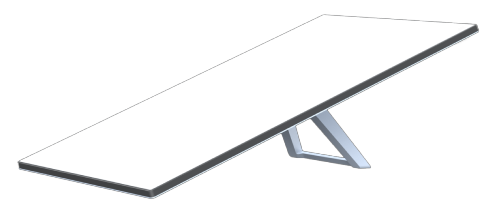
Which Starlink Gen 3 mount is right for an Australian home?
Choose the mount by working through three questions: which Starlink terminal do you own, what structure will support it, and can that location give it a clear view of the sky? A bracket that fits the dish is only one part of the installation.
This October 2026 guide covers Starlink Standard Gen 3 / V4 mounting choices for metal roofs, tiled roofs, existing poles and travel setups. It explains what to check before buying, with links to the relevant product instructions rather than a universal drilling or fastening recipe.

Start with the Gen 3 / V4 mount range, then confirm the exact product and variant for your site. A roof kit, a pole adapter and a portable mast are different purchases; their included parts and intended uses differ.
Confirm the terminal before choosing the adapter
The Standard Gen 3 / V4 kit uses manual alignment. Follow the Starlink app and the official Standard installation guide for setup and obstruction checks. Do not use a fixed compass direction copied from another installation as a substitute for the app's instructions at your location.
An older pole may be reusable, but that does not make its original dish attachment compatible. Check the terminal interface, the pole diameter and the condition of the supporting structure separately.
For example, SpaceTek's heavy-duty Gen 3 / V4 pole adapter is specified for the Standard Gen 3 / V4 terminal and round poles from 30 to 51 mm. It is machined aluminium and supports internal or external cable routing. It is an adapter only, not a freestanding mount, and it does not fit Mini, Gen 2 actuated or High Performance terminals.
Take a photograph of the terminal label and measure the existing pole before asking about compatibility. A similar-looking rectangular dish is not sufficient identification.
Compare roof, pole and travel mounting options
| Location | Option to investigate | Check before ordering |
|---|---|---|
| Corrugated or metal roof | A roof kit designed for that surface | Roof profile, structural fixing points, supplied adapter and sealing requirements |
| Tiled roof | A tile-specific kit or a suitable alternative location | Whether tile penetrations are acceptable and how the structure and weather sealing will be assessed |
| Roof ridge | A ridge-cap kit | The particular roof pitch and profile supported by the product |
| Existing pole | A compatible terminal adapter | Pole diameter, structural condition and cable route |
| Caravan or RV | A travel mount with the correct terminal adapter | Attachment to the vehicle and whether use is permitted while parked or moving |
Metal-roof kits
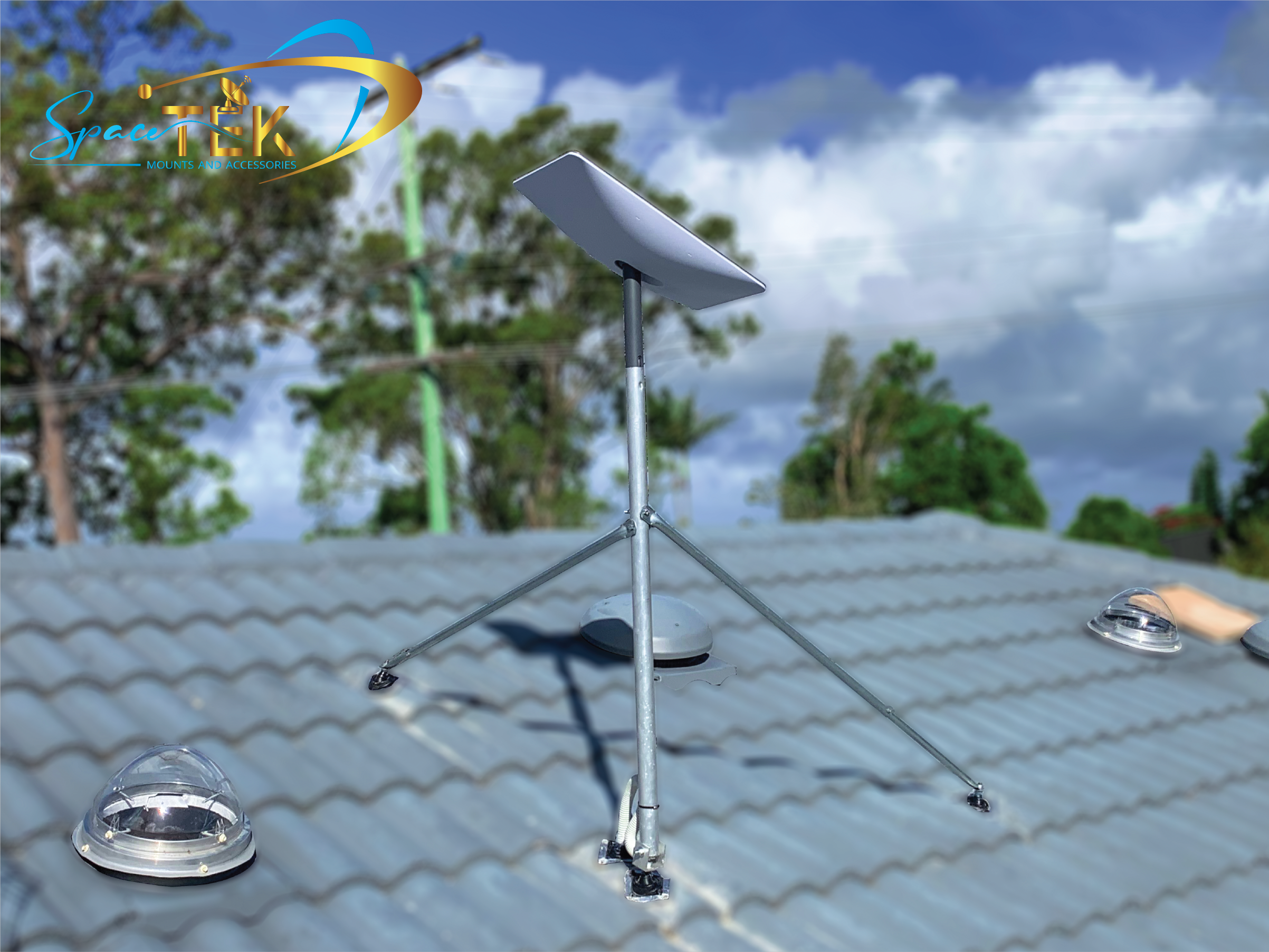
The SpaceTek Gen 3 tin-roof installation guide describes a permanent installation involving roof penetrations. Check the supplied parts and fasteners against the actual roof before installation, and plan the cable entry and sealing. Do not assume a generic fastener pack suits every roof.
The guide's kit includes a mast, base plate, stay bars and a Gen 3 adapter, with variations depending on the option selected. A base-only product may exclude the terminal adapter, so compare the inclusions rather than judging kits only by their photographs.
Tiled roofs
The Gen 3 / V4 tile-roof kit explicitly requires drilling and sealing tile penetrations. It should not be described as a universal under-tile or no-drill solution. Discuss the roof condition, suitable fixing points and alternative locations with an installer before selecting it.
Existing poles and travel setups
An adapter solves the connection between the terminal and a suitable pole; it does not establish that the pole itself is strong enough. Keep the model and diameter limits in the product instructions.
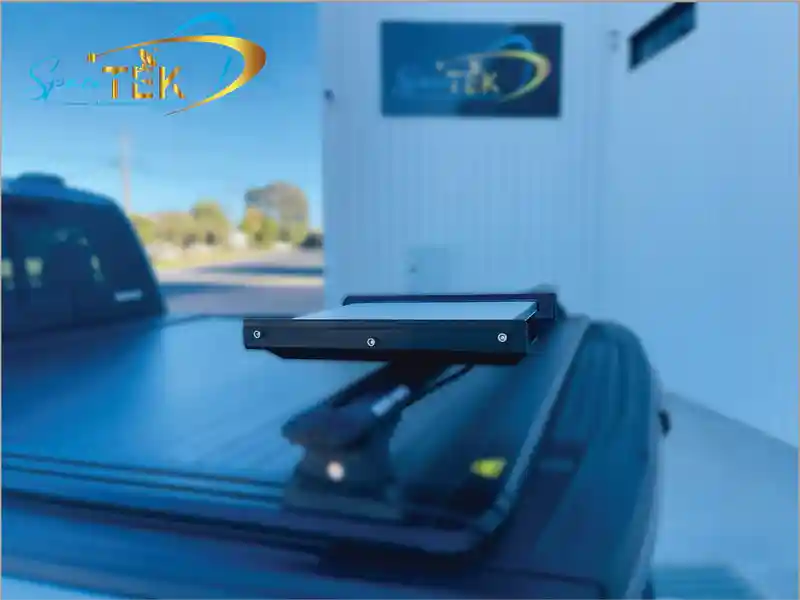
For caravans, compare the telescopic RV mount with your terminal and intended attachment. Do not assume that portable hardware is approved for driving with the mast extended. Establish the product's travel restrictions and the service requirements before using any installation in motion. Power conversion is a separate compatibility question, not a benefit shared by every mount.
Plan the installation before the hardware arrives
Give an installer the terminal model, roof or vehicle type, proposed position and cable route. Ask them to assess the supporting structure and the mounting system as a whole, including any exposed or high-wind location. A heavier bracket alone is not proof of a site-specific wind rating.
Use the Starlink app to assess sky visibility from a safe position. A ground-level view can help with planning, but it does not establish the exact view from a rooftop. Do not climb onto a roof simply to reproduce an illustration in an article.
Agree on how the cable will reach the indoor equipment, how penetrations will be sealed and how maintenance can be carried out. Follow the instructions for the actual roof kit and adapter instead of borrowing screw sizes, torque values or installation steps from another model.
After installation, complete the app-guided alignment and check the system status. A clear sky view and appropriate mounting support the installation, but neither guarantees uninterrupted service in every weather condition.
Common questions about Gen 3 mounts
Can I keep an older roof mast?
Possibly, after checking its condition, dimensions and supporting installation. You still need an adapter listed for the new terminal. Reusing the pole and reusing the old dish attachment are separate decisions.
Is the tallest mast always better?
No. Choose a position and height that address the actual obstructions while remaining suitable for the structure and mounting system. If extra height is needed, have the complete arrangement assessed rather than adding an improvised extension.
Does an aftermarket mount preserve every warranty?
Do not assume that from a product photograph or a general compatibility statement. Review the applicable product instructions and warranty terms, and ask the supplier about your exact installation.
Can the mount improve weak indoor Wi-Fi?
It addresses the terminal's physical installation. Indoor router placement and local network coverage need their own checks; changing a roof bracket does not extend Wi-Fi around the home.
Choose the mount with the site in mind
The useful outcome is a compatible, maintainable installation with an appropriate sky view. Confirm the terminal, compare the kit inclusions and settle the structural and cable-routing questions before ordering.
For help choosing among SpaceTek's options, contact the team with the terminal model, roof profile or vehicle, and measurements of any existing pole. Those details make the recommendation more useful than a general request for the strongest mount.

Leave a comment
This site is protected by hCaptcha and the hCaptcha Privacy Policy and Terms of Service apply.