
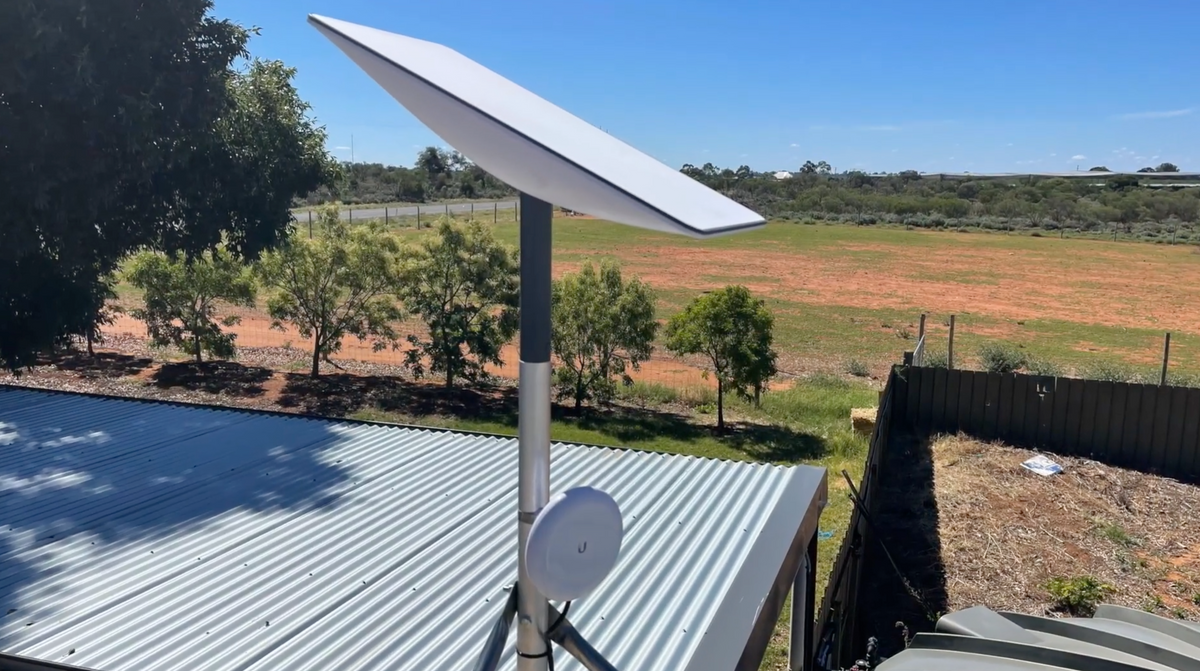
Planning a DIY Starlink pole mount: where should you start?
A pole mount can give you more choice over where to place Starlink when a roof or ground-level stand does not offer a suitable sky view. Start by checking the location, exact terminal and cable route before choosing the pole or buying materials.
Updated for October 2026, this guide helps separate the planning you can do yourself from work that needs a documented installation design or professional help. There is no single pole height, footing depth or concrete recipe suitable for every property.
A model-compatible dish adapter does not certify the pole or its support. Treat the terminal, adapter, pole, supporting arrangement and cable route as one installation.
Decide what problem the pole will solve
Use the Starlink app's obstruction check from a safe position. Compare possible locations rather than assuming the tallest pole is best. Raising the dish may help with a nearby obstruction, but does not guarantee clearance of a tree canopy or building.
Write down the requirements before comparing hardware:
| Planning question | Why it matters |
|---|---|
| Permanent or portable use? | The support and setup method will differ |
| Exact terminal model? | The adapter and installation instructions must match |
| Suitable sky view? | Pole height alone does not establish a usable location |
| Cable route and length? | A remote position may need a different route or equipment plan |
| Safe installation and maintenance access? | A tall pole is not automatically serviceable from ground level |
| Supporting structure and exposure? | The complete system must suit the actual site |
Check property permissions and any site-specific requirements before making permanent changes. Keep the proposed position accessible for assessment, and avoid committing to excavation or cable routing before the supporting arrangement is resolved.
What needs a site-specific installation plan?

For a permanent pole, the support depends on the pole, terminal load, ground or attachment conditions and exposure. Do not select a footing from an illustration showing an arbitrary hole depth, amount of concrete or gravel layer. Arrange an appropriate installer or structural assessment where those details are uncertain.
Before any ground disturbance, establish the location of underground services and the applicable safe excavation requirements. A visible clear patch of ground does not establish that it is safe to dig. Do not carry out excavation or electrical work you are not equipped or qualified to perform.
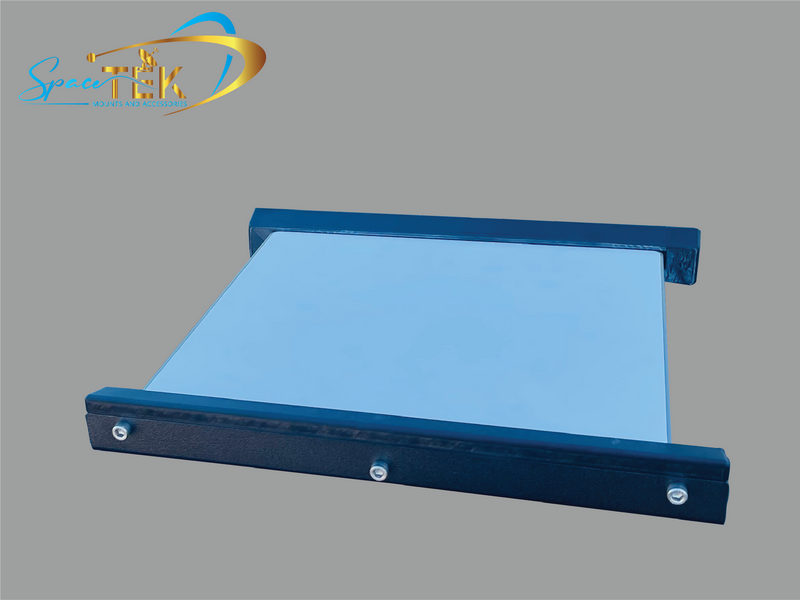
For the terminal connection, use an adapter intended for the model. For example, the SpaceTek Standard Gen 3 / V4 pole adapter specifies the pole sizes it accepts. That fit does not establish the load capacity or stability of a pole at your proposed height.
Plan cabling using the instructions for the exact kit. Do not assume that any Starlink cable can be buried directly, extended with a generic joiner or pulled through an improvised opening. Resolve cable protection, building entry and any electrical requirements with the relevant supplier or tradesperson.
Once the design is established, use the documented assembly and fixing instructions. If the available guidance does not specify a required detail, seek clarification rather than inventing a torque, brace or fastening arrangement.
Would a portable pole be a better fit?

For a campsite or touring setup, a portable kit may be more suitable than a permanent ground installation. SpaceTek's telescopic caravan and RV pole kit has separate variants for Mini, Gen 2 and Standard Gen 3 / V4. Choose the variant for the actual terminal.
The supplier describes this as a portable solution and warns against use in unsafe wind or storm conditions. Follow the documented supporting arrangement and packing instructions. Do not treat adding improvised guy-lines as permission to keep a pole deployed in unsuitable weather.
Recheck the sky view after each move. A site that worked yesterday may not suit today's parking position or nearby trees. Pack equipment for travel as instructed; a campsite pole should not be assumed suitable for operation while the vehicle is moving.
Power is a separate consideration. Choosing a portable mount does not by itself require a different power supply or router configuration.
Frequently asked questions
How deep should a permanent pole footing be?
There is no universal answer. The design depends on the pole and local conditions. Use a documented, site-appropriate design rather than a generic internet diagram or a fixed number of concrete bags.
Will a pole avoid every obstruction?
No. It provides another possible location or height, but the result depends on the actual sky view. Compare positions using the app and the official instructions for your kit.
Can I reuse an old antenna pole?
Only after its condition, support, dimensions and suitability for the complete installation have been established. An adapter fitting over the pole does not prove that the old installation can carry the proposed load.
Can I route the cable inside the pole?
Use the actual pole, adapter and cable instructions. Confirm the route, connector clearance and protection against damage rather than drilling an opening or changing the cable on the assumption that it will fit.
What about earthing and warranty?
Ask an appropriately qualified electrical professional about requirements for the actual installation. Check current supplier terms before modifying hardware or cables. Do not rely on a blanket claim that a DIY mount is automatically compliant or has no effect on support coverage.
Make the design clear before you build
A useful DIY starting point is a documented location and equipment plan: terminal model, intended use, sky view, cable route and support requirements. Get uncertain structural or electrical details resolved before construction.
Contact SpaceTek for adapter or portable-kit selection, and use appropriate local expertise for permanent support, ground work and installation. This helps you avoid buying a collection of parts that fit individually but do not form a suitable system.

Leave a comment
This site is protected by hCaptcha and the hCaptcha Privacy Policy and Terms of Service apply.