
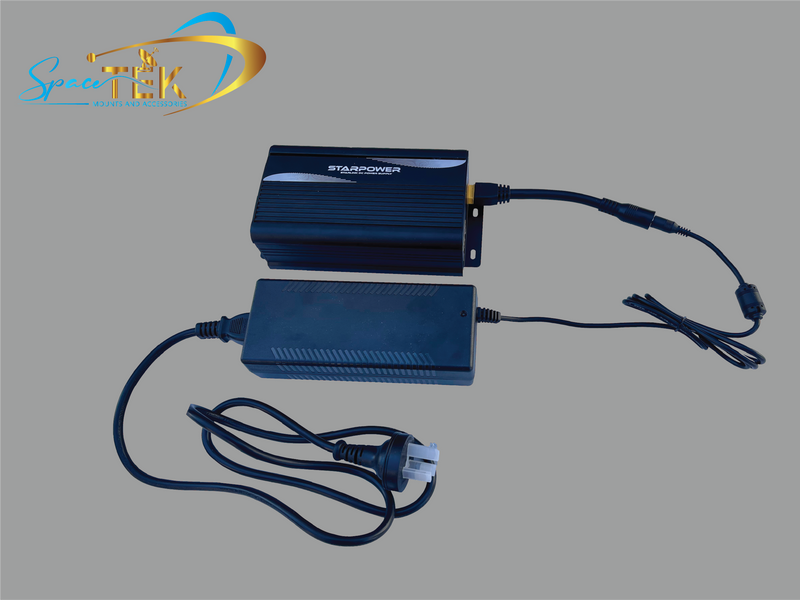
Which Starlink power supply suits your setup?

Choose a power supply that matches your Starlink hardware model, your travel rig, and whether you run on mains power or off-grid batteries. Updated for October 2026, this guide outlines current product-specific options for Australian homes, touring rigs, boats, and remote properties. For homes with stable mains electricity, the standard factory AC adapter remains straightforward. For caravans, 4WD touring setups, boats, or remote properties running on auxiliary batteries, dedicated SpaceTek StarPower DC solutions eliminate the waste of running an inverter.
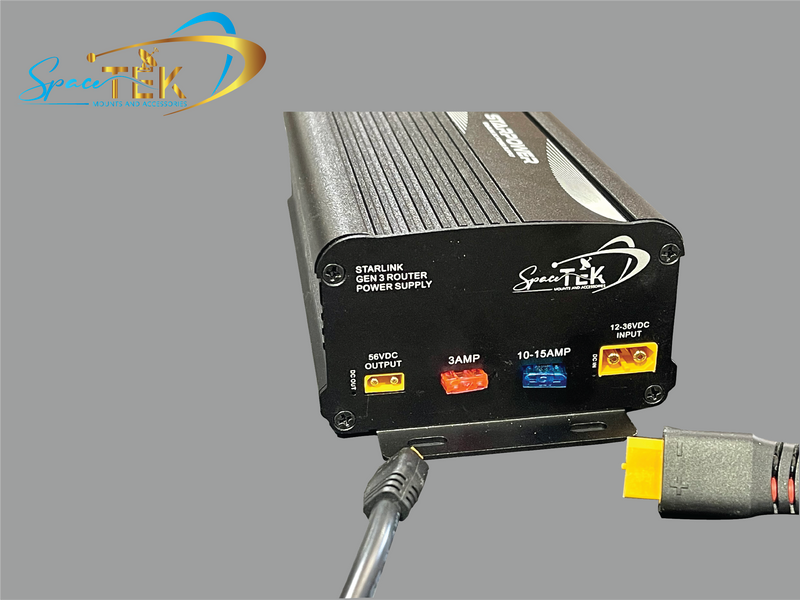
Direct DC-to-DC power can deliver higher efficiency and lower battery draw by avoiding unnecessary inverter conversion. Router configuration is model-specific: StarPower V3 for Standard Gen 3/V4 keeps and powers the original Starlink router, which then powers the dish. Install StarPower V3 indoors or in a protected weatherproof location, with correctly sized wiring and fuse protection, following the manufacturer instructions. Whether you are outfitting a touring 4WD or a regional homestead, SpaceTek pairs Australian-designed DC power hardware with precision-machined aluminium and reinforced-composite Starlink mounts engineered to handle harsh outback heat and rugged corrugated tracks.
How Do Power Requirements Vary Across Starlink Hardware Models?

Every satellite setup relies on continuous, stable power to keep phased-array beamforming operational while processing high-speed data. A sudden voltage drop can cause terminal reboots, dropped video calls, or satellite tracking interruptions.
Understanding how hardware generations differ ensures your power source, cabling, and battery bank are matched correctly to avoid unexpected dropouts in regional Australia.
What Are the Power Demands for Mini, Standard Gen 3, and High Performance?
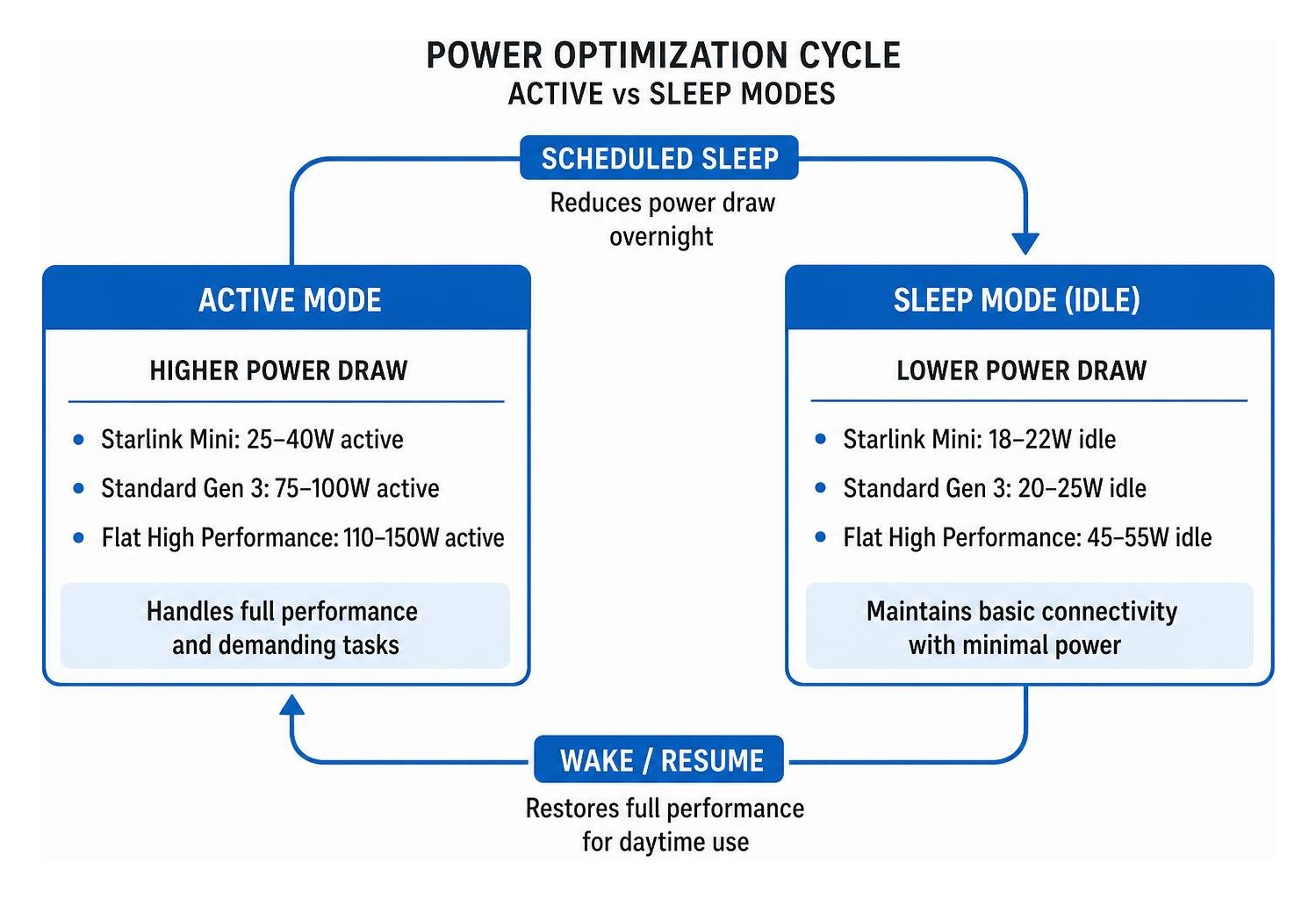
Power demands vary across hardware generations, from compact bush setups to heavy-duty installations. Each terminal draws different power levels during active data transmission and idle periods, making it important to evaluate your setup before planning your touring battery or solar configuration.
How Do Operational Modes Impact Daily Power Usage?
Operational power settings directly influence the daily energy demand placed on off-grid battery systems:
- Active Heating and Snow Melt: Starlink handles extreme cold and frost accumulation by driving increased power through the antenna array, creating a noticeable surge in total energy draw.
- Sleep Schedules: Enabling the automated sleep schedule in the Starlink app shuts down active phased-array tracking during scheduled overnight hours, conserving power when Starlink is not in use.
What Types of Starlink Power Supplies Are Available for AC and DC Systems?

Selecting the right power supply depends on whether your installation is fixed to a domestic mains grid or operates on a mobile, battery-backed DC network.
What Are the Key Differences Between Standard AC Power and Direct DC-DC Power Supplies?
Connecting through standard mains power relies on the included factory AC power supply adapter, converting incoming AC mains power down to the direct current required by the dish.
In mobile installations like caravans, camper trailers, and boats, running an AC inverter introduces substantial efficiency penalties. The double-conversion process (DC battery to AC inverter, then AC back down to DC) wastes precious battery storage as heat.
Opting for direct DC-to-DC power delivers key benefits:
- Higher efficiency: Direct conversion avoids the substantial conversion losses of running an AC inverter.
- Lower draw: Running directly from DC power reduces total battery consumption during extended off-grid stays.
- Router configuration: StarPower V3 keeps and powers the original Gen 3/V4 router. StarPower V2 is a 12V/24V router replacement, while StarPower V4 is an AC-powered router replacement.
Explore our complete range of SpaceTek StarPower DC power supplies and accessories for purpose-built Australian off-grid setups.
Which Hardware Solutions Support 12V and 24V Starlink Deployments?
Powering satellite broadband across Australia's remote regions requires reliable hardware built to handle harsh regional conditions.
Why Choose StarPower DC Starlink Power Supplies for Off-Grid Performance?
SpaceTek's dedicated StarPower range provides clean, regulated power for off-grid touring and remote installations:
- StarPower V2: A 12V/24V router replacement for compatible Starlink installations using your own router.
- StarPower V3: A 12V/24V DC power kit for Standard Gen 3/V4 that retains and powers the original Starlink router, which then powers the dish.
- StarPower V4: An AC-powered router replacement for compatible Starlink or third-party router setups.
How Do You Power the Portable Starlink Mini in Mobile Rigs?
The Starlink Mini features native DC input capability, making it well-suited for portable camping and touring applications:
- Power your dish directly from vehicle battery systems using the dedicated Starlink Mini DC-DC power regulator.
- Secure the dish to vehicle roof bars or camper setups using precision-machined aluminium Starlink mounts engineered for high wind resistance and harsh outback travel.
- Maintain short, properly sized DC cable runs to prevent voltage drop between your auxiliary battery and the dish.
How Can You Build an Off-Grid Solar and Battery Setup for Starlink?

Sizing an off-grid solar and battery setup requires balancing your daily connectivity needs against regional generation conditions across Australia.
Connecting via direct DC power provides distinct advantages over traditional inverters:
- Higher efficiency: Eliminates the overhead and heat loss of running an inverter full-time.
- Lower draw: Conserves essential battery capacity during cloudy weather or overnight use.
- Model-specific router setup: StarPower V3 retains the original Gen 3/V4 router, while StarPower V2 and StarPower V4 are router-replacement options for compatible setups.
How Do You Plan Daily Battery Capacity and Solar Needs?
Follow these steps to properly plan your off-grid Starlink power system:
- Check the operating draw for your specific Starlink terminal model and usage profile.
- Multiply your estimated hourly draw by your planned daily operating hours to determine total daily energy demand.
- Size your auxiliary battery bank to comfortably cover your daily demand plus reserve capacity for overcast days.
- Account for local seasonal solar conditions, ensuring solar panel capacity matches your travel region from sunny northern Australia to variable southern climates.
- Incorporate a direct DC-to-DC converter to maintain stable voltage as auxiliary battery levels fluctuate.
Frequently Asked Questions About Starlink Power Supplies
Can I run a Starlink Gen 3 dish directly from a 12V vehicle battery?
Yes, with StarPower V3, which is designed for Standard Gen 3/V4 systems on 12V or 24V battery setups. It keeps and powers the original Starlink router, and the router then powers the dish. This avoids the double conversion of running a 240V inverter, helping deliver higher efficiency and lower battery draw.
How much does running Starlink 24/7 cost each month?
Running a Starlink dish continuously on mains electricity incurs standard domestic power costs based on your local electricity tariff and hardware model. The Starlink Mini features the lowest continuous power demand, while larger high-performance dishes require more power during active satellite tracking.
Why is direct DC power better than an AC inverter for camping and touring?
Direct DC-to-DC power supplies provide higher efficiency and lower battery draw than running an AC inverter, which wastes power through double conversion. Router setup depends on the model: StarPower V3 retains the original Gen 3/V4 router, while V2 and V4 are router-replacement options for compatible installations.
Conclusion
Securing a stable, reliable power configuration ensures your satellite connection remains fast and dependable across Australia. Using direct DC-to-DC power hardware provides higher efficiency, lower battery drain, and the flexibility to customise your networking setup for off-grid touring.
SpaceTek Australia engineers premium satellite hardware built tough for local conditions. Our dish mounts and installation components are precision-machined or folded from high-grade aluminium and reinforced composites—never made using prototyping methods or 3D printing. Whether you are outfitting an off-road campervan or upgrading a permanent remote homestead, pairing robust power hardware with our durable Starlink mounts keeps your connection rock-solid.
Need technical assistance dialling in your off-grid setup? Reach out directly to contact SpaceTek Australia for expert advice.

Leave a comment
This site is protected by hCaptcha and the hCaptcha Privacy Policy and Terms of Service apply.