
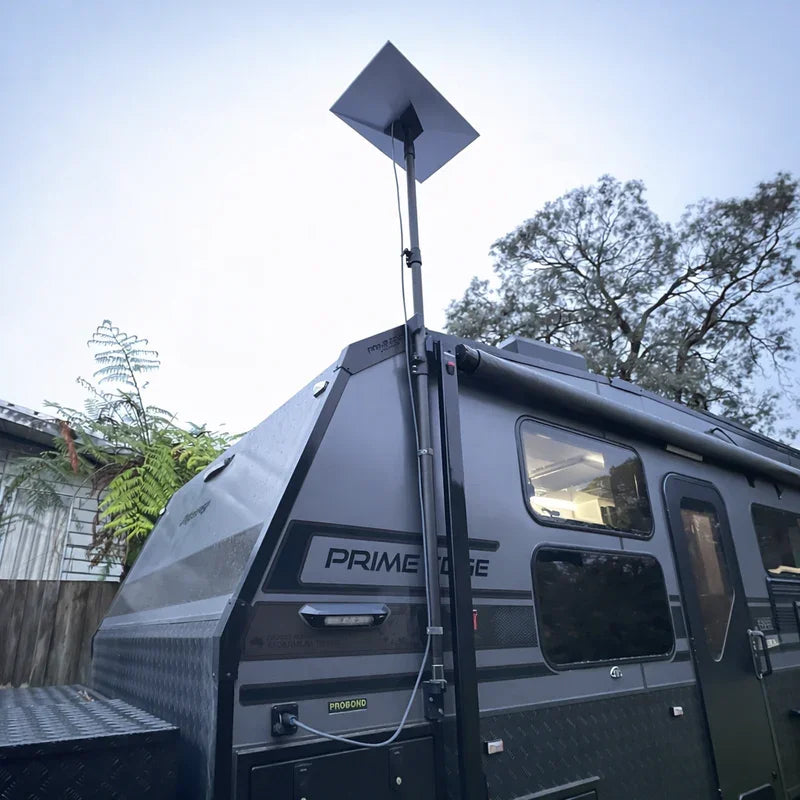
Why Choose a Rust-Resistant Starlink Mount for Coastal Travel?
An anti-rust Starlink mount helps protect your Starlink dish from salt spray, coastal humidity, and rough-road vibration by using corrosion-resistant materials that keep everything secure. If you spend weekends by the beach, tour full-time, or park up near salty air, the right dish mount can save plenty of maintenance.
Key Takeaways
- Coastal conditions are harsh on standard hardware, so a purpose-built corrosion-resistant Starlink mount is a smarter choice for regular beach and caravan travel.
- Folded aluminium, reinforced composite parts, and stainless hardware help reduce rust, staining, seized fasteners, and unwanted dish movement.
- A good mobile setup needs both corrosion resistance and vibration resistance, especially across corrugated tracks and exposed coastal campsites.
- Freshwater rinsing, careful cable routing, and regular fastener checks help keep your Starlink mount performing properly.
- SpaceTek Australia designs Starlink accessories and dish mounts for Australian touring conditions, with practical options for caravans, 4WDs, utes, and off-grid travel.
Standard uncoated steel hardware can begin corroding quickly in marine conditions, creating maintenance headaches and reliability risks on the road. A weather-ready Starlink mount is essential for travellers moving between windswept beaches, humid coastal campsites, and corrugated outback tracks.
The risk is not only cosmetic. Rust can make fasteners hard to remove, reduce clamping force, stain vehicle panels, and allow small movement that gradually affects dish positioning. Once salt crystals build up around threads or untreated contact points, vibration from highway driving and rough tracks can accelerate wear.
SpaceTek Australia designs Starlink accessories, DC power solutions, and mobile dish mounts for demanding Australian travel. Its Starlink mounts use precision-machined or folded aluminium and reinforced composite materials, rather than fragile parts made for sheltered, static home roofs. Choosing marine-ready materials makes inspections, freshwater washdowns, and long-term ownership simpler.
Why Do You Need an Anti-Rust Starlink Mount Near the Coast?
Setting up camp near the coastline is one of the best parts of travelling around Australia, but salt air is tough on outdoor equipment. Tiny airborne saltwater droplets cling to metal surfaces, speeding up corrosion and making standard fittings harder to maintain.
When standard hardware fails, it rarely happens at a convenient time. Salt-laden coastal winds, ongoing humidity, and coastal storms can cause untreated steel to degrade faster than expected. In marine settings, atmospheric corrosion is one of the main reasons outdoor equipment becomes harder to adjust, remove, or rely on.
Investing in a proper rust-resistant Starlink mount helps protect satellite hardware against pitting, seized fasteners, and rust stains running down your caravan, canopy, or vehicle roof. For travellers moving between coastal camps and inland tracks, that protection keeps the setup practical, serviceable, and ready for the next stop.
What Makes Marine-Ready Starlink Hardware Different?
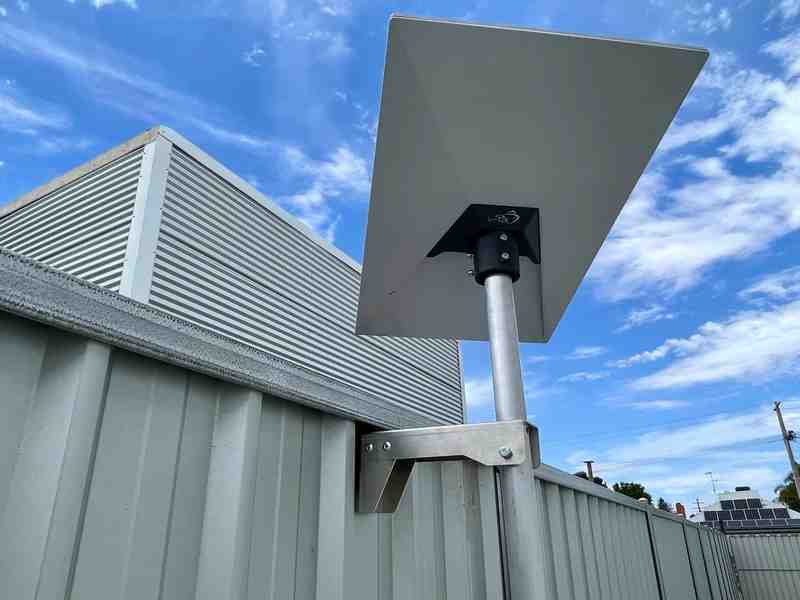
To survive exposure near the ocean, satellite mounting systems need materials proven in marine-style conditions. Precision-machined or folded aluminium combined with marine-grade stainless steel hardware provides strong corrosion resistance without adding unnecessary load to roof racks, canopies, or crossbars.
Unlike fragile 3D-printed alternatives that degrade and become brittle under intense UV radiation, industrial-grade folded aluminium and reinforced composite structural components provide the rigid strength needed to keep your satellite dish aligned in coastal winds. Standard galvanised steel mounts use thin zinc coatings over mild steel, while marine-ready aluminium dish mounts with stainless fasteners are better suited to touring, roof load, and vibration resistance.
What Are the Key Advantages for Mobile Setups?
Mobile setups face two big challenges: chemical corrosion from salt air and physical stress from road vibration. A well-engineered Starlink mount designed for Australian conditions needs to handle both.
Our comprehensive rust-resistant satellite mounts guide explains how specialised hardware keeps your dish secure across outback corrugations and coastal highways. Key benefits include:
- Sealed fasteners and isolation: Helps prevent galvanic corrosion, the reaction that can happen when different metals touch in wet or salty conditions.
- Structural fatigue resistance: Precision-machined alloys absorb road shocks and wind buffeting without cracking or warping under normal touring use.
- Better off-grid power pairing: StarPower V2 and V3 DC power supplies can reduce the waste from running an AC inverter full-time, lower battery draw, and let you bypass the standard Starlink router for a streamlined mobile network.
- Cleaner roof setup: Low-profile mounting geometry helps reduce drag on vehicle roofs and keeps the setup tidy for highway driving.
What Materials Provide the Best Salt-Spray and Weather Protection?
Selecting the right materials makes the difference between a dish mount that keeps doing its job and one that becomes a maintenance headache after coastal trips. In our guide on Starlink mounting kits for harsh climates, we explain the practical engineering standards needed for Australian touring conditions.
The best protective materials include:
- Marine-grade folded aluminium: Naturally forms a protective oxide layer that helps resist atmospheric attack while keeping vehicle roof loads manageable.
- Industrial architectural powder coating: Provides a tough physical barrier against road grit, harsh sun, and continuous salt spray.
- Reinforced composites: Engineered non-metallic structural components reduce metal-on-metal friction, help prevent galvanic reactions, and avoid corrosion altogether.
- Passivated stainless fasteners: Help resist pitting and crevice corrosion in high-salinity zones, so hardware remains easier to inspect, adjust, or remove.
How Do You Install and Maintain a Marine-Grade Starlink Mount?
Proper installation and routine care help your Starlink mount perform across thousands of kilometres of coastal touring. The goal is simple: keep salt away from exposed contact points, stop cables rubbing, and make fasteners easy to inspect.
To get the most out of your setup, review our advice on Starlink mount maintenance. A practical installation and maintenance routine includes:
- Clean the base surface: Clean roof racks, crossbars, or mounting plates to remove road grit, dust, and grease before securing the dish mount.
- Apply barrier lubricant: Use anti-seize compound or dielectric grease on stainless steel threads to help prevent galling and make future removal easier.
- Tighten fasteners evenly: Snug nylon lock nuts to a firm, even hold without overtightening, so composite isolators and mounting flanges maintain consistent contact.
- Protect cable routing: Secure connection cables along roof tracks using UV-stabilised clips to prevent wind flutter and rubbing against sharp metal edges.
- Rinse after coastal exposure: Give the dish mount and fasteners a quick freshwater rinse after camping near the ocean to wash away salt crusts and sand.
Frequently Asked Questions About Rust-Resistant Starlink Hardware
How quickly does salt air corrode standard Starlink mounts?
In coastal zones with high salt-fog exposure, uncoated or budget steel mounting hardware can show visible rust quickly. Over time, surface oxidation can move deeper into the metal, seize adjustment bolts, stain vehicle panels, and weaken structural joints.
Can powder-coated aluminium handle harsh off-road vibrations?
Yes. Precision-machined and folded aluminium delivers a strong strength-to-weight ratio. When engineered for off-road travel, it can absorb shock without shearing or fatiguing under normal touring conditions, making it a better choice than brittle cast metals or unreinforced plastics across corrugated outback tracks.
What fasteners are best for marine Starlink setups?
Marine-grade stainless steel fasteners paired with nylon locking nuts are a smart choice for mobile touring. They resist saltwater pitting and help prevent loosening from engine harmonics or rough-road vibration during transit.
Why is direct DC power better for coastal and off-road touring?
Powering your setup with StarPower V2 and V3 DC power supplies is more efficient than running an AC inverter. A dedicated DC-to-DC system can lower draw from your auxiliary battery bank, reduce inverter heat, and allow you to bypass the standard Starlink router for a compact custom setup.
Ready for Coastal Touring With a Rust-Resistant Starlink Mount?
A heavy-duty, marine-ready mount helps keep your mobile satellite hardware secure, reliable, and protected from damaging rust around Australia’s coast. By choosing folded aluminium, marine stainless hardware, and robust composite components, you protect both your vehicle and your connection across coastal camps and outback tracks.
Explore SpaceTek Australia's dedicated range of caravan and vehicle mounting solutions to find the right dish mount for your off-grid touring setup.

Leave a comment
This site is protected by hCaptcha and the hCaptcha Privacy Policy and Terms of Service apply.