

Weatherproof satellite mounts help keep your dish steady, your roof protected and your connection reliable through Australian wind, UV exposure and heavy rain. A properly designed dish mount resists corrosion and movement, so you are less likely to face signal drop-outs after rough weather.
If you are installing Starlink on a regional property, the mount matters just as much as the dish. Australian roofs can deal with intense sun, summer storms, coastal salt air and sharp temperature changes, so it pays to choose hardware built for those conditions.
Key Takeaways
- Weatherproof satellite mounts help maintain dish alignment in wind, heat and heavy rain.
- Non-penetrating clamping systems can protect metal roofing by avoiding unnecessary holes.
- Precision-machined or folded aluminium and reinforced composite components are well suited to harsh Australian conditions.
- Extra-wide feet spread the load across the roof profile to reduce flexing and distortion.
- Explore SpaceTek's weatherproof Starlink mounts to find a mounting option suited to your roof.
How Do Weatherproof Satellite Mounts Handle Wind and Coastal Corrosion?
Coastal properties and elevated inland sites can cop sustained wind and salt-laden air, both of which are tough on low-grade outdoor hardware. Salt deposits can accelerate galvanic corrosion on exposed metal, so untreated steel can quickly become rusty and unreliable.
A satellite dish catches wind much like a sail. To protect the dish and the roof beneath it, the mount needs solid rigidity, corrosion-resistant materials and secure locking points that hold alignment when the weather turns.
For exposed locations, look for these practical features:
- Strong structural support that handles aerodynamic uplift.
- Marine-grade resistance to salt spray and moisture.
- Vibration-dampening contact points that reduce movement in windy conditions.
- Secure locking mechanisms that help the dish stay aligned.
Why Is High-Strength Aluminium a Better Choice for Outdoor Mounts?
The material used in a dish mount has a big impact on how well it holds up outdoors. Galvanised and painted steel can offer early protection, but scratches, drilled points and cut edges may expose the steel underneath to moisture and rust.
Precision-machined or folded aluminium offers a strong balance of low weight and durability. It forms a protective oxide layer that resists corrosion, while a quality powder-coated finish can add further protection from UV, rain and airborne grit.
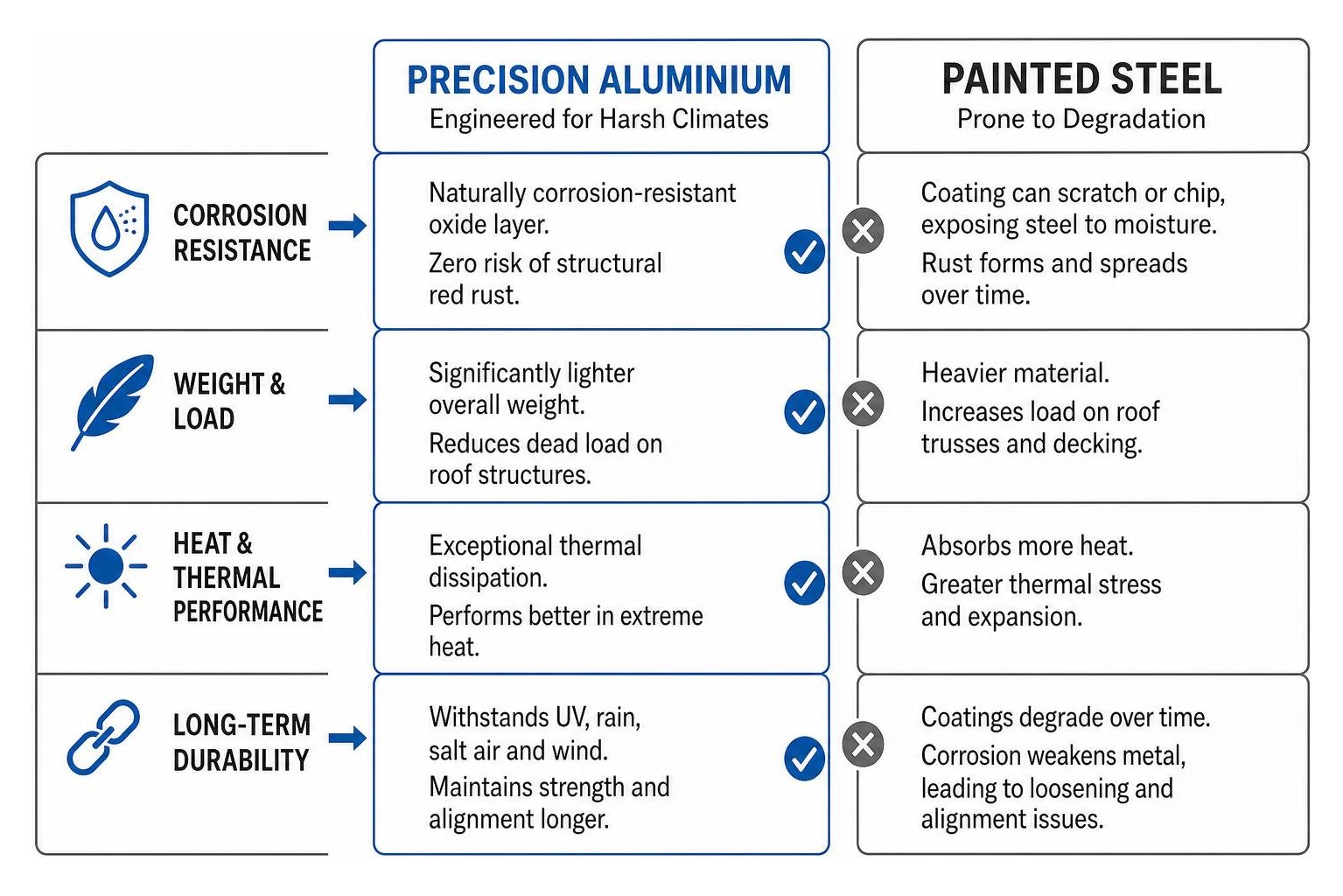
Compared with conventional steel, aluminium dish mounts can offer:
- No structural red rust.
- Less weight on roof trusses and metal decking.
- Better heat dissipation in hot Australian conditions.
- A clean finish that is less likely to streak or stain light-coloured roofing sheets.
How Do Non-Penetrating Dish Mounts Protect Your Roof?
Traditionally, outdoor equipment was fitted by drilling through roof sheeting or membranes. Each penetration can create a possible leak path as sealants, rubber washers and silicone age under strong Australian sun.
Non-penetrating dish mounts avoid piercing the roof sheet. Instead, heavy-duty clamps grip the raised ribs or seams of compatible metal roofing, helping preserve the roof's waterproofing and supporting manufacturer warranty requirements.
How Does an Extra-Wide Foot Help Prevent Roof Distortion?
Thin-gauge metal roofing can be vulnerable to point-load stress. When wind pushes against a dish, that force travels through the mounting base. A narrow foot can concentrate the load in one small area, which may crease or distort the sheet and create places where water can collect.
An extra-wide foot spreads both static and wind loads across a broader area. That helps protect the roof profile while keeping the dish mount firm during a storm.
- Distributes the load across multiple structural ribs.
- Reduces point pressure during sudden wind gusts.
- Helps limit sheet-metal flexing near seams.
- Improves base rigidity to reduce dish wobble and maintain line of sight.
Which Weatherproof Satellite Mounts Suit Metal Roof Profiles?
Different metal roofs need different mounting geometry for a secure, weather-tight fit. Stramit panels, corrugated iron and standing seam roofs each have their own ridge height and spacing, so the clamp and foot design need to match the profile.
For regional homes, SpaceTek's residential Starlink mount range is designed to help you find a secure, rattle-free fit for the roof profile you have.

Compatible roof profiles can include:
- Stramit and Custom Orb corrugated profiles with matched clamp radii.
- Concealed-fix standing seam roofs that use friction-lock clamping blocks.
- Trapezoidal and rib-and-pan roofs that need wide-span footing plates.
How Should You Install and Maintain Outdoor Roof Mounts?
Even tough hardware works best when it is installed carefully. Correct clamp tension, alignment checks and tidy cable routing help your dish mount perform reliably through changing seasons.
What Should You Consider When Installing on Stramit and Metal Roofs?
A clean, weatherproof installation on metal roofing comes down to a careful process:
- Inspect the roof and confirm there is a clear line of sight, sound panels and no loose fasteners.
- Clean the clamping area, removing dirt, debris and surface oxidation where the mount will contact the metal rib.
- Position the extra-wide foot evenly across the profile ribs to spread the load.
- Tighten the non-penetrating clamps gradually, alternating sides to apply even pressure.
- Tighten the hardware to the specified settings without pinching or distorting the roof profile.
- Fit the Starlink dish into the adapter and check that the locking points are fully engaged.
- Route the cable neatly beneath the mount, secure it with UV-rated ties and create a drip loop before the entry point so rainwater runs away from the connection.
If your roof is steep or complex, SpaceTek's certified installer network can help you arrange a safe installation. For larger sites, take a look at SpaceTek's commercial mounting systems.
How Do Non-Penetrating Dish Mounts Compare for Long-Term Maintenance?
Penetrating mounts need regular inspection because caulking can dry, crack and pull away from the roof sheet over time. Rubber grommets may also deteriorate in persistent UV exposure, allowing water to follow fasteners into the roof space.
Non-penetrating dish mounts generally need less ongoing attention. Because the roof surface stays intact, there are no sealant beds to remove and reapply. An annual check of clamp tightness and cable condition is usually enough to keep the installation in good shape.
Frequently Asked Questions About Weatherproof Satellite Mounts
How does a non-penetrating dish mount help prevent roof leaks in heavy rain?
A non-penetrating dish mount clamps to the raised seams or ribs of compatible metal roofing rather than drilling through the sheet. Keeping the roof surface intact removes the usual holes and ageing grommets that can let driving rain in.
Why is precision-machined aluminium preferred to painted steel?
Precision-machined or folded aluminium resists corrosion without relying only on an outer paint layer. If painted steel is scratched during installation or by debris, the exposed steel can rust. Aluminium is a dependable option for salty air, humidity and harsh Australian weather.
What equipment can an extra-wide-foot weatherproof mount support?
These dish mounts are suited to compatible Starlink dishes and other approved outdoor communications hardware used on residential and light-commercial metal roofs.
Why Do Weatherproof Dish Mounts Make Sense for Australian Roofs?
A reliable satellite connection in regional and rural Australia starts with durable mounting hardware. When you pair a non-penetrating clamp design with an extra-wide, load-spreading foot and corrosion-resistant materials, you can better protect the roof while helping the dish stay steady in wind and heavy rain.
SpaceTek Australia designs Starlink mounts and accessories using precision-machined or folded aluminium and reinforced composites for dependable outdoor use. Whether you are setting up a homestead, a commercial site or an off-grid camp, the right dish mount can help keep you connected without compromising the roof. For more practical help, explore SpaceTek's Starlink mounting guidance.


Leave a comment
This site is protected by hCaptcha and the hCaptcha Privacy Policy and Terms of Service apply.