

Why the Right Starlink Mounts Matter for Australian Homes and Vehicles

Starlink mounts are the physical hardware used to secure your satellite dish to a roof, wall, pole, vehicle, or other surface to ensure an unobstructed sky view and stable internet reception. Choosing the correct mount prevents signal dropouts, protects your building or vehicle structure, and ensures the satellite dish withstands harsh weather conditions.
Hi, I'm Andrew Ziogas, managing director at SpaceTek Australia. With years of hands-on engineering experience designing robust mounting systems specifically for Australian environments, I understand how critical proper dish mounts and hardware are for keeping regional homes, commercial fleets, and off-road travellers connected.
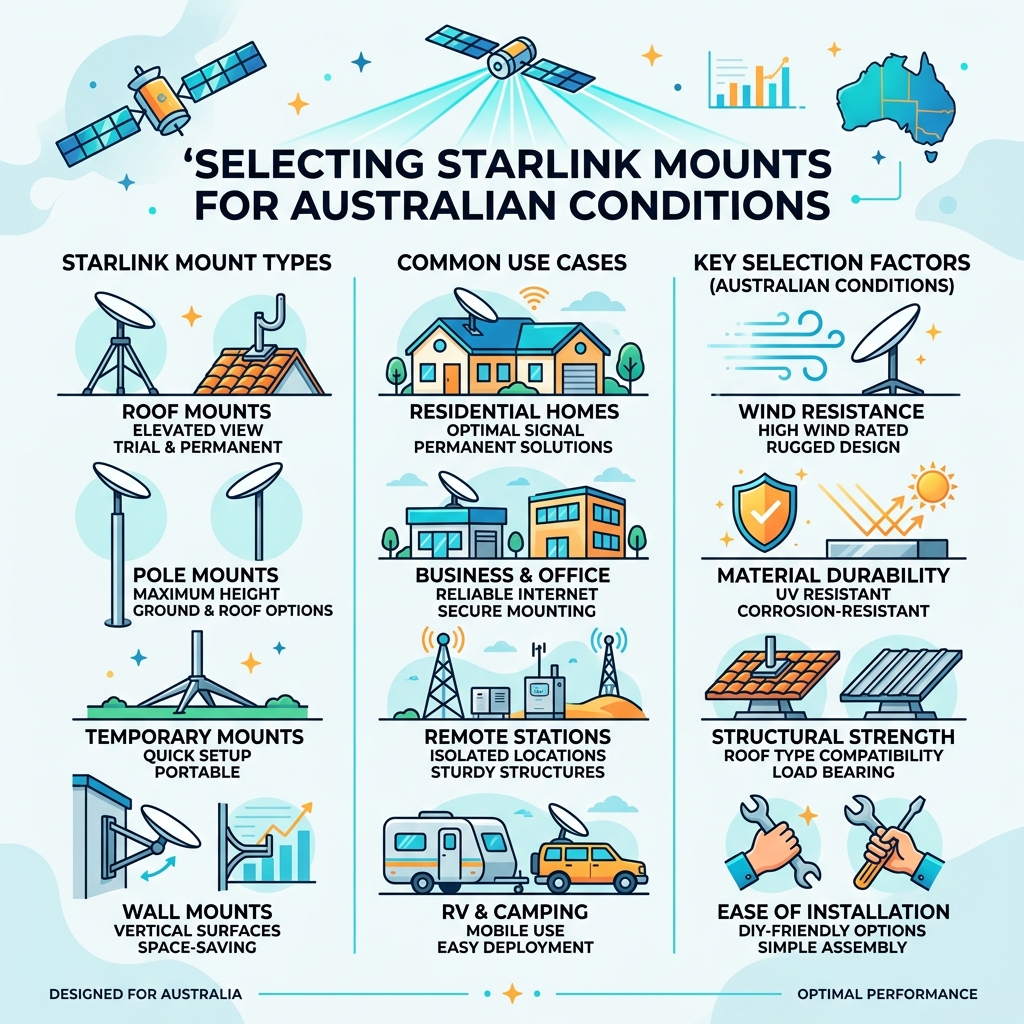
Here are the main types of dish mounts available in Australia as of November 2026:
- Wall mounts - attach to exterior walls or fascia, ideal for homes with roof overhangs
- Roof mounts - fixed directly to roofing surfaces, including pivot and flashing options for slanted or tiled roofs
- Pole mounts - elevate the dish on a standalone post for ground or elevated installs
- Non-penetrating mounts - use ballast weights instead of drilling, such as ridgeline-style mounts
- Vehicle and RV mounts - designed for caravans, 4WDs, and boats, including in-motion options
- Portable and tripod mounts - lightweight setups for camping and temporary use
Getting online with Starlink is simple. The standard kit includes a basic kickstand for initial testing, but a permanent setup requires more robust hardware.
For most Australian homes, vehicles, and remote worksites, you need a purpose-built mount. These solutions must handle coastal salt air, intense UV radiation, strong winds, and the wide variety of roof styles found across the country. A reliable connection starts with a secure, well-positioned dish. Without the right mount, even high-end satellite hardware will underperform.
Choosing the Best Starlink Mounts for Your Setup
Selecting the right hardware involves more than finding a flat spot. In Australia, architectural styles and environmental extremes vary significantly. Whether you are mounting to a corrugated iron roof, a modern tiled home, or a 4WD heading into the Simpson Desert, your dish mounts must be durable.
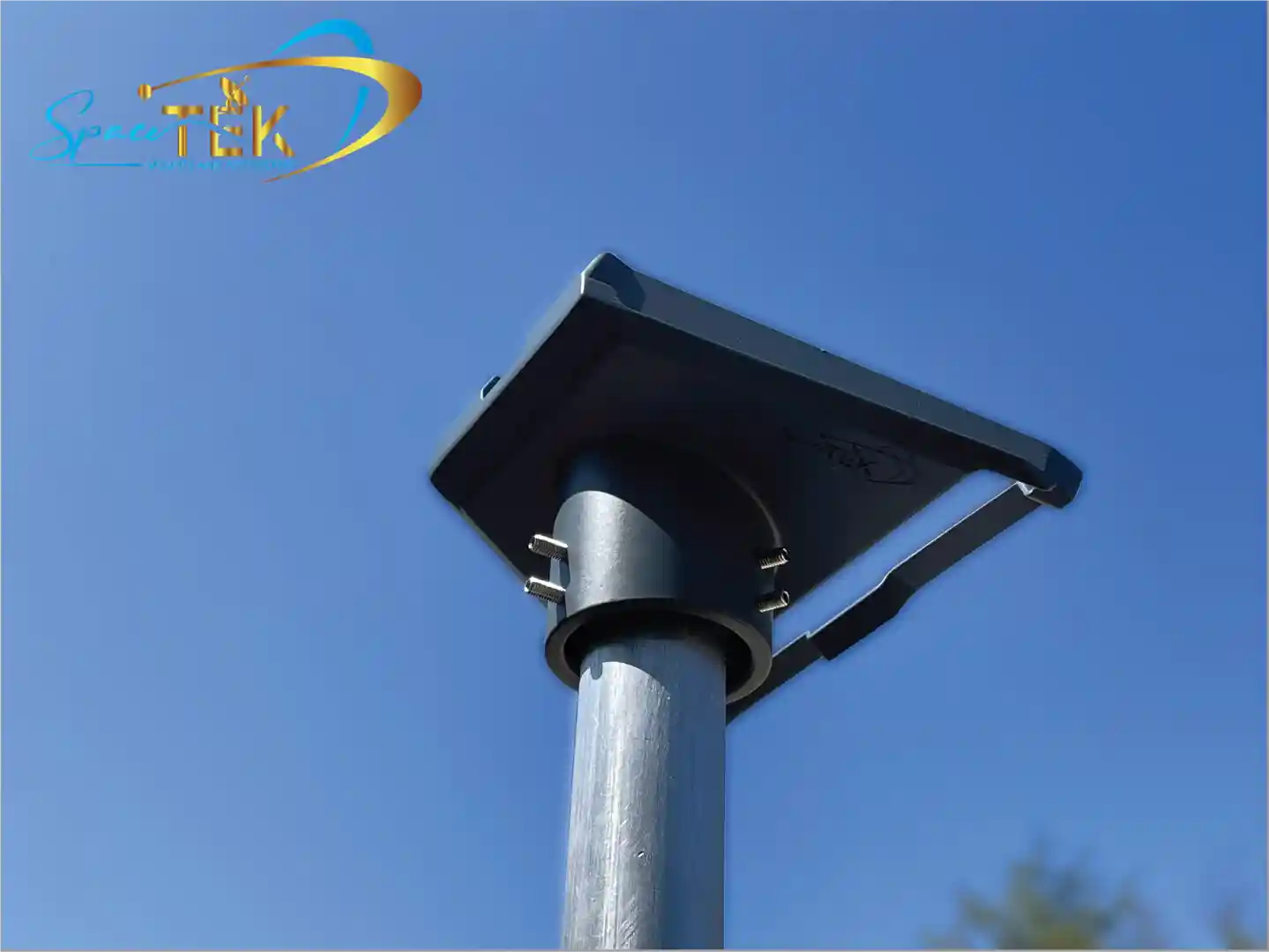
When evaluating Starlink mounts, consider these primary factors:
- Obstruction Clearance: The dish requires a clear look angle to the sky. Even minor obstructions like tree branches or roof peaks can cause service drops, making taller masts or extended arms necessary.
- Mounting Surface: Options include securing directly to timber fascia, clamping to a vehicle roof rack, or using a non-penetrating ridgeline mount to avoid drilling into roofing sheets.
- Wind Ratings: High-performance dish mounts constructed from precision-machined or folded aluminium and reinforced composite offer superior stability during severe storms.
Residential Starlink Mounts for Permanent Installation
For a permanent home setup, the goal is a maintenance-free installation. You need a mount that resists rust and remains stable during summer storms.
- Wall Mounts: These are excellent for homes with eaves. A long wall mount provides up to 30cm of clearance, allowing the dish to see over the gutter line. Short wall mounts are better for direct fascia attachment where overhangs are minimal.
- Pivot and Flashing Mounts: For tiled or metal roofs, a pivot mount allows for precise angle adjustment. When paired with a flashing mount, you ensure a water-tight seal that protects the roof's integrity.
- Roof Protection: When installed correctly with sealant tape and proper fasteners, roof dish mounts preserve structural integrity. Choosing between a wall, eave, or pole mount depends on your roof pitch and house orientation.
Versatile Starlink Mounts for Gen 3 and Mini Models
The Starlink Gen 3 (V4) and Starlink Mini have distinct mounting requirements. The Gen 3 dish is larger and lacks an internal motor, relying on a fixed kickstand or manual adjustment mount.
We design specific Gen 3 Starlink mounts built for Australian winds. These use precision-machined aluminium to ensure the larger surface area of the Gen 3 dish remains secure. For the Starlink Mini, portability is essential. Many users prefer pole dish mounts to elevate the compact dish above campsite obstructions.
Mobile Solutions for RVs and Caravans
For travellers and off-roaders, Starlink mounts must handle constant vibration and high-speed wind resistance.

- In-Motion Mounts: An 8-degree tilt is recommended for vehicle use to minimise aerodynamic drag. Aerodynamic flat dish mounts allow the dish to stay attached while driving, providing continuous internet.
- Roof Rack Integration: Most Australian adventurers use platforms like Rhino-Rack. We offer precision slot hardware and specialised dish mounts to bolt your Starlink directly to the rack.
- Magnetic and Suction Options: For temporary setups, heavy-duty magnets provide a stable, no-drill solution.
For step-by-step guidance, see our Starlink mount for caravan, van, or RV complete installation guide.
Starlink Gen 3 Roof Rack Mobility Mount: What You Need to Know
The Starlink Gen 3 Roof Rack Mobility Mount is a specialised solution designed for users who require high-speed internet while on the move or in rugged environments. Unlike standard residential setups, these are engineered to withstand the mechanical stresses of off-road travel and highway speeds.
Definition and Purpose
A mobility mount is a fixed housing that secures the Gen 3 dish to a vehicle's roof rack. Its primary purpose is to provide a rigid platform that maintains a consistent orientation to the satellite constellation, even when the vehicle is in motion or parked on uneven terrain.
Benefits of Mobility Mounts
- Continuous in-motion internet access while driving for fleet tracking, emergency communications, and passenger connectivity
- Precision-machined aluminium construction that prevents dish flexing or vibration
- Low-profile installation to reduce vehicle clearance height and minimise the risk of impacts from low-hanging branches
Key Features
- Aerodynamic profiling designed to reduce wind lift and drag at highway speeds
- Vibration dampening materials to protect sensitive internal satellite electronics on corrugated outback roads
- Marine-grade aluminium and stainless steel hardware to resist harsh UV rays and heavy rainfall
Product Highlights
- Starlink Mini In-Motion Mount: A compact, rugged housing engineered specifically for the Mini's footprint.
- Starlink Mini Direct DC Setup: Using direct DC-to-DC power provides significant advantages over running AC inverters, delivering higher efficiency, lower overall power draw, and allowing users to bypass the standard Starlink router for streamlined custom 12V vehicle installations.
Installation and Maintenance for Australian Conditions
Installing your own dish mounts is a practical DIY project when following sequential steps and using proper tools.
Step-by-Step Installation Process
- Check for sky obstructions using the Starlink app at your intended mounting position.
- Position your dish mount base and secure all structural fasteners into solid timber or metal framing.
- Apply waterproof silicone sealant and weatherproofing tape around all roof penetrations.
- Attach the Starlink dish securely into the mounting adaptor.
- Route the connection cable along the structure, securing it with clips every 30 to 50 centimetres.
Maintenance Checklist
- Rinse mounting hardware with fresh water periodically if located near coastal areas to remove salt accumulation
- Inspect and tighten all mounting hardware annually to accommodate thermal expansion and contraction
- Clear fallen leaves, bird droppings, and debris from the dish surface to maintain optimal signal performance
Key Factors for Durability and Performance
Material choice is critical for longevity. SpaceTek components are manufactured from precision-machined or folded aluminium and reinforced composite, avoiding fragile plastics.
- Aluminium Construction: High-grade aluminium is lightweight, robust, and naturally rust-resistant.
- Coastal Resistance: Starlink for coastal homes requires hardware that resists aggressive marine environments.
- UV Stability: Metal and reinforced composite dish mounts prevent the cracking and embrittlement common with plastic hardware under intense Australian sun.
Comparison of Mounting Options
Roof rack dish mounts provide the highest stability for permanent RV or 4WD setups. They are bolted for high security and allow for in-motion use. Portable tripods are best for temporary camping, setting up in minutes, but offer lower security and cannot be used while driving. Magnetic dish mounts offer a practical solution for temporary vehicle use, featuring fast attachment and moderate security when stationary.
Frequently Asked Questions About Mounting
What are SpaceTek Starlink mounts compatible with?
SpaceTek Starlink mounts are compatible with Starlink Mini, Gen 2, and Gen 3 models. Designed and manufactured in Australia from precision-machined and folded aluminium, these dish mounts support residential roof installations as well as mobile setups for caravans and 4WD vehicles.
Can I install SpaceTek Starlink mounts myself?
Most SpaceTek mounting solutions are designed for straightforward DIY installation. Whether securing a dish to a home fascia, a vehicle roof rack, or an off-grid pole, our complete kits provide all necessary hardware and clear instructions.
Why choose SpaceTek over standard mounts?
SpaceTek dish mounts are custom-machined or folded from high-grade aluminium and reinforced composite, offering a lightweight, rust-resistant alternative to generic plastic products. Our designs are specifically hardened for the Australian climate with high resistance to UV degradation and coastal salt air.
Do SpaceTek mounts work in extreme Australian weather?
Every SpaceTek dish mount is built to perform in extreme Australian environments. From the heat of the interior outback to high coastal winds, our hardware maintains a rigid hold, protecting your satellite dish from excessive vibration, heavy rain, and storm gusts.
Which mount should I choose for my setup?
Selecting the right mount depends on your Starlink model and whether you require a permanent building installation or mobile vehicle setup. SpaceTek provides specialised dish mounts engineered specifically for each generation to ensure an exact fit.
Conclusion and Next Steps
Securing your satellite connection in Australia requires hardware that is as tough as the landscape. Whether you are setting up a permanent home office in regional Australia or taking your setup off-road, the right Starlink mounts make all the difference.
SpaceTek Australia provides precision-machined aluminium dish mounts and reinforced hardware built to endure local conditions.
Ready to optimise your setup?
- Shop our full range of Gen 3 V4 mounts.
- Check out the Starlink Mini collection for portable and mobile mounting solutions.
Explore our Australian-made dish mounts today to secure reliable high-speed satellite internet wherever you are.


Leave a comment
This site is protected by hCaptcha and the hCaptcha Privacy Policy and Terms of Service apply.