

If you want a dish pole that will stand up to Australia’s sun, rain and salt air, start with structural aluminium or marine-grade stainless steel. The right material and mounting setup keep your dish stable now and help prevent corrosion-related headaches later.
Key Takeaways
- Structural aluminium offers a strong, lightweight option for a rust resistant dish pole because its natural oxide layer helps protect it outdoors.
- Marine-grade stainless steel is a durable choice for exposed coastal locations, although it adds more weight to the installation.
- Choose a pole diameter, wall thickness and height that suit the dish size and wind exposure at your property.
- Pair the mast with a corrosion-resistant Starlink mount to help protect the complete setup from long-term weather exposure.
- Check fixings, drainage and roof seals regularly so small issues do not turn into signal or corrosion problems.
Raising a dish above nearby rooflines and tree cover can improve its line of sight, but extra height also increases wind load and weather exposure. As a practical guide, make sure any taller mast has enough support for local conditions before installation.
A large dish mounted about 600 mm from the pole centre creates far more leverage than the same dish mounted closer to the mast. If corrosion weakens the structural joints, that extra load can lead to flex, signal drift and hardware failure.
Outdoor antenna masts must endure severe environmental stresses, including relentless UV exposure, driving rain, temperature swings, and airborne salt. Over time, moisture and airborne contaminants cause untreated metals to degrade through galvanic reactions and atmospheric oxidation.
Selecting a suitable material comes down to balancing structural load capacity, tensile strength, weather endurance, and overall weight.
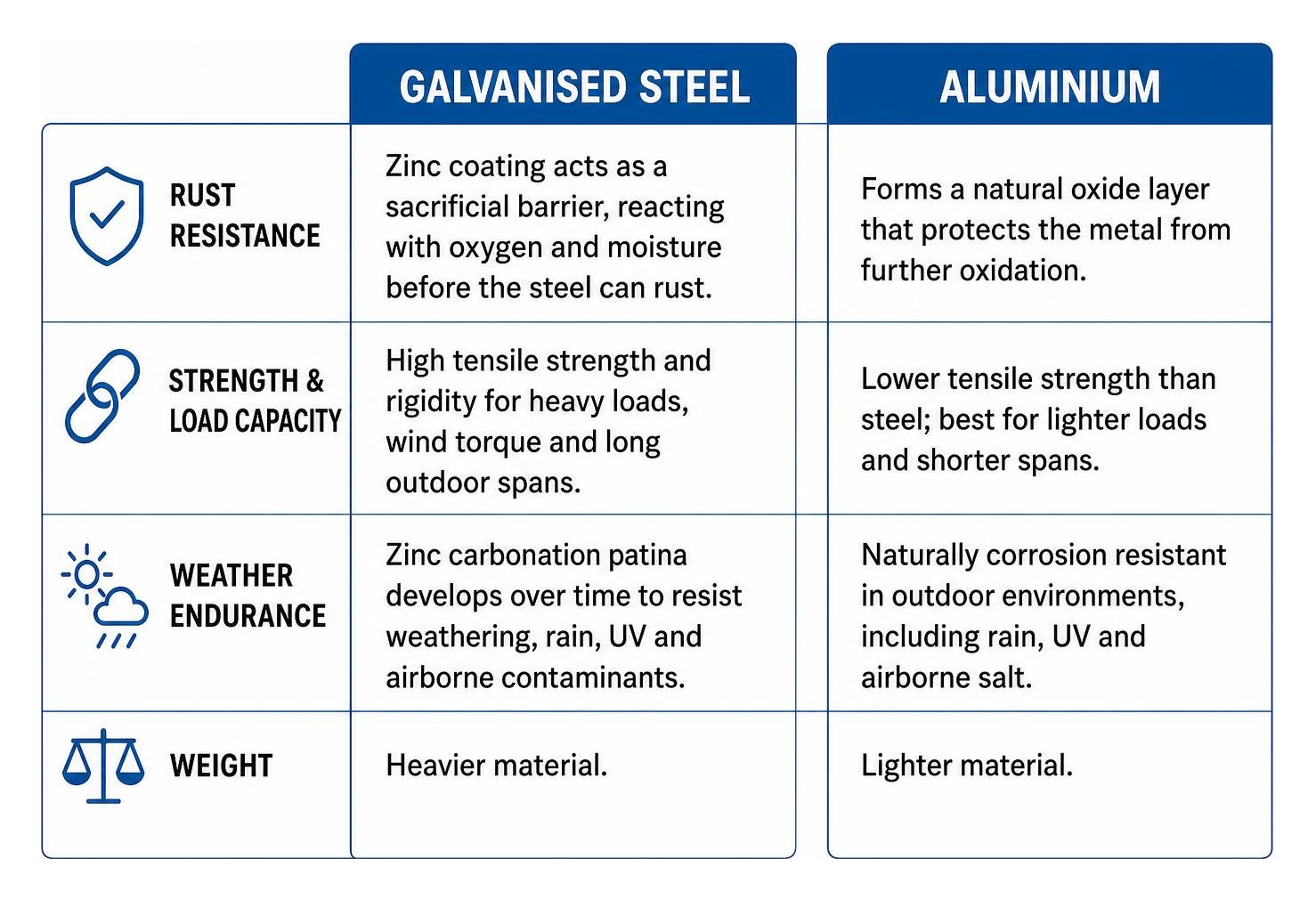
How Does Galvanised Steel Compare to Aluminium in a Rust Resistant Dish Pole?
Galvanised steel and structural aluminium represent the two most popular options for outdoor antenna masts, each serving distinct installation requirements.
Galvanised steel relies on a metallurgical zinc layer applied across the surface. The zinc acts as a sacrificial barrier, reacting with oxygen and moisture before the underlying steel can oxidise. Over time, the zinc forms a protective zinc carbonate patina that resists weathering.
However, if moisture sits trapped against unsealed cut edges or sub-surface mounting points, the zinc layer eventually depletes, leaving the structural steel exposed to red rust.
Structural 6000-series aluminium offers a natural advantage against oxidation. When exposed to air, aluminium rapidly forms a transparent, self-healing aluminium oxide film that seals the metal against ongoing corrosion.
A dedicated corrosion-resistant Starlink mount made from aluminium helps reduce the risk of deep structural flaking or rust staining on roof tiles.
Core material properties to consider include:
- Galvanised steel strength: strong and rigid for very tall ground masts.
- Aluminium weight: a high strength-to-weight ratio that places less strain on eaves and fascia.
- Corrosion protection: steel relies on a finite zinc coating, while aluminium forms a renewable oxide barrier.
- Handling: aluminium is easier to lift, align and secure when working at height.
Are Powder-Coated and Stainless Steel Options Worth the Investment?
For coastal properties or locations subject to heavy tropical moisture, premium metal treatments provide vital long-term protection.
Stainless steel achieves corrosion resistance through high chromium content. While standard 304-grade stainless performs reliably inland, 316 marine-grade stainless steel includes added molybdenum to prevent pitting and crevice corrosion caused by ocean salt spray.
The main trade-off is added weight, so solid stainless steel is typically reserved for critical hardware, clamping U-bolts and specialised marine setups.
Electrostatic powder coating adds a durable, UV-stabilised polymer shield over a metal substrate. Applied as a dry powder and cured under heat, this coating forms a seamless skin that resists chipping, scratching, and chemical degradation.
When paired with treated alloys, quality rust-resistant mounts help protect the setup against harsh salt air and seasonal rainfall.
How Do You Select the Right Pole Specifications and Mounting Style?
A mast must hold your satellite dish firmly in place without flexing when strong gusts hit. Selecting the correct pole requires matching the outer diameter, wall thickness, and overall elevation to the specific wind exposure of your property.
What Diameter, Wall Thickness, and Height Deliver Maximum Wind Resistance?
Outer diameter and wall thickness dictate how much structural deflection a mast allows under load:
- Outer diameter: many satellite dish clamps suit masts with an outside diameter of roughly 38 mm to 50 mm, but always check the dish manufacturer’s mounting requirements.
- Wall thickness: thin-walled poles can buckle in high winds. A wall thickness of around 3 mm or more generally provides a sturdier option for larger dishes and exposed sites.
- Height and leverage: the taller the mast, the more wind leverage it creates. Masts extending beyond 3 metres usually need additional structural support to keep the dish aligned.
How to Configure a Rust Resistant Dish Pole for Roof, Wall, or Ground Mounts?
Your chosen mounting position determines how hardware should be anchored to avoid structural movement:
- Ground mounts: useful where tall trees surround the property or roof access is limited. Set the mast into stable ground with proper drainage at the base.
- Roof and ridge mounts: position the dish where it has a clear view of the sky, while ensuring loads are spread across structural rafters.
- Wall and fascia mounts: secure the pole to external walls or eaves and leave suitable clearance from gutters.
For detailed installation steps and hardware comparisons, explore our Starlink Mounts Australia Guide to find the right configuration for your building layout.
For taller poles, triangulated guy wires can reduce sway-induced signal drift and help keep satellite links stable during severe weather.
How Should You Install and Maintain Outdoor Antenna Hardware to Prevent Corrosion?
Proper installation practices prevent water ingress and galvanic reactions before corrosion can take hold.

Follow these sequential steps during installation to maximise hardware lifespan:
- Isolate dissimilar metals: fit neoprene or EPDM isolation washers between stainless steel fasteners and aluminium surfaces to reduce direct metal-to-metal galvanic transfer.
- Clear base drainage ports: check that the bottom of the mast has an open weep hole so internal condensation drains freely instead of pooling inside the tube.
- Seal roof penetrations: apply neutral-cure, UV-resistant silicone around roof and wall screw points to keep moisture away from internal timber framing.
- Treat exposed fasteners: coat exposed threads and bare mounting hardware with a thin anti-corrosion barrier spray or cold-galvanising compound.
For ongoing care, keep your setup in peak condition with these maintenance checks:
- Biannual salt wash: rinse the mast and dish base with fresh water every six months to remove salt build-up and grime.
- Hardware tension check: inspect clamping bolts, turnbuckles and securing hardware each year to make sure vibration has not loosened them.
- Seal integrity review: examine roof seals and wall flashings for UV cracking or shrinkage.
Frequently Asked Questions About Satellite Dish Poles
How Deep Should a Ground-Mounted Pole Be Buried?
A ground-mounted pole should be set into a concrete footing about 750 mm to 1,200 mm deep, depending on local soil conditions and site exposure.
Place a 75 mm to 100 mm layer of coarse gravel at the base of the post hole before pouring concrete. This helps internal condensation drain into the subsoil rather than pooling at the bottom of the pipe.
How Do You Identify Structural Rust Damage Before Mast Failure?
Check your outdoor hardware periodically for early warning indicators of corrosion:
- Red rust pitting: deep, granular oxidation that eats into the steel tube beneath the surface coating.
- Zinc layer flaking: chalky white powder or peeling surface metal that can indicate the galvanised layer has failed.
- Base joint cracking: stress fractures around welded flange plates or lower mounting holes.
- Hardware seizure: heavy rust binding adjustment bolts and preventing secure re-tensioning.
- Intermittent signal dropouts: dish alignment shifting during moderate winds, which can indicate reduced structural rigidity.
Do Taller Antenna Poles Require Guy Wires for Wind Resistance?
Yes. Any free-standing mast extending more than 3 metres above its upper dish mount should be stabilised with triangulated guy wires. Guy wires set at 120-degree intervals help prevent lateral mast deflection and protect dish alignment in strong winds.
How Can You Keep a Dish Pole Rust Resistant for Years?
A reliable satellite connection starts with a rigid, weatherproof foundation. Raising the dish can clear obstacles, but durable corrosion-resistant hardware is what helps it stay secure through years of wind, rain and harsh Australian sunlight.
SpaceTek Australia makes dish mounts and accessories for demanding outdoor conditions. Precision-machined or folded aluminium and reinforced composite components provide dependable structural support without the rust issues associated with untreated steel.
For commercial sites and high-exposure installations, explore our range of Commercial Dish Mounts or Contact Our Team for help choosing a secure setup.


Leave a comment
This site is protected by hCaptcha and the hCaptcha Privacy Policy and Terms of Service apply.